Understanding the Landlord and Tenant Board Form N3: Notice to Increase the Rent and/or Charges for Care Services and Meals
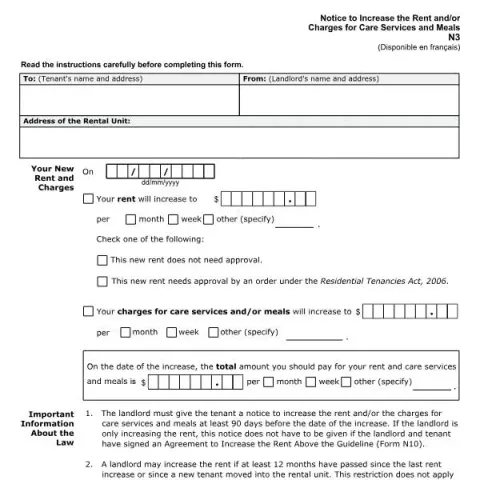
If you are a landlord in Ontario planning to increase the rent or charges for care services and meals in a rental unit, you will need to complete and serve the official Form N3 issued by the Landlord and Tenant Board (LTB). This form is a legal document that notifies tenants of upcoming increases and ensures compliance with the Residential Tenancies Act, 2006. Below, you will find a comprehensive overview of the form’s purpose, how to prepare it, and important legal considerations.
Purpose of the Form N3
The primary objective of Form N3 is to formally inform tenants about upcoming rent and/or care services and meal charges increases. It serves as an official notice that must be provided at least 90 days before the increase takes effect. The form specifies the new amounts payable, the effective date, and whether the increase requires approval from the Landlord and Tenant Board.
This notice is crucial because it ensures transparency and gives tenants sufficient time to prepare or respond. If the rent increase exceeds the guideline or is contested, the landlord must seek approval from the Board before implementing the change.
Preparing and Completing the Form
Key Information to Include
- Tenant’s name and address: The full name and address of the rental unit.
- Landlord’s details: Name and address of the landlord or property manager.
- Effective date of increase: The date when the new rent or charges will start.
- New rent amount: Specify whether the rent will increase to a certain dollar amount, weekly, monthly, or other period.
- Charges for care services and meals: Indicate the new charges if applicable.
- Total payable amount: The combined total of rent and care charges payable after the increase.
- Approval status: Check whether the increase needs approval by an order from the Board or not.
Signature and Date
The landlord or authorized representative must sign and date the form to validate it. Include contact details if applicable, such as phone number or company name.
Legal Requirements and Important Considerations
Timing and Delivery
The landlord must serve the N3 notice at least 90 days before the proposed increase date. Delivery can be in person, by mail, or through other approved methods under the Residential Tenancies Act. If the increase pertains solely to care services or meals, the same notice period applies.
Restrictions and Exceptions
- Frequency of rent increases: The rent can only be increased once every 12 months unless an agreement to increase above the guideline is signed (Form N10).
- Approval process: If the increase exceeds the guideline, the landlord must apply for approval from the Landlord and Tenant Board before implementing it. Until approved, tenants are only required to pay the guideline increase.
- Care home considerations: Landlords must provide a care home information package to new tenants before serving any rent increase notice.
Tenant’s Rights and Responsibilities
Tenants must give at least 30 days’ notice if they decide to terminate the tenancy (using Form N9). Once notice is given, tenants can also notify the landlord in writing to stop receiving care services and meals, with at least 10 days’ notice.
Fill in your form directly online
No printing: type your details into the boxes of the official form, tick, then download the PDF ready to send.
- 1Type into the form boxes
- 2Tick in one click
- 3Save and download the PDF
Additional Resources and Contact Information
If you have questions regarding the legal aspects of rent increases or the proper completion of Form N3, you can contact the Landlord and Tenant Board at 416-645-8080 or toll-free at 1-888-332-3234. Further information is also available on the Board’s official website at tribunalsontario.ca/ltb.
Summary
Completing and serving the Form N3 correctly is essential for lawful rent and charge increases in Ontario rental units, especially those involving care services and meals. Ensuring compliance with the 90-day notice period and understanding the approval process helps avoid disputes and legal complications. Always keep a copy of the served notice and confirm delivery methods to maintain proper documentation.