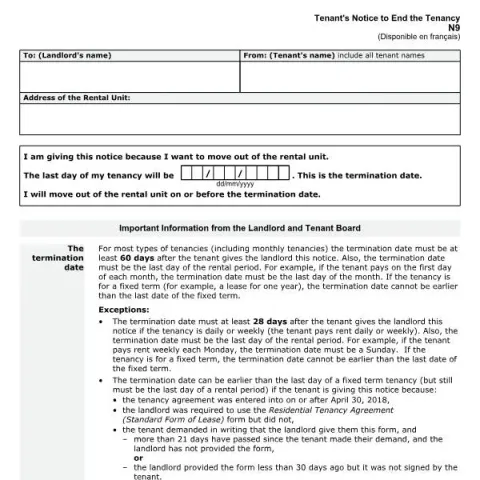
Understanding the N9 Form: Tenant's Notice to End the Tenancy in Canada
The N9 form, officially known as the "Tenant's Notice to End the Tenancy," is a critical document used within the Canadian rental housing system. Managed by the Landlord and Tenant Board (LTB), this form allows tenants to formally notify their landlord of their intention to vacate a rental unit. Whether you are planning to move out at the end of a lease, due to specific circumstances, or because of other personal reasons, understanding how to properly fill out and submit this form is essential to ensure your rights are protected and the process complies with legal requirements.
Purpose of the N9 Form
The primary objective of the N9 form is to serve as an official communication from the tenant to the landlord, indicating the tenant’s intention to terminate the tenancy. This form is necessary because it establishes a clear date for moving out, allowing both parties to plan accordingly. It also ensures that the termination process adheres to Ontario’s Residential Tenancies Act, 2006, which governs rental agreements in most provinces and territories.
How to Prepare Your N9 Form
Gather Essential Information
- Landlord’s Name: Ensure you have the correct full name of your landlord or property management company.
- Tenant’s Name(s): Include all tenants listed on the lease agreement.
- Rental Address: Provide the complete address of the rental unit.
- Termination Date: Decide on the final day you plan to move out, which must comply with notice period rules.
Complete the Form Accurately
Fill out the form clearly, indicating your intention to vacate and specifying the last day of tenancy. Remember that the termination date must be at least 60 days after the notice is given for most types of tenancies, and it must coincide with the end of a rental period (e.g., the last day of the month if rent is paid monthly). For fixed-term leases, the date cannot be earlier than the lease’s end date.
Submitting the N9 Form
Methods of Submission
The N9 form can be submitted either in person, by mail, or through the Landlord and Tenant Board’s online platform where available. When submitting in person or by mail, keep copies of the completed form for your records. If submitting online, follow the instructions provided on the official website to upload your document securely.
Important Deadlines and Considerations
It’s crucial to adhere to the notice period rules. For most tenancies, your notice must give the landlord at least 60 days’ notice, and the termination date should be the last day of a rental period. Exceptions exist for daily or weekly rent payments, where a minimum of 28 days’ notice is required. Additionally, if your tenancy is a fixed-term lease, the termination date cannot be earlier than the lease’s expiry date.
Follow-Up and Legal Implications
Once the landlord receives your N9 notice, they may choose to apply to the Landlord and Tenant Board to end the tenancy, but they cannot require you to move out before the date you specified. If disputes arise, such as disagreements over the termination date or notice validity, either party can request a hearing with the Board for resolution.
Fill in your form directly online
No printing: type your details into the boxes of the official form, tick, then download the PDF ready to send.
- 1Type into the form boxes
- 2Tick in one click
- 3Save and download the PDF
Key Tips for Tenants
- Timely Notice: Always give notice well in advance, respecting the minimum period required by law.
- Clear Communication: Fill out the form legibly and accurately to avoid delays or misunderstandings.
- Keep Records: Save copies of the completed form and any correspondence with your landlord.
- Understand Your Rights: You are not required to sign the N9 as a condition of renting, and the form cannot be used to force you to move out earlier than the legal date.
In conclusion, the N9 form is a vital part of ending a tenancy responsibly and legally in Canada. Proper preparation, timely submission, and understanding the legal framework will help ensure a smooth transition when moving out of your rental unit.