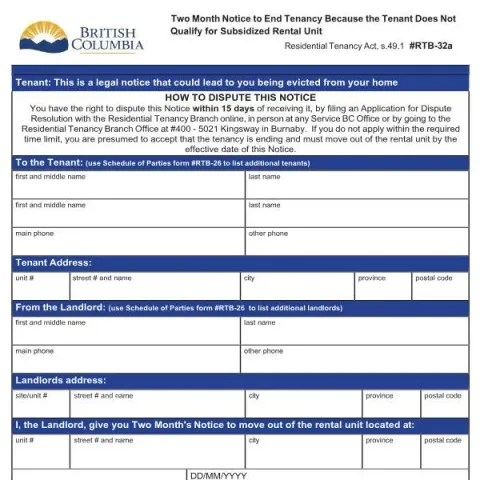
Understanding the Two Month Notice to End Tenancy Due to Non-Qualification for Subsidized Rental Units
If you are a tenant receiving a Two Month Notice to End Tenancy Because the Tenant Does Not Qualify for a Subsidized Rental Unit, it is essential to understand the purpose of this document, your rights, and the steps you can take. This official form from the Residential Tenancy Branch (RTB) is part of the legal framework under the Residential Tenancy Act, designed to inform tenants about the termination of their tenancy when they no longer meet the criteria for subsidized housing.
When Is This Notice Used?
This notice is issued by landlords when a tenant no longer qualifies for a subsidized rental unit. Such situations can arise if, for example, a tenant's income exceeds the eligibility threshold, or if there are changes in the tenant's status that disqualify them from the subsidy program. The form is specifically used to give tenants a formal two-month period to vacate the rental unit, aligning with legal requirements for notice periods.
Key Information Included in the Form
Parties Involved
- Tenant details: Full names, contact information, and address of the rental unit.
- Landlord details: Names, contact information, and address of the property owner or agent.
Notice Details
- Effective move-out date: The date by which the tenant must vacate, which must be at least two months after the notice is served.
- Method of service: How the notice was delivered (in person, mail, email, etc.).
Reason for Termination
The form clearly states that the tenancy is ending because the tenant no longer qualifies for the subsidized unit. The landlord must complete the section confirming the reason and method of service.
How to Dispute This Notice
If you believe this notice was issued in error or wish to challenge it, you have the right to do so within 15 days of receiving it. You can file an Application for Dispute Resolution with the Residential Tenancy Branch either online, in person at a Service BC Office, or at the RTB office located at #400 - 5021 Kingsway, Burnaby.
Failing to apply within the 15-day window will be presumed that you accept the termination, and you will be required to vacate the unit by the specified date.
Important Points for Tenants
Effective Date of the Notice
The date you must move out is the last day of a rental period, typically the end of the month if rent is paid monthly. For fixed-term leases, the move-out date cannot be earlier than the lease’s end date.
Early Move-Out Options
If your tenancy is periodic (e.g., month-to-month), you can choose to move out earlier than the date specified by giving at least 10 days' written notice and paying the proportional rent due until that earlier date. Fixed-term tenancies cannot be ended before the lease expires.
Receiving the Notice
You are considered to have received the notice on the day it is personally delivered, or, if sent by mail or email, on the date stipulated in the guidelines (e.g., three days after mailing). Keep records of how and when you received the notice.
Fill in your form directly online
No printing: type your details into the boxes of the official form, tick, then download the PDF ready to send.
- 1Type into the form boxes
- 2Tick in one click
- 3Save and download the PDF
Next Steps for Tenants
Dispute Process
If you dispute the reason for ending your tenancy, you should file an Application for Dispute Resolution within the specified timeframe. A hearing will be scheduled where both parties can present their case. The decision may result in the tenancy continuing or ending on a different date.
Legal Advice and Support
It is advisable to seek legal advice or contact tenant support organizations if you are unsure about your rights or the process. The RTB provides resources and assistance to help tenants navigate disputes and understand their obligations.
Summary
This form is a formal notification used by landlords to end a tenancy when a tenant no longer qualifies for subsidized housing. It is crucial for tenants to understand the notice period, their rights to dispute, and the procedures for moving out or contesting the notice. Staying informed and seeking assistance when needed can help ensure your rights are protected during this process.