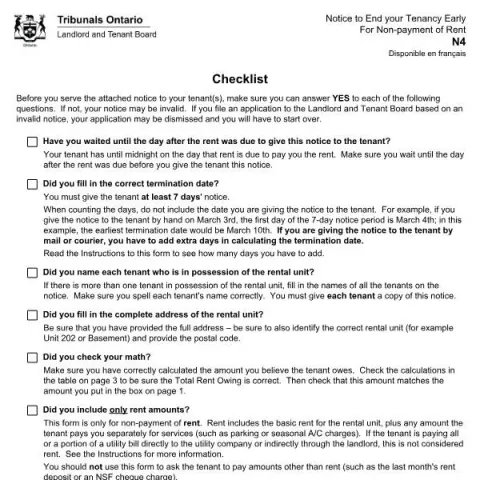
Understanding the N4 Notice to End Your Tenancy Early for Non-Payment of Rent
If you are a tenant in Ontario and have failed to pay your rent on time, your landlord may serve you with a Notice to End your Tenancy Early for Non-payment of Rent, commonly known as the N4 form. This official document is issued by the landlord to formally inform you of the unpaid rent and the possible eviction process if the debt is not settled. It is essential to understand when and how this notice is used, what information it contains, and your rights and responsibilities as a tenant.
When is the N4 Notice Used?
The N4 form is specifically designed for situations where tenants have not paid their rent by the due date. It is a legal requirement for landlords to serve this notice before applying to the Landlord and Tenant Board (LTB) for eviction. The purpose of the notice is to give tenants a clear deadline to pay the overdue rent or to vacate the rental unit.
It is important to note that the landlord must wait until at least the day after the rent was due before serving this notice. The notice must specify the exact amount owed and the date by which the tenant must pay to avoid eviction proceedings.
Key Information Required on the N4 Form
The N4 form contains several critical pieces of information that both landlords and tenants should review carefully:
- Tenant and Landlord Details: The full names of all tenants in possession of the rental unit, as well as the landlord’s name.
- Rental Property Address: Complete address, including unit or suite number, municipality, province, and postal code.
- Amount Owed: The total rent unpaid, including a detailed calculation and the date by which the tenant must pay.
- Termination Date: The date by which the tenant must pay the overdue amount or move out. This date must be at least 7 days after the notice is served, with additional days added if the notice is sent by mail or courier.
The form also emphasizes that only rent amounts should be included. Other charges, such as utility bills or deposits, are not covered by this notice.
Steps to Properly Serve the N4 Notice
Before serving the N4, landlords should ensure that all information is accurate and complete. This includes verifying the calculation of the overdue rent, spelling tenant names correctly, and filling in the full address of the rental unit. The notice must be signed and dated by the landlord to be valid.
Regarding delivery, the notice can be handed directly to the tenant, mailed, or sent via courier. The method of delivery affects the calculation of the earliest possible eviction date, as additional days are added when mailed or couriered.
What Happens After the Notice is Served?
If the tenant agrees that they owe the amount specified, they should pay the overdue rent by the termination date. Successful payment prevents the landlord from applying for eviction through the LTB.
If the tenant disputes the amount or believes the notice is invalid, they can discuss the matter with the landlord or seek legal advice. If unresolved, the landlord can file an application with the LTB for eviction proceedings. The tenant will then have an opportunity to present their case during a scheduled hearing.
Fill in your form directly online
No printing: type your details into the boxes of the official form, tick, then download the PDF ready to send.
- 1Type into the form boxes
- 2Tick in one click
- 3Save and download the PDF
Important Points for Tenants
Tenants should be aware that paying the overdue rent by the specified date can halt eviction proceedings. Conversely, failure to pay or vacate by the deadline may result in legal action, and the landlord can seek an eviction order from the LTB.
If you move out before the termination date, your tenancy will end, but the landlord may still pursue collection of any unpaid rent within one year after your departure.
Summary
The N4 form is a critical legal document aimed at addressing rent non-payment issues in Ontario rental properties. Both landlords and tenants must understand its purpose, the necessary information it contains, and the procedures for serving and responding to it. Tenants are encouraged to review the form carefully, verify all details, and seek legal advice if needed to protect their rights during this process.