Understanding the "Notice to End Your Tenancy For Interfering with Others, Damage or Overcrowding" (Form N5)
The Notice to End Your Tenancy For Interfering with Others, Damage or Overcrowding, also known as Form N5, is an official document issued by landlords in Ontario to tenants. This form is used when a landlord wants to terminate a tenancy due to specific issues such as disruptive behaviour, property damage, or overcrowding. It is a legal requirement for landlords to follow the rules outlined in this form to ensure the notice is valid and enforceable.
Purpose and When to Use the N5 Form
The N5 form serves as a formal notice to tenants that their tenancy will be ending because of:
- Substantial interference with the enjoyment of the residential complex by other tenants or the landlord
- Physical damage to the property caused negligently or intentionally
- Overcrowding beyond legal or by-law limits
This notice is part of the legal process in Ontario for ending a tenancy under specific circumstances, and it must be completed carefully to avoid invalidation.
Key Sections of the N5 Form
1. Completing the Notice Correctly
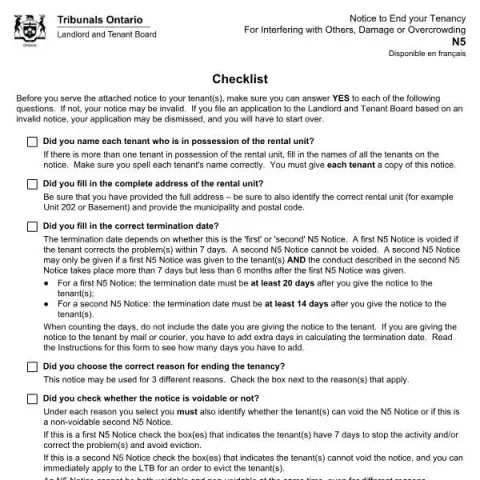
Before serving the notice, landlords must ensure all details are accurate and complete:
- Tenant Names: List all tenants residing in the unit, ensuring correct spelling and full names.
- Rental Address: Provide the full address, including unit or suite number, municipality, and postal code.
- Termination Date: Specify the date by which the tenant must vacate, which varies depending on whether it’s a first or second N5 notice.
- Reason for Ending Tenancy: Check the appropriate box(es) for interference, damage, or overcrowding.
- Voidability: Indicate whether the notice is voidable or not, based on the situation and timing.
- Details of the Issue: Provide specific information about the behaviour, damage, or overcrowding, including dates, times, and costs where applicable.
2. Timing and Validity of the Notice
The notice period depends on whether it is a first or second N5:
- First N5: The tenant has 7 days to correct the issue. The termination date must be at least 20 days after the notice is served.
- Second N5: The tenant has no right to void the notice, and the termination date must be at least 14 days after service.
When calculating the date, exclude the day the notice is served. If served by mail or courier, additional days must be added according to the instructions.
Procedure for Filling Out the N5 Form
Follow these steps to ensure the notice is properly completed:
- Fill in all tenant names and the full address of the rental unit.
- Select the correct reason(s) for ending the tenancy and specify whether it’s a first or second notice.
- Provide detailed descriptions of the behaviour, damage, or overcrowding, including relevant dates and costs.
- Choose the appropriate voidability status, indicating whether tenants can dispute the notice.
- Sign and date the form to validate it.
After Serving the Notice
Once the N5 has been properly completed and served to all tenants, the landlord must wait for the specified period. If the tenants do not correct the behaviour, repair the damage, or reduce overcrowding within the given timeframe, the landlord can apply to the Landlord and Tenant Board (LTB) for an eviction order.
Fill in your form directly online
No printing: type your details into the boxes of the official form, tick, then download the PDF ready to send.
- 1Type into the form boxes
- 2Tick in one click
- 3Save and download the PDF
It is essential to keep a record of how and when the notice was served, as this information may be required if legal proceedings are initiated.
Conclusion
The N5 form is a critical tool for landlords in Ontario to address serious issues within rental units legally. Proper completion, timely service, and adherence to legal timelines are vital to ensure the notice’s validity and to proceed with eviction if necessary. Tenants should also understand their rights and obligations when receiving this notice, and seek legal advice if they believe it has been issued improperly.