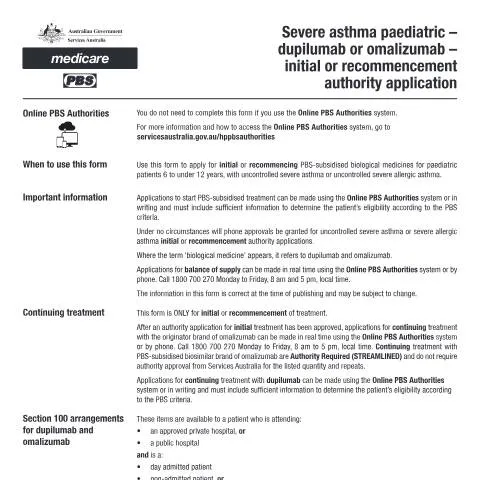
Navigating the PB188 Form: A Lifeline for Children with Severe Asthma
Filling out the PB188 form—officially known as the "Severe asthma paediatric - dupilumab or omalizumab - initial or recommencement authority application form"—is not merely a bureaucratic step. For many families dealing with severe asthma, this form represents access to essential medications that can dramatically improve their child's quality of life. Understanding the nuances of this application can make a crucial difference in how promptly and effectively it gets processed.
Who Needs to Submit the PB188 Form?
The PB188 form is intended for children under the age of 18 who are suffering from severe asthma and are candidates for treatment with either dupilumab or omalizumab. These treatments are often pivotal in managing complex asthma cases that do not respond well to conventional therapies. The application must be submitted by a medical professional—typically the child’s general practitioner (GP) or a specialist in respiratory medicine—who has assessed the child's condition and determined that these medications are necessary.
Key Professionals Involved
- General Practitioners: Often the first point of contact, GPs will have the primary responsibility for overseeing the child's general health and making initial referrals.
- Respiratory Specialists: These professionals focus specifically on asthma and respiratory conditions and play a critical role in prescribing and recommending specialist treatment.
- Pediatricians: In some cases, pediatricians may be involved, especially if the asthma is part of a broader health context requiring multidisciplinary management.
Understanding the Structure of the PB188 Form
The form itself is divided into several sections, each designed to gather specific information about the child’s medical history, current treatment, and the rationale for prescribing dupilumab or omalizumab. Here’s a detailed look at what each section typically requires:
Section Breakdown
- Patient Details: Basic information such as the child's name, date of birth, and contact details. Ensure accurate spelling and current details are provided.
- Medical History: A comprehensive overview of the child's asthma history, including previous medications and treatments. This is crucial for assessing treatment eligibility.
- Current Medication: List all medications the child is currently taking. Omissions here can delay the review process.
- Reason for Application: A detailed explanation of why dupilumab or omalizumab is deemed necessary. This should include details of the severity of the child’s asthma and the impact on their daily life.
- GP/Specialist Details: Contact information for the medical professional submitting the form. Accuracy is vital here as it may affect communication regarding the application.
Essential Documentation: Gathering What You Need
Completing the PB188 form requires attention to detail, but it also necessitates gathering supplemental documentation to support the application. The following documents are typically essential:
Supporting Documents
- Clinical Notes: Detailed notes from the assessing physician can substantiate the diagnosis and treatment rationale.
- Previous Treatment Records: Documents that outline what treatments have been tried previously and the outcomes.
- Referral Letters: If a specialist is involved, a referral letter may be needed to establish the continuity of care.
Submission Channels: How and Where to File Your Application
The PB188 form can be submitted through several channels, each with its own set of pros and cons. Understanding these can significantly impact the speed and efficiency of your application.
Online Submission via myGov
The most efficient method is through the myGov portal, where authorized medical professionals can lodge the form electronically. This method generally expedites processing times.
Paper Submission
For those who prefer traditional methods, a paper version of the form can be completed and mailed. However, processing this way tends to take longer due to the manual handling involved.
In-Person Submission
Some clinics or health facilities may accept in-person submissions. This allows for immediate confirmation of receipt but is less common. Always check with the facility beforehand.
What Happens After Submission? The Review Process Explained
Once submitted, the PB188 form undergoes a review process by Services Australia. This can include various steps, including assessing the information provided, reviewing supporting documents, and possibly requesting additional information from the medical professional.
Timelines and Expectations
The review process can vary significantly. In general, families should expect a decision within a few weeks, although delays may occur if the documentation is incomplete or requires additional clarification.
The Stakes: Rights and Responsibilities of Families
Completing the PB188 form isn’t just a procedural formality; it opens doors to treatments crucial for managing a child's health. However, it comes with obligations. Families must ensure that all information is truthful and complete, as inaccuracies can lead to denial of the authority for medication.
Understanding Potential Outcomes
The review can lead to various outcomes:
- Approval: If approved, the family will receive a notification regarding the eligibility for the medication, which can then be processed through the pharmacy.
- Request for More Information: Sometimes, additional details may be required to make an informed decision. Promptly responding to such requests is crucial.
- Denial: Should the application be denied, families have the right to seek a review of the decision, often involving an appeals process that may require additional supporting evidence.
Special Considerations: Different Scenarios and Exceptions
While the PB188 form has a defined procedure, there are unique situations that may arise based on individual health profiles and circumstances. Being aware of these can help families navigate the complexities of the application process more effectively.
Profile Variations
- Pre-existing Conditions: Children with additional health concerns may require more detailed documentation to explain why dupilumab or omalizumab is vital.
- Age Considerations: Although the medication is for children under 18, different age brackets may have specific criteria or additional assessments.
- Previous Treatment Experiences: If a child has previously been on these medications, detailed records must be provided to clarify the context of recommencement.
Final Thoughts: Ensuring a Smooth Application Process
Completing the PB188 form is a significant step towards securing essential asthma treatment for children in need. By approaching the application with thoroughness and understanding of what is required, families can navigate this process with greater confidence. Preparing all necessary documentation and ensuring precise completion of the form will not only expedite the review process but also increase the likelihood of a successful outcome.
If you have questions or uncertainties during the process, it is advisable to reach out to healthcare professionals for assistance, ensuring that every aspect of the application is addressed correctly. This proactive approach can make a substantial difference in the health journey of children with severe asthma.
Understanding Dupilumab and Omalizumab for Severe Paediatric Asthma
When managing severe asthma in children, Dupilumab and Omalizumab are two biologic therapies that have gained prominence due to their efficacy in controlling symptoms and reducing the frequency of exacerbations. Understanding the mechanisms, indications, and administration of these medications is crucial for healthcare providers and families navigating the complexities of severe asthma treatment.
Dupilumab is an interleukin-4 receptor antagonist that disrupts the inflammatory pathway associated with asthma. It is indicated for children aged 6 years and older with uncontrolled severe asthma despite high-dose inhaled corticosteroids and a second controller. The efficacy of Dupilumab has been demonstrated in clinical trials, showing significant improvements in lung function, asthma control, and quality of life.
On the other hand, Omalizumab is a monoclonal antibody that targets immunoglobulin E (IgE). It is approved for children aged 6 years and above with moderate to severe persistent asthma who have a positive skin test or in vitro reactivity to a perennial allergen. Omalizumab has been shown to reduce the frequency of asthma exacerbations and improve overall asthma control by minimizing allergic responses.
Both medications require careful consideration regarding the patient's individual characteristics, including age, weight, and specific asthma triggers. Healthcare providers should engage in shared decision-making with families to choose the most appropriate therapy based on clinical evidence, tolerability, and patient preference.
Completing the Initial or Recommencement Authority Application Form (PB188)
Filling out the Initial or Recommencement Authority Application Form (PB188) for Dupilumab or Omalizumab is a crucial step in securing subsidised access to these treatments through the Pharmaceutical Benefits Scheme (PBS). The form is designed to gather comprehensive information about the child's medical history, current treatment status, and response to previous therapies.
When completing PB188, it’s important to provide detailed information in the relevant sections. Firstly, the patient’s personal details, including their Medicare number, date of birth, and residential address, must be accurately filled out. This information is essential for verifying eligibility and ensuring that the PBS can process the application efficiently.
The clinician must also document the child's asthma severity, including the frequency of exacerbations, the degree of control over symptoms, and the prior medications administered. Evidence of previous treatments and their outcomes must be clearly outlined. For instance, if high-dose inhaled corticosteroids were utilized, clinicians should specify the duration and dosage to justify the need for biologic therapy. Additionally, any allergies or adverse reactions to asthma medications should be noted.
Another critical aspect involves attaching relevant clinical documentation. This may include the results of spirometry tests, asthma control questionnaires, or specialist letters that support the diagnosis of severe asthma. Providing comprehensive supporting documents not only strengthens the application but also facilitates a quicker review process by the authority.
Finally, the clinician must sign and date the application, affirming the accuracy of the information provided. Submitting the PB188 form can be completed electronically through the myGov platform, which streamlines the process and allows for real-time tracking of the application status.
Addressing Common Concerns and Misconceptions
Families navigating the journey of severe asthma management often have numerous questions and concerns regarding the use of Dupilumab and Omalizumab. Addressing these misconceptions is a vital aspect of patient education and can empower families in their decision-making process.
One common concern revolves around the perceived side effects of biologic therapies. While it is true that both Dupilumab and Omalizumab can cause side effects, many children tolerate these medications well. Common side effects may include injection site reactions, headache, and fatigue. However, it’s important to note that serious adverse effects are rare, and monitoring is often straightforward. Healthcare providers should communicate the risk-benefit ratio to families, helping them understand that the potential benefits may outweigh the risks, particularly in uncontrolled severe asthma cases.
Another misconception is the belief that biologic therapies are a last resort option. In reality, Dupilumab and Omalizumab can be considered early in the treatment pathway for children with severe asthma who are not achieving control with conventional therapies. Early intervention can lead to improved long-term outcomes, including better control of symptoms and enhanced quality of life.
Families may also worry about the cost of treatments; however, both Dupilumab and Omalizumab are available through the PBS, significantly reducing the financial burden on families. The successful completion of the PB188 application can provide access to these life-changing medications at a subsidised rate. It is essential for families to be informed about the support available through Medicare and the role of healthcare professionals in navigating this system.
Lastly, ongoing education and support from healthcare providers are essential. Asthma management is not a one-time event; it is a continuous process that requires regular follow-ups, adjustments in treatment plans, and support to ensure that both children and their families feel empowered to manage this chronic condition effectively.