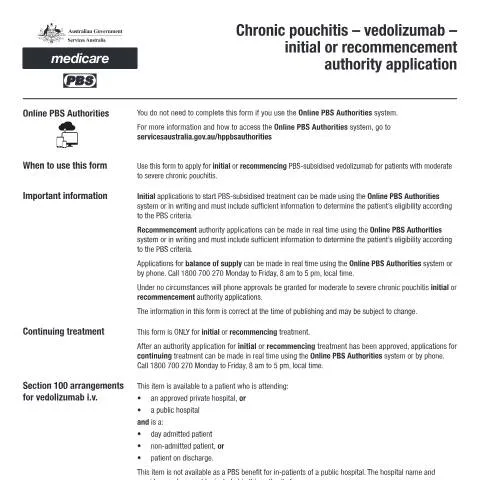
Understanding the Chronic Pouchitis Application Process
Navigating the healthcare system can be daunting, especially for individuals seeking treatment for chronic conditions such as pouchitis. The Chronic pouchitis - vedolizumab - initial or recommencement authority application form (PB379) is a crucial document for patients with this condition. It establishes the process through which healthcare providers can request access to vedolizumab, a medication that can help manage the symptoms of chronic pouchitis. In this article, we will explore the intricacies of this application form, detailing its significance, the parties involved, the completion process, and more.
Who is Involved in the Application Process?
The application process for PB379 is primarily initiated by healthcare professionals who are treating patients diagnosed with chronic pouchitis. These professionals might include:
- Gastroenterologists
- General practitioners
- Specialist nurses
Additionally, patients themselves play a vital role in this process by providing necessary medical history and consenting to the use of vedolizumab as part of their treatment plan. Understanding the roles and responsibilities of each party is essential for a smooth application experience.
Step-by-Step Guide to Completing the PB379
Completing the PB379 form demands careful attention to detail to ensure all required information is accurately provided. The following steps outline the completion process:
- Gather Medical Documentation: Before starting the form, collect relevant medical records, including diagnoses and treatment history that support the need for vedolizumab.
- Fill Out Patient Information: Include accurate personal details of the patient, such as their Medicare number, contact information, and any other identifying details.
- Provider Information: The healthcare provider must include their details, including their registration number and contact information.
- Clinical Justification: Clearly articulate why vedolizumab is appropriate for the patient’s treatment, referencing specific symptoms and previous treatments.
- Review and Sign: Ensure all sections are completed and reviewed for accuracy. The healthcare provider must sign the application to validate it.
Each section of the form is designed to capture vital information. It’s essential to provide thorough and accurate responses, as incomplete or incorrect submissions could delay the approval process.
The Submission Channels: Online vs. Paper Applications
Submitting the PB379 can be done through different channels, depending on the healthcare provider’s preference and the patient’s situation. Each method has its own set of benefits:
| Submission Method | Benefits | Considerations |
|---|---|---|
| Online Submission via myGov | Faster processing times, immediate confirmation of receipt | Requires a myGov account; not all providers may have access |
| Paper Submission | Accessible to all providers, no internet required | Longer processing times, potential for loss in transit |
Regardless of the choice of submission method, it is crucial to ensure that the completed form is sent to the appropriate address as specified by Services Australia.
Timelines: From Submission to Approval
Understanding the timelines associated with the PB379 application process is critical for both healthcare providers and patients. While exact timeframes may vary based on several factors, including the completeness of the application and workload within Services Australia, here is a general overview of the process:
- Submission: Once the application is submitted, confirmation of receipt will be provided (immediately for online submissions).
- Processing Time: Generally, approval decisions are made within several weeks, but this can vary.
- Notification: Patients and providers will be notified via mail or electronically of the decision.
- Follow-Up: If further information is required, both the provider and patient will be contacted to address any outstanding questions.
Being aware of these timelines can help set expectations and reduce anxiety surrounding the application process.
Special Considerations for Unique Cases
There are circumstances where the standard process may need adjustments. For example:
- International Patients: For patients who may be visiting from overseas, specific additional documentation may be required to demonstrate the medical necessity of vedolizumab.
- Minors: Applications on behalf of minors must include parental consent and may require additional health documentation.
- Complex Medical Histories: Patients with unique or complex histories may need to provide more extensive information for the form to be considered.
Healthcare providers should be prepared to navigate these complexities to avoid delays in the approval process.
After the Approval: Next Steps for Treatment
Once the PB379 application is approved, both the healthcare provider and patient should be informed about the next steps in the treatment process. These steps may include:
- Accessing Vedolizumab: Patients will need to coordinate with their pharmacy or treatment facility to obtain the medication.
- Monitoring and Follow-Up: Regular follow-ups with healthcare providers will be essential to monitor the effectiveness of the treatment and make any necessary adjustments.
- Reapplication for Continued Treatment: If ongoing treatment is necessary, be aware of the timelines for reapplication to ensure that there are no gaps in medication.
Close communication between the patient and healthcare provider during this phase is vital to successful management of chronic pouchitis.
Understanding Your Rights and Responsibilities
Lastly, it’s important for patients and healthcare providers to understand their rights and responsibilities throughout this process. Patients have the right to:
- Receive clear information regarding the application process and treatment options.
- Be informed about the status of their application at any time.
- Understand the criteria for medication approval.
Healthcare providers, on their part, have the responsibility to:
- Provide accurate and comprehensive information in the application form.
- Maintain confidentiality regarding the patient’s medical information.
- Keep the patient informed about the progress of their application.
By acknowledging these rights and responsibilities, all parties can foster a collaborative and efficient approach to managing chronic pouchitis.
Understanding Chronic Pouchitis and the Role of Vedolizumab
Chronic pouchitis, a complication often arising after ileal pouch-anal anastomosis (IPAA) surgery, presents a significant challenge for many patients with ulcerative colitis. This condition is characterized by inflammation of the ileal pouch, leading to symptoms such as abdominal pain, diarrhea, and urgency. The management of chronic pouchitis can be complex, requiring a tailored approach depending on the severity and duration of the symptoms. Vedolizumab, a monoclonal antibody, is a targeted therapy that plays a crucial role in the treatment of inflammatory bowel diseases (IBD), including chronic pouchitis. It works by blocking the migration of lymphocytes to the gut, thereby reducing inflammation.
For patients considering treatment with vedolizumab, understanding the nuances of the treatment pathway is essential. Upon evaluation by a specialist, a thorough discussion regarding the benefits, potential side effects, and the importance of monitoring treatment progress should take place. Patients may need to be well-informed about the possibility of treatment escalation or changing therapeutic strategies if vedolizumab does not yield the desired outcomes or if the pouchitis recurs.
Eligibility Criteria for Vedolizumab Treatment in Chronic Pouchitis
When applying for vedolizumab via the initial or recommencement authority application form (PB379), it's vital to establish eligibility based on specific criteria set forth by the Pharmaceutical Benefits Scheme (PBS). This involves a comprehensive assessment by a qualified healthcare professional who can determine whether the patient's condition aligns with the required parameters for approval.
The criteria generally include:
- Confirmed Diagnosis: Patients must have a confirmed diagnosis of chronic pouchitis, typically following surgical intervention for ulcerative colitis.
- Previous Treatments: Patients should have a history of inadequate response to conventional therapies, such as antibiotics or corticosteroids, prior to considering vedolizumab.
- Functional Impairment: The degree of functional impairment resulting from pouchitis symptoms must be significant enough to warrant advanced treatment options.
- No Contraindications: Patients must not have any contraindications to vedolizumab, including active infections or hypersensitivity to the drug.
It is crucial for healthcare providers to document these criteria thoroughly in the application to enhance the chances of a successful approval and ensure that patients receive timely access to this essential medication.
Navigating the Application Process for PB379
Completing the initial or recommencement authority application form (PB379) for vedolizumab requires careful attention to detail and adherence to specific guidelines. The process involves several key steps that patients and their healthcare providers must navigate to ensure a smooth submission.
Firstly, ensure that the form is completed accurately, providing all necessary patient information, including:
- Patient details (name, date of birth, and Medicare number)
- Clinical history relevant to chronic pouchitis
- A detailed list of previous treatments and their outcomes
- Documentation of the ongoing symptoms and their impact on daily life
Secondly, it is essential for the prescribing physician to include a clear and concise clinical justification for using vedolizumab. This should outline why standard therapies were ineffective and why vedolizumab is the appropriate next step. Supporting documentation, including pathology results and specialist letters, can bolster the application.
Once the form is complete, submissions can typically be made through the myGov portal, ensuring all supporting documents are uploaded as required. It’s advisable to keep records of the application for personal reference and follow up with Services Australia if no communication is received within the expected timeframe.
Lastly, understanding the potential for reconsideration is important. In the case of a denial, patients may have the option to appeal the decision, which often involves submitting additional clinical information or seeking further clarification from the prescribing physician.