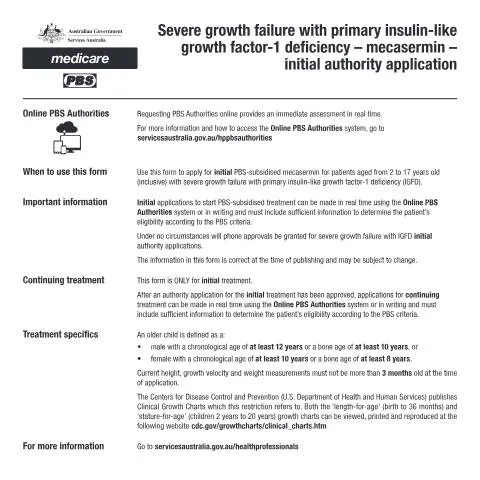
The Significance of the PB336 Form in Accessing Vital Medications
When dealing with health challenges, every detail matters. The PB336 form is pivotal for patients suffering from severe growth failure due to primary insulin-like growth factor-1 deficiency. This form is an essential gateway for healthcare professionals to initiate the request for mecasermin, a critical medication that can significantly improve a patient’s quality of life. Understanding the nuances of this form is vital for both practitioners and patients, ensuring that all applications are filled out correctly and expeditiously.
Understanding the Legislative Background: A Framework for Patient Care
The PB336 form operates within a broader regulatory environment established by Services Australia, which oversees the provision of health services and payments. This framework aims to guarantee that patients receive necessary treatments under specific conditions, ensuring safety and efficacy. The regulations surrounding the prescribing of mecasermin emphasize the need for clinical justification, which the PB336 form facilitates by requiring health professionals to provide comprehensive details about the patient's condition.
Legislative Considerations
Since the introduction of regulations regarding medications for severe growth disorders, the critical role of forms like PB336 has been underscored in ensuring that only eligible patients receive treatment. This legislation serves to protect patients and guarantee that health services are utilized appropriately. Healthcare professionals must be familiar with these laws to navigate the application process effectively.
Navigating the Application Process: From Submission to Approval
Completing the PB336 form is just one part of a comprehensive application process. Once filled out, the form must be submitted alongside necessary documentation to the appropriate authority. Here’s a streamlined process that health professionals can follow:
- Gather Required Documentation: Before submitting the form, confirm that all necessary documents, such as medical reports and patient history, are ready.
- Complete the PB336 Form: Ensure that every section is filled out accurately, as incomplete forms may lead to delays.
- Submit the Application: Send the form and attachments to Services Australia through the designated channels, preferably electronically for speed.
- Await Response: After submission, monitor for any communication from Services Australia regarding the status of the application.
A Deep Dive into the PB336 Form: Key Sections and Common Pitfalls
The PB336 form consists of several critical sections that require careful attention. A detailed understanding of each part is essential for preventing common mistakes that could result in application delays or denials.
Section Breakdown
| Section | Description | Common Errors |
|---|---|---|
| Patient Information | Includes essential details such as name, address, and Medicare number. | Incorrect or outdated contact information. |
| Diagnosis Information | Details the medical history and current condition related to growth failure. | Failure to provide adequate medical justification. |
| Treatment History | Describes any previous treatments and their outcomes. | Inconsistent treatment timelines or missing treatment records. |
| Prescriber Details | Information about the healthcare professional submitting the application. | Missing registration number or incorrect details. |
Handling Challenges: What to Do When Things Don’t Go as Planned
Submitting the PB336 form does not guarantee approval. There may be instances of application denial, requests for additional information, or even the need for rectifications. Here’s how to handle such situations effectively:
Addressing Denials
- Review the Feedback: Understand the reasons cited for denial, as this will guide your next steps.
- Provide Additional Evidence: If requested, gather further documentation to support the application.
- Reapply or Appeal: Depending on the situation, you may need to resubmit the application or file an appeal against the decision.
Who Should File the PB336 Form? A Look at Patient Profiles
The PB336 form is specifically designed for patients diagnosed with severe growth failure due to primary insulin-like growth factor-1 deficiency. Various profiles may necessitate this application, including:
Patient Categories
- Children: Young patients may require careful consideration, as their growth needs differ from adults.
- Adults: Though less common, some adults might also be diagnosed and in need of treatment.
- Complex Cases: Patients with coexisting conditions might face additional hurdles in the application process.
Each of these categories may require specific documentation or justification to ensure that the PB336 form is accurately completed and processed.
Special Circumstances: Applications from Unique Patient Situations
Some patient profiles present unique challenges that warrant special consideration when completing the PB336 form. These situations may include:
International Patients
For patients who are not Australian citizens or permanent residents, additional documentation may be required to demonstrate eligibility for treatment. It is crucial to liaise with Services Australia for specific guidelines regarding these cases.
Minors and Guardianship
In cases where the applicant is a minor, the form must be filed by a parent or legal guardian. This adds a layer of responsibility for guardians to ensure all information is accurately represented and that consent is adequately provided.
Preparing Your Documents: A Checklist for Success
When applying for access to mecasermin through the PB336 form, having the right documentation prepared can make all the difference. Here’s a checklist to ensure nothing is overlooked:
- Current medical report outlining the patient’s condition.
- Documentation of previous treatments and their effectiveness.
- Identification documents for the patient, including Medicare details.
- Any supplementary information requested by Services Australia.
Thorough preparation can significantly enhance the chances of a successful application outcome.
Conclusion: The Path Ahead with the PB336 Form
Understanding the intricacies of the PB336 form is essential for health professionals and patients navigating the complexities of severe growth failure treatment. By following the outlined processes, carefully preparing documentation, and being ready to address challenges, both patients and healthcare providers can work together to ensure timely access to the necessary medications.
Understanding Severe Growth Failure and IGF-1 Deficiency
Severe growth failure can be a significant concern for children, often leading to various health complications. One of the primary causes identified is the deficiency of insulin-like growth factor-1 (IGF-1), a crucial hormone for growth and development. In Australia, addressing this issue requires a comprehensive understanding of the medical criteria and the associated administrative processes for treatment authorization.
IGF-1 deficiency can manifest in various ways, such as stunted growth and developmental delays. Medical professionals typically perform a series of evaluations, including blood tests and growth assessments, to diagnose this condition accurately. Once diagnosed, the treatment often involves mecasermin, a recombinant form of IGF-1, which is administered to help stimulate growth in affected children.
Understanding the nuances of this deficiency, along with the specific criteria for the approval of mecasermin under the Pharmaceutical Benefits Scheme (PBS), is vital for parents and guardians navigating the initial authority application process. It is essential to work closely with healthcare providers, ensuring that all necessary documentation and evidence are gathered to support the application.
Navigating the Initial Authority Application (Form PB336)
The initial authority application for mecasermin, encapsulated in form PB336, can be a complex procedure. It is imperative for applicants to be well-versed in the form's requirements and how to present the medical history compellingly. The application requires detailed information about the child's medical condition, treatment history, and any previous interventions. This allows Services Australia to assess the need for the medication and determine eligibility for subsidized access.
When completing the PB336 form, families must ensure that all sections are filled out accurately, providing comprehensive medical records that clearly outline the diagnosis of IGF-1 deficiency. This includes growth charts, hormone level tests, and previous treatment responses. Engaging with a healthcare professional familiar with the PBS application process can significantly enhance the chances of a successful application.
Moreover, applicants should be aware of the importance of including supporting letters from specialists, detailing the medical necessity of mecasermin for their child's growth. These letters should articulate the potential benefits of the treatment and why alternatives may not be suitable. By doing so, families can create a robust application that addresses all necessary criteria, ultimately facilitating a smoother approval process.
Post-Approval: Ongoing Requirements and Monitoring
Once the initial authority application for mecasermin has been approved, it is crucial for families to understand the ongoing requirements and monitoring procedures associated with its use. The Australian healthcare system emphasizes regular follow-ups and assessments to ensure that the treatment remains effective and that any side effects are promptly addressed.
Patients receiving mecasermin will typically undergo periodic growth assessments and laboratory testing to monitor IGF-1 levels and evaluate response to treatment. These assessments are vital for both the effectiveness of the medication and the health status of the child. Families should maintain open communication with their healthcare team, scheduling regular appointments to discuss any concerns and adjustments that may be necessary in the treatment plan.
Furthermore, it is essential for families to stay informed about any changes to the PBS regulations or eligibility criteria that may impact continued access to mecasermin. This includes understanding how to navigate any potential re-application process if the treatment needs to be reassessed at a later date, ensuring that all paperwork is prepared and submitted in a timely manner.
In summary, successfully managing severe growth failure with primary IGF-1 deficiency through the administration of mecasermin involves a comprehensive understanding of both the medical and administrative aspects of treatment. Through careful preparation of the initial authority application and commitment to ongoing monitoring, families can significantly enhance their child's growth outcomes.