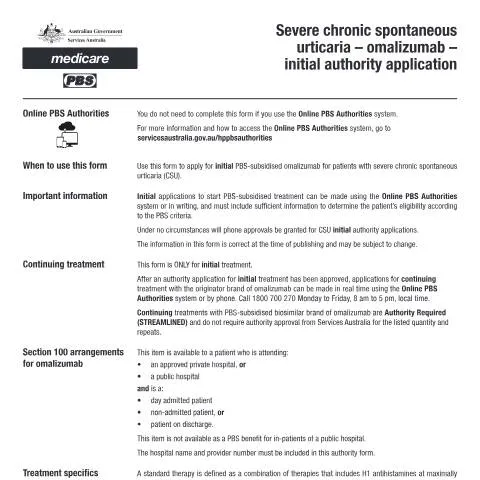
Understanding the Significance of Form PB223 in Chronic Urticaria Management
Chronic spontaneous urticaria (CSU) can be a debilitating condition, often requiring careful management and specific treatments to mitigate symptoms that can severely affect the quality of life. In Australia, one of the key treatments for CSU is omalizumab, a monoclonal antibody that has been shown to be effective in reducing urticaria symptoms for patients who do not respond adequately to conventional therapies. To facilitate access to this treatment, healthcare professionals must navigate the administrative process, notably through the completion and submission of the Severe Chronic Spontaneous Urticaria - Omalizumab - Initial Authority Application Form (PB223) provided by Services Australia.
The Pathway to Accessing Omalizumab: A Timeline
Understanding the timeline associated with the PB223 form is crucial for both healthcare providers and patients. Here’s a breakdown of the process that unfolds from the moment the application is submitted:
- Initial Consultation: The patient should have undergone an assessment by their healthcare professional to determine if omalizumab is the appropriate next step.
- Form Completion: The healthcare provider completes the PB223 form with the necessary clinical details and justification for treatment.
- Submission: The form can be submitted either online via myGov or through conventional postal services. The method of submission can influence processing times.
- Review Period: After submission, the application will enter a review phase during which Services Australia verifies the information provided and assesses eligibility.
- Outcome Notification: Applicants will be notified of the outcome, typically within a specified timeframe. If approved, the patient can commence treatment.
Each step is critical, and delays at any stage could impact the patient’s treatment plan.
Factors Impacting the Processing Time
The processing time for applications can vary based on several factors:
- Completeness of Application: Incomplete forms or missing information can lead to delays.
- Volume of Applications: High submission volumes can result in longer processing durations.
- Complex Cases: Applications requiring additional clinical information may take longer to assess.
Therefore, ensuring thorough and accurate completion of the form is paramount to expedite the process.
Decoding the Submission Process: Online vs. Paper
While healthcare professionals might prefer the traditional paper submission method, the shift towards online processes has brought about significant advantages. Here’s a comparative overview:
| Submission Method | Advantages | Considerations |
|---|---|---|
| Online (via myGov) |
|
|
| Paper Submission |
|
|
Behind the Scenes: Regulatory Framework Supporting PB223
The usage of form PB223 is anchored in Australia’s healthcare framework, specifically designed to ensure that patients with severe chronic spontaneous urticaria have access to necessary treatments while maintaining rigorous standards of evidence-based medicine. The relevant guidelines and protocols established by Services Australia ensure that the application process aligns with national healthcare objectives.
Healthcare professionals need to be aware of the following key elements:
- Clinical Guidelines: The Therapeutic Goods Administration (TGA) provides clinical guidelines that influence the approval and usage of medications like omalizumab.
- Funding Framework: Omalizumab falls under the Pharmaceutical Benefits Scheme (PBS), meaning that its access is governed by specific criteria that must be met as outlined in the PB223.
This regulatory backing is essential for maintaining the integrity of treatment protocols and ensuring that patients receive effective care.
What Happens When Applications Are Denied?
Receiving a denial for the PB223 application can be disheartening for both patients and healthcare providers. However, it is crucial to understand the options available following a negative outcome:
- Review Process: An application can be reviewed based on additional evidence or clarifications that can substantiate the need for treatment.
- Resubmission: If the initial application lacked certain details, healthcare providers can amend the submission and resubmit it alongside any supporting documentation.
- Patient Advocacy: In some cases, seeking the assistance of patient advocacy groups can provide additional support and guidance through the appeals process.
Being proactive in these scenarios can significantly influence the chances of eventual approval.
Common Reasons for Application Rejection
Understanding why applications might be denied can help healthcare providers better prepare for success. Typical reasons include:
- Insufficient clinical evidence: Lack of documentation supporting the diagnosis and previous treatment failures.
- Non-compliance with PBS criteria: Failure to meet the specific criteria for funding under the Pharmaceutical Benefits Scheme.
Healthcare professionals must ensure that all clinical details are thoroughly documented to avoid these pitfalls.
Impact on Patients: Rights and Responsibilities
The submission of the PB223 form not only initiates the potential for treatment but also encapsulates a set of rights and responsibilities for patients and their healthcare providers:
- Patient Rights: Patients have the right to access necessary medications provided that they meet the set criteria. Transparency regarding the application process and outcomes is also a fundamental right.
- Healthcare Provider Responsibilities: Practitioners must provide accurate and complete information in the application, advocate for their patients, and remain informed about the latest treatment guidelines.
Maintaining clear communication between patients and healthcare providers is essential for navigating the complexities of the healthcare system effectively.
Final Thoughts on the PB223 Application Journey
The completion and submission of the Severe Chronic Spontaneous Urticaria - Omalizumab - Initial Authority Application Form (PB223) represent a vital step in the management of chronic urticaria. A thorough understanding of the application process, the regulatory framework, and the implications of the submission for patients can empower healthcare professionals and patients alike. While the journey may come with challenges, the potential for improved patient outcomes makes the effort worthwhile.
Understanding the Treatment and Management of Severe Chronic Spontaneous Urticaria
Severe chronic spontaneous urticaria (CSU) is characterized by the recurrent appearance of hives or welts on the skin that can persist for six weeks or longer, without any identifiable trigger. Omalizumab, a monoclonal antibody that targets IgE, has emerged as a pivotal treatment option for patients who do not respond adequately to antihistamines. Before proceeding with an application for initial authority to access omalizumab, it is essential to understand its mechanism of action, the treatment protocol, and the expected outcomes.
When using omalizumab, it is crucial for patients to be under the supervision of a healthcare professional experienced in managing chronic urticaria. The treatment typically starts with an initial dose administered subcutaneously, with subsequent doses tailored based on the patient's response. While many experience a significant reduction in hives and associated symptoms, it is essential to monitor for any potential side effects, including anaphylaxis, although this is rare.
Moreover, managing expectations is vital; while omalizumab can significantly improve quality of life, it may not completely eliminate symptoms for all patients. Regular follow-ups should be scheduled to reassess the treatment's efficacy and any adverse effects encountered.
The Initial Authority Application Process for Omalizumab: Key Considerations
The application for the initial authority to access omalizumab (PB223) via the relevant health authority is a critical step for patients suffering from severe chronic spontaneous urticaria. Understanding the requisite documentation and the criteria for approval can streamline this process. Typically, the application will require detailed clinical information, including a thorough history of the patient’s urticaria, previous treatments attempted, and the efficacy of those treatments.
Healthcare providers must ensure that all relevant clinical evidence is submitted, including any laboratory tests conducted, that might support the need for omalizumab. Furthermore, the application form may request details on concomitant medications and the patient’s overall health status, which is critical for assessing the appropriateness of omalizumab as a treatment option.
The application will be reviewed by the health authority, which may take several weeks. It’s paramount for patients to stay in communication with their healthcare provider during this period to monitor for any updates or additional requests for information. In cases where the application is declined, a healthcare provider can assist in understanding the reasons for this decision and guide patients through the options available for appeal or reconsideration. Documentation of any prior treatments and their outcomes is often essential in these discussions.
Impact of Treatment on Quality of Life and Patient Support Resources
Severe chronic spontaneous urticaria can significantly impact a patient's quality of life, leading to challenges in daily activities, work, and even social interactions. The introduction of omalizumab as a treatment option has been transformative for many patients, allowing for improved management of their symptoms. However, the journey does not end with obtaining the medication.
Patients are encouraged to engage with support resources, including local and national patient advocacy groups. These organizations often provide a wealth of information, emotional support, and community connections for individuals facing chronic health conditions. They can also offer guidance on navigating the healthcare system, understanding patient rights, and connecting with peers who share similar experiences.
Furthermore, mental health support is an essential component of managing a chronic condition. Patients may experience anxiety or depression related to their symptoms and the unpredictability of flare-ups. Many healthcare providers recommend psychological support alongside medical treatment, helping patients to develop coping strategies and resilience.
Finally, the role of education cannot be overstated. Patients should take the initiative to educate themselves about their condition, potential triggers, and the latest research surrounding treatments for CSU. Engaging with healthcare professionals can help patients make informed decisions about their treatment options and empower them in their healthcare journey.