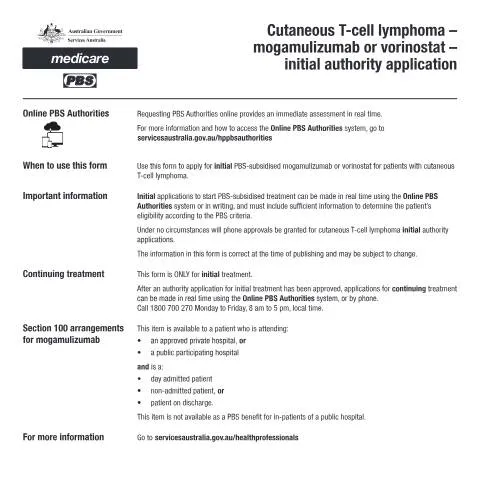
Understanding the Context of PB216 in Cancer Treatment Authorization
When dealing with the complexities of managing cutaneous T-cell lymphoma (CTCL), healthcare professionals must navigate a series of administrative steps to secure necessary treatments for their patients. The PB216 Cutaneous T-cell lymphoma - mogamulizumab or vorinostat - initial authority application form plays a pivotal role in this process. It serves as a formal request for approval to access specific medications under the Australian health system, crucial for practitioners aiming to provide the best care for their patients.
Initiating the Application Process: Key Triggers
The application process for medications such as mogamulizumab or vorinostat begins when a healthcare professional identifies a patient who meets the clinical criteria for these treatments. This decision is often influenced by:
- Diagnosis Confirmation: A definitive diagnosis of CTCL is crucial, along with a detailed understanding of the patient's medical history.
- Previous Treatment Outcomes: Documenting previous therapies that have failed to yield effective results can bolster the case for requiring these specific treatments.
- Clinical Guidelines: Adhering to established clinical guidelines that support the use of these drugs is essential for a successful application.
Recognizing these triggers not only facilitates the completion of the PB216 form but also ensures that all necessary information is gathered before submission.
Dissecting the PB216 Form: Components and Requirements
The PB216 form is structured to gather comprehensive information about the patient and the clinical rationale for the treatment request. Each section serves a distinct purpose:
- Patient Information: This section necessitates accurate demographic details, including the patient’s Medicare number and Tax File Number (TFN), which are critical for identity verification and billing purposes.
- Clinical Details: Healthcare providers must provide a detailed account of the patient's condition, including staging, prior treatments, response to those treatments, and any relevant comorbidities.
- Proposed Treatment Plan: Clearly outlining the medication dosage, administration schedule, and expected duration of treatment is vital to justifying the application.
Completing this form accurately is crucial; omissions or inaccuracies can lead to delays or denials in treatment authorization.
Submission Pathways: From Healthcare Provider to Services Australia
Once the form is completed, the next step involves submitting it to Services Australia. It's essential to be aware of the submission pathways:
- Online Submission: For those registered with myGov, the form can often be submitted electronically, streamlining the approval process.
- Mail Submission: Alternatively, it can be sent via traditional mail, though this method may prolong processing times.
Upon submission, healthcare providers should maintain a record of the application and any communications regarding the status of the request.
Awaiting the Decision: What Happens After Submission?
After the PB216 form is submitted, it enters a review process conducted by Services Australia. Here’s what to expect:
- Assessment Period: The application will undergo a thorough review based on the provided information, aiming to validate the need for the requested treatment.
- Communication of Outcome: Once a decision is reached, the healthcare provider will be notified, typically through the same channel used for submission.
If the application is approved, authorization for the treatment will be granted, and the healthcare provider can proceed with the treatment plan. In case of a denial, a detailed explanation will accompany the decision, which may allow for an appeal under the Administrative Decisions (Judicial Review) Act 1977 (Cth).
Specific Cases: Navigating Complex Situations
There are instances where the application process may become more intricate, particularly for special patient categories:
- Patients Under 18: For minors, consent requirements differ, necessitating the involvement of a guardian or parent in the application process.
- Patients with Non-Standard Conditions: Those with complicated medical histories may need additional documentation or endorsements from specialist practitioners.
- Emergency Treatments: In urgent circumstances, expedited processing may be available, but this typically requires direct communication with Services Australia.
Understanding these special considerations can enhance the likelihood of securing timely treatment approval.
The Impact of the PB216 Form on Patient Care
Completing and submitting the PB216 form can have significant implications for patient care:
- Access to Life-Saving Treatments: Timely approval can mean the difference between effective management of CTCL and prolonged suffering for the patient.
- Financial Considerations: Approval allows patients to access medications that, without government funding, could be prohibitively expensive.
- Continuity of Care: The authorization process supports ongoing treatment strategies, ensuring patients receive necessary therapies without disruption.
Moreover, adherence to the correct procedures can empower healthcare providers in advocating for their patients’ needs effectively.
A Historical Perspective: Regulation and Framework Behind PB216
The framework governing the PB216 form and its application lies within a broader historical context of healthcare regulation in Australia. The regulatory landscape has evolved to ensure that patients receive safe and effective treatments while allowing for rigorous review processes to prevent misuse of healthcare resources.
Historically, the demand for equitable access to innovative therapies has influenced the development of rules and forms like the PB216. This progression underscores the necessity for ongoing dialogue between healthcare providers, regulatory bodies, and patients to ensure that the system meets the needs of all stakeholders.
Conclusion: Advocate Effectively Through the PB216 Process
Understanding every facet of the PB216 form—from its purpose to the nuances in its completion—enables healthcare professionals to be effective advocates for their patients. Every detail counts in ensuring that patients with cutaneous T-cell lymphoma receive timely and necessary treatments. By being informed and prepared, providers can navigate the administrative landscape confidently, significantly impacting patient outcomes.