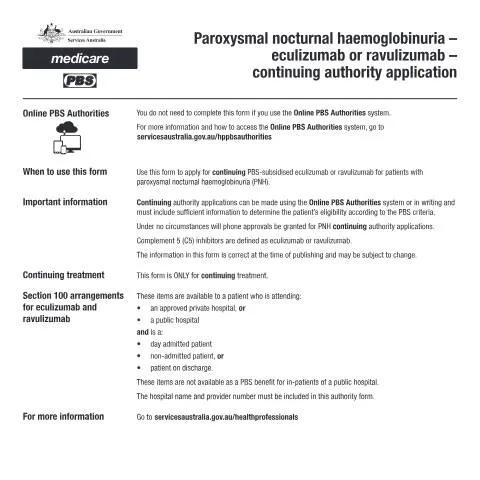
Navigating the PB328 Document: A Critical Step for Patients with Paroxysmal Nocturnal Hemoglobinuria
For individuals living with paroxysmal nocturnal hemoglobinuria (PNH), the pathway to receiving essential treatment can often feel overwhelming. The Continuing Authority Application Form for Eculizumab or Ravulizumab (PB328) is a pivotal document in this journey, serving as a bridge between patients and the healthcare services they require. But what does this form entail, and how does one navigate the complexities of its completion and submission? This article delves into the intricacies of the PB328 form, outlining its importance, the audience it serves, and the procedural steps involved in its processing.
Understanding the Regulatory Framework Behind PB328
The PB328 form is situated within a broader context established by Australia’s healthcare regulations. Specifically, it aligns with policies set forth by Services Australia, which are designed to ensure that patients with specialised medical conditions like PNH can access necessary medications with minimal bureaucratic hurdles.
Paroxysmal nocturnal hemoglobinuria is a rare, life-altering blood disorder. The treatment options, namely eculizumab and ravulizumab, are expensive and are classified under the Pharmaceutical Benefits Scheme (PBS), making it critical for patients to submit the PB328 form accurately to gain access to these treatments. The legal foundation for this administrative process is laid out in various legislative frameworks, primarily aimed at ensuring patients receive timely assistance and support.
Who Is Required to Submit the PB328 Form?
The submission of the PB328 form primarily concerns individuals diagnosed with PNH who are already under treatment with either eculizumab or ravulizumab. However, there are several layers to this requirement:
- Current Patients: Those who are already receiving treatment and need to apply for a continuation of medication.
- New Patients: Individuals who are starting treatment for the first time must obtain prior approval before beginning therapy.
- Health Professionals: Prescribing physicians must ensure the form is filled out correctly, as inaccuracies can lead to delays.
Understanding this segmentation is vital, as it helps streamline the application process and clarifies who bears the responsibility of submission.
Breaking Down the PB328 Form: Essential Sections and Instructions
Completing the PB328 form requires precision and attention to detail. Each section serves a specific purpose, and understanding these intricacies can significantly affect the approval process. Below is a detailed breakdown of the core sections of the form.
Identifying Patient Information
The initial part of the PB328 form requests comprehensive patient details. This includes:
- Name
- Date of Birth
- Address
- Medicare Number
Each piece of information must be accurate as any discrepancies could result in a processing delay. It’s advisable to double-check each entry against official documents.
Clinical Information Section
This section is particularly crucial, as it outlines the patient's medical history relevant to PNH management. Key components include:
- Diagnosis Confirmation: Ensuring that the PNH diagnosis is documented by a qualified healthcare provider.
- Current Treatment Regimen: Clearly detailing the medication (eculizumab or ravulizumab) being administered, the dosage, and the frequency of administration.
Healthcare practitioners must provide clear indications and recent clinical evaluations to substantiate the application.
Justification for Continued Authority
Patients are required to explain why they need ongoing access to these high-cost medications. This justification is paramount in helping the assessors understand the clinical necessity and the impact of treatment on the patient's quality of life. Points to consider include:
- Clinical Outcomes: Document any improvements in the patient's health since starting the medication.
- Side Effects: Any adverse reactions must be reported as these can influence treatment decisions.
As this is often a subjective area, clear, concise, and factual statements can significantly enhance the application’s strength.
Submission and Processing: What Happens Next?
Once the PB328 form is completed, the next steps involve submission and eventual processing by Services Australia. The submission process can be streamlined through the following steps:
How to Submit the Form
The PB328 form can be submitted through several channels:
- Online Submission: If you have a myGov account linked to Services Australia, this is often the quickest way to submit.
- Mail: Alternatively, you can send the completed form via traditional postal services.
When submitting via post, consider using registered mail to ensure that your application is tracked and confirmed as received.
Processing Times and What to Expect
Upon submission, the processing time for a PB328 application can vary based on several factors, including current workloads at Services Australia. Typically, the assessment process may take several weeks. During this time:
- Monitoring: Keep an eye on any communication from Services Australia, as they may require additional information or clarification.
- Follow-Up: Don’t hesitate to reach out to Services Australia if you have not received confirmation within a reasonable time frame.
Addressing Issues: What If Your Application Is Refused?
Receiving a refusal can be disheartening, but it’s essential to understand that there are options available for patients. If an application for continuing authority is denied, consider the following steps:
Understanding the Reasons for Refusal
Initial communication from Services Australia regarding a refusal should outline the reasons behind the decision. Common issues leading to a refusal might include:
- Inadequate Clinical Evidence: If the supporting medical evidence is insufficient to justify the ongoing use of treatment.
- Incorrect Information: Errors in the patient or clinical information provided can lead to a denial.
Appealing the Decision
Patients have the right to appeal decisions made by Services Australia. The appeals process typically involves:
- Requesting a Review: This can be initiated through the Administrative Appeals Tribunal (AAT) if the initial decision stands.
- Providing Additional Evidence: This may involve gathering further clinical documentation or expert opinions to support the appeal.
Engaging with a healthcare provider during this stage can also enhance the chances of a successful appeal.
Unique Situations: Navigating Complex Cases
While the PB328 form is designed for a general audience, it’s important to consider unique circumstances that may affect the application process:
Minors and Guardianship Issues
For patients under the age of 18, particular attention must be given to the legal guardians involved in the submission process:
- Guardian Consent: Ensure that the form is signed and submitted by a legal guardian.
- Additional Documentation: Include any relevant supporting documents that affirm the guardian’s authority to act on behalf of the minor.
Non-Citizen Residents and Visa Holders
Individuals on temporary visas or those without permanent residency may face different challenges. Key considerations include:
- Eligibility for PBS: Confirm if you meet the eligibility criteria for PBS subsidised medicines.
- Documentation of Residency: Ensure that all documentation regarding your residency status is in order to avoid processing delays.
Common Pitfalls: Avoiding Errors During the Application Process
Completing the PB328 form accurately is paramount for a seamless application process. Here are some common pitfalls to avoid:
Incomplete Sections
Every section of the PB328 form must be addressed. Incomplete forms are likely to be rejected. It’s advisable to:
- Review Each Section: Prior to submission, ensure that each area is filled out fully and accurately.
- Cross-Check Details: Verify that all patient and clinical information corresponds with supporting documentation.
Documentation Requirements
While the PB328 form is crucial, accompanying documentation is equally important. Ensure that the following documents are included:
- Medical Reports: Recent clinical evaluations and letters from healthcare providers.
- Identification Proof: A copy of the patient’s Medicare card and any other identification as required by Services Australia.
The Role of PB328 in the Treatment Journey
The PB328 form represents more than just a bureaucratic step in securing medication; it plays a vital role in the ongoing health management of patients with PNH. The implications of successfully completing this form include:
- Continued Access to Treatment: It allows patients to maintain their medication regimen without interruption.
- Support from Healthcare Providers: Facilitates communication between patients and healthcare professionals, ensuring a collaborative approach to care.
- Financial Assistance: As eculizumab and ravulizumab are high-cost medications, successful approval can ease financial burdens related to treatment.
In conclusion, the PB328 form serves as a critical document for those seeking ongoing treatment for paroxysmal nocturnal hemoglobinuria. Understanding and navigating its requirements can significantly impact the overall healthcare experience for patients.
Understanding Paroxysmal Nocturnal Haemoglobinuria and Its Treatment Options
Paroxysmal Nocturnal Haemoglobinuria (PNH) is a rare, acquired disorder characterized by the destruction of red blood cells, leading to hemolysis, bone marrow failure, and thrombosis. It is caused by a mutation in the PIGA gene, which is essential for the synthesis of glycosylphosphatidylinositol (GPI) anchors. As a result, affected red blood cells lack protective proteins on their surface, making them vulnerable to destruction by the immune system.
Patients with PNH often experience symptoms such as fatigue, abdominal pain, and dark-colored urine, particularly noticeable in the morning. The management of PNH has evolved significantly, especially with the introduction of complement inhibitors like eculizumab and ravulizumab, which target the underlying pathophysiology of the disease.
Eculizumab (a humanized monoclonal antibody) was the first complement inhibitor approved for PNH treatment, while ravulizumab is a newer option with the convenience of longer dosing intervals. Both treatments have been shown to significantly reduce hemolysis and improve quality of life for patients. However, the choice between these two therapies can depend on several factors, including individual patient response, frequency of administration, and potential side effects. Understanding the nuances of these treatment modalities is crucial for health professionals, caregivers, and patients navigating the complexities of PNH.
Navigating the Continuing Authority Application Process for Eculizumab and Ravulizumab
The continuation of therapy with eculizumab or ravulizumab is contingent upon the successful completion of the Continuing Authority Application Form (PB328). This form is critical in ensuring that patients receive uninterrupted access to their prescribed treatment, which is vital for managing PNH effectively.
To complete the PB328 form, healthcare providers must provide detailed information regarding the patient's diagnosis, treatment history, and clinical outcomes. It is essential to clearly outline the reasons why ongoing treatment is necessary, including the patient's response to therapy, the impact on their symptoms, and any side effects experienced with discontinuation of treatment.
Furthermore, the application must demonstrate the absence of alternative treatment options and illustrate the need for continued use of the prescribed therapy. The importance of thorough documentation cannot be overstressed; incomplete or vague submissions may result in delays or denial of approval, putting patients at risk for potential complications arising from treatment interruption.
In addition, understanding the timelines for submission and the potential for review by Services Australia can help streamline the process. It is advisable to track submission status through the myGov platform, allowing for timely follow-ups if needed.
Patient Support and Resources for Living with PNH
Living with PNH can be challenging, both physically and emotionally. Patients and their families often require comprehensive support beyond medical treatment to navigate the complexities of this rare disease. Various resources and support networks are available to assist individuals affected by PNH in managing their condition effectively.
One of the primary resources includes patient advocacy groups that focus on rare blood disorders. These organizations often provide education, emotional support, and community forums where patients can connect with others who understand their experiences. Additionally, they may offer workshops and informational sessions about PNH, treatment options, and coping strategies.
Healthcare providers play a crucial role in offering ongoing support and guidance. Regular consultations with specialists in hematology and access to counseling services can help patients address the psychological aspects of living with PNH, including anxiety and depression that may arise due to their condition.
Moreover, understanding and utilizing financial resources is essential for patients managing the costs associated with long-term treatment. Patients are encouraged to explore options for financial assistance provided by the government, insurance companies, or non-profit organizations dedicated to supporting individuals with rare diseases.
Ultimately, creating a robust support system that encompasses medical, emotional, and financial aspects can significantly enhance the quality of life for individuals with PNH and their families.