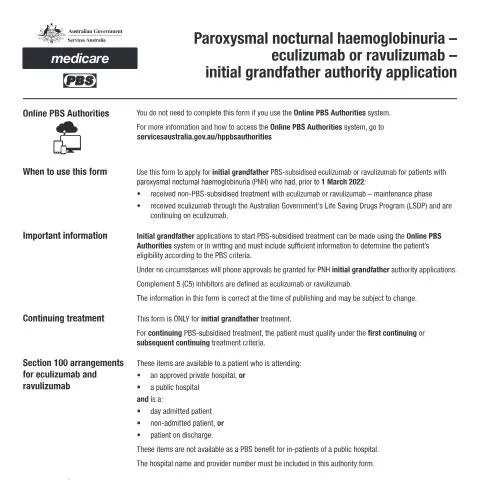
Navigating the Paroxysmal Nocturnal Haemoglobinuria Authority Application Process
For individuals diagnosed with paroxysmal nocturnal haemoglobinuria (PNH), access to specific treatments like eculizumab or ravulizumab can significantly improve quality of life. However, securing funding for these medications through the initial grandfather authority application (form PB329) requires a thorough understanding of the application process. This document plays a pivotal role in ensuring that eligible patients receive the necessary financial support for their treatment, and it is crucial to navigate this path carefully.
Key Stakeholders in the Application Process
The execution of the PB329 form involves several key parties:
- Patients: Individuals suffering from PNH must initiate the application process by submitting the relevant form.
- Health Professionals: Medical practitioners play a vital role, as they must provide accurate information and support the application with relevant medical documentation.
- Services Australia: The agency responsible for reviewing applications and determining eligibility for medication funding.
Understanding the Role of Health Professionals
Health professionals must ensure that they are well-informed about the specifics of PNH and the treatments available. Their involvement is crucial, as they need to provide comprehensive medical details in the application, including:
- Diagnosis Details: Clearly stating the patient's diagnosis, including any relevant medical history.
- Treatment Plans: Outlining the proposed treatment plan with eculizumab or ravulizumab, including dosage and frequency.
- Supporting Evidence: Providing necessary documentation that attests to the patient’s condition and the therapeutic necessity of the requested drugs.
Chronology of the Application Journey
The process from the moment a patient decides to apply for funding to receiving a decision can be intricate. Here’s a structured outline of what to expect:
- Diagnosis: A confirmed diagnosis of PNH by a qualified health professional.
- Form Preparation: Health professionals complete the PB329, ensuring all sections are filled out accurately.
- Submission: The application is submitted to Services Australia for review.
- Review Process: Services Australia evaluates the application, which may take several weeks.
- Decision Notification: The patient is informed of the outcome, including any additional steps if the application is successful.
Importance of Accuracy in Completion
Completing the PB329 form accurately is paramount. Inaccuracies or incomplete information can lead to delays or even rejections. Here are critical components of the form to pay attention to:
| Section | Description | Common Pitfalls |
|---|---|---|
| Patient Information | Collects basic details about the patient, including contact and demographic information. | Missing or incorrect details can hamper communication. |
| Diagnosis | Requires clear documentation of PNH diagnosis. | Incomplete medical history can lead to denial. |
| Treatment Information | Details on proposed medication dosage and schedule. | Inconsistent information with medical records may raise red flags. |
Unique Considerations for Vulnerable Groups
Certain demographics may face additional challenges in navigating the application process. This includes:
- Minors: Applications on behalf of minors must be handled by a parent or guardian, which can require additional documentation.
- Non-Citizens: Temporary residents or individuals with uncertain status may have specific eligibility criteria that differ from citizens.
- Urgent Cases: Patients in immediate need of medication may require expedited processing, necessitating clear communication with Services Australia.
Document Requirements for Special Cases
For special cases, additional documentation may be necessary to support the application:
- Guardian/Parent Consent: For minors, formal consent documentation must be attached.
- Visa Information: Non-citizens may need to provide visa details or evidence of residency status.
- Urgent Medical Reports: In cases of urgency, a letter from a health professional may expedite processing.
Institutional Framework and Regulatory Background
The need for the PB329 form is grounded in a broader regulatory framework designed to ensure that Australians have access to necessary medical treatments. The process is influenced by:
- Administrative Decisions (Judicial Review) Act: This law provides patients with the right to appeal decisions made by Services Australia.
- Health Insurance Act: Governs the funding of certain medications, including those prescribed for serious conditions like PNH.
The Review Process Explained
Understanding how decisions are made is crucial for applicants. The review process entails:
- Initial Assessment: A preliminary review of the application against established criteria.
- Merits Review: If a claim is denied, applicants have the right to request a merits review through the Administrative Appeals Tribunal (AAT).
- Notification of Outcome: Communication of the decision, including reasons for approval or denial, is sent to the applicant.
Moving Forward Post-Application
Once the application is submitted and a decision is received, the patient should be prepared for the next steps:
- If Approved: The patient can begin the treatment as prescribed, with funding in place.
- If Denied: The applicant has the option to appeal the decision, providing additional evidence or clarifications as necessary.
- Ongoing Monitoring: Regular communication with health professionals is essential to ensure that treatment remains effective, and to facilitate any future applications or reviews.
Staying Informed and Connected
For patients and health professionals alike, staying informed about changes in health policies and funding criteria is vital. Regularly checking updates from Services Australia and participating in relevant health forums can provide essential insights into navigating the complexities of the healthcare system.
The Bigger Picture: Integrating the Application into Healthcare Services
The PB329 form is not an isolated document but part of a larger ecosystem that connects patients, healthcare providers, and administrative entities. Understanding its role within the healthcare system can empower patients and practitioners alike, ensuring they navigate treatment options effectively. As such, it is important to foster collaboration between all parties to streamline processes and improve outcomes for individuals affected by PNH.
This proactive approach can significantly enhance the patient experience and ensure that those in need can access life-saving treatments without unnecessary bureaucratic delays.
Understanding Paroxysmal Nocturnal Haemoglobinuria (PNH) in the Australian Context
Paroxysmal Nocturnal Haemoglobinuria (PNH) is a rare, acquired hemolytic anemia that arises from a mutation in hematopoietic stem cells leading to the abnormal survival of red blood cells. In Australia, patients with PNH often experience a range of complications including chronic fatigue, thrombosis, and renal issues, which necessitate rigorous management strategies. The Australian healthcare system has made significant strides in providing comprehensive treatment options for PNH, notably through the availability of monoclonal antibodies such as eculizumab and ravulizumab. These treatments are pivotal in the management of PNH and require careful consideration when applying for funding through the Pharmaceutical Benefits Scheme (PBS).
To effectively navigate the complexities surrounding PNH treatment in Australia, it is essential to understand the characteristics of the disease, its symptoms, and the various treatment pathways available. Patients typically present with symptoms such as dark-colored urine, especially in the morning, as well as symptoms of anemia like pallor, shortness of breath, and dizziness. Additionally, the increased risk of thrombosis can lead to life-threatening conditions, making timely diagnosis and intervention critical.
Impact on Daily LifeLiving with PNH can significantly impact an individual's quality of life. The unpredictable nature of symptoms and the chronic fatigue associated with the condition can hinder daily activities and overall well-being. Psychological support, lifestyle modifications, and collaborative care with healthcare providers play a crucial role in managing the condition holistically. Patients are encouraged to maintain open communication with their treating teams to monitor symptoms and optimize treatment plans.
Application Process for PBS Authority - A Step-by-Step Guide
Applying for the Pharmaceutical Benefits Scheme (PBS) authority, specifically for eculizumab or ravulizumab, requires careful preparation to ensure that all necessary information is accurately provided. The initial Grandfather Authority application form (PB329) can be intimidating for some; however, understanding the requirements and navigating the process can streamline approval. Here’s a breakdown of the steps involved:
Gather Required DocumentationBefore filling out the PB329 form, it is essential to gather all relevant documentation. These may include:
- Medical history detailing the diagnosis of PNH, including laboratory test results confirming the diagnosis.
- Details of previous treatments attempted, including response to those treatments.
- Information about related complications, such as thrombosis, that could impact treatment decisions.
Completing the FormThe PB329 form is available online via myGov, ensuring that patients or their healthcare providers can access it easily. When completing the form, it’s critical to provide:
- Accurate personal information, including the patient’s Tax File Number (TFN) to facilitate identification.
- Comprehensive details of the clinical evidence supporting the use of eculizumab or ravulizumab. This may involve citing clinical guidelines or studies.
- Justification for the choice of treatment, particularly if prior therapies have failed.
Once the form is completed, review it thoroughly to ensure there are no omissions or errors. Submitting an incomplete application can delay the approval process significantly.
Submission and Follow-UpAfter submission, patients should expect a response from Services Australia, which manages the PBS approvals. It is advisable to keep a record of the submission date and any correspondence received. If there is a delay in response, a follow-up call to inquire about the application status can often provide peace of mind. Patients should also be aware that in some cases, additional information may be requested by the approving body, and timely responses can facilitate a quicker resolution.
Key Considerations for Ongoing Treatment and Monitoring
Once the PBS authority has been granted, ongoing treatment with eculizumab or ravulizumab requires careful monitoring and management. This entails regular consultations with healthcare providers to assess the efficacy of the treatment and manage any potential side effects or complications that may arise.
Routine MonitoringPatients should be aware of the importance of routine blood tests and clinical assessments to monitor their hemoglobin levels and ensure that their PNH is adequately controlled. These evaluations are essential for timely detection of any potential complications such as thrombosis or infections that can occur due to the immunosuppressive nature of these therapies.
Coping MechanismsLiving with a chronic condition like PNH can be challenging; thus, it’s beneficial to engage in support networks. Various organizations in Australia provide resources and support for PNH patients, including forums for sharing experiences and coping strategies. Such support can enhance emotional well-being and provide practical tips for managing day-to-day challenges.
Future Directions in PNH TreatmentThe field of hematology is continuously evolving, with ongoing research into new therapies and treatment modalities for PNH. Patients are encouraged to stay informed about emerging treatments and clinical trials that may provide additional options for management. Participating in clinical trials can not only give patients access to cutting-edge therapies but also contribute to the development of future treatments for PNH.