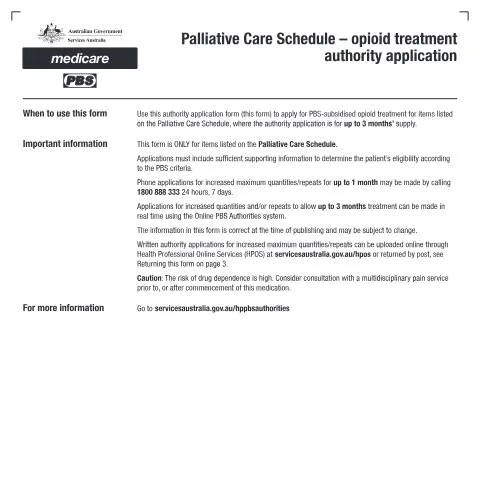
Navigating the PB306 Form: Your Key to Palliative Care Access
When it comes to managing medication for patients requiring palliative care, the Palliative Care Schedule - opioid treatment authority application form (PB306) plays a crucial role. Designed to facilitate the prescription of opioids for individuals facing terminal illnesses, this document is not merely administrative; it serves as an essential tool for healthcare providers. Understanding its nuances is vital for health professionals involved in the care of these patients.
The Ins and Outs: Who Needs This Form?
This application form is particularly relevant for practitioners who are authorized to prescribe opioid medication under the Palliative Care Schedule. Typically, this includes:
- General practitioners (GPs)
- Specialists in palliative care
- Oncologists
- Hospice and palliative care nurses
Solely designed for health professionals, the PB306 form is distinct from other health-related applications. It is specifically tailored for those managing patients in palliative care, focusing exclusively on opioid treatments. Understanding its specific context is crucial for proper application.
Dissecting the Form: Essential Sections Explained
The PB306 form comprises several sections that require careful attention and precise completion. Below is a breakdown of the key sections and what needs to be provided:
- Patient Information: Ensure that all demographic details—such as name, DOB, and address—are accurate. Common pitfalls include misspellings and incorrect date formats.
- Medical Details: Here, clinicians must provide comprehensive medical history. Incomplete or vague descriptions may lead to delays in processing.
- Prescribing Details: Specify the type and dosage of opioid requested. It’s essential to align these with current clinical guidelines to avoid complications.
- Signature and Declaration: This section involves the clinician's signature, affirming the accuracy of the information provided. It is critical; any discrepancies may result in rejection.
While each section may seem straightforward, particular attention must be paid to detail. For instance, ensure that all medical history is documented in chronological order to provide a clear patient timeline.
Gathering Supporting Documents: What You Need
In addition to the PB306 form, several supplementary documents might be required to support the application. Here’s a brief overview of the typical documents needed based on various scenarios:
| Scenario | Supporting Document |
|---|---|
| New Patient | Referral letter from a specialist |
| Existing Patient with Changes | Discharge summary from the hospital |
| Clinical Assessment Required | Assessment report from palliative care team |
It’s advisable to check with Services Australia for any updates or specific requirements pertaining to supporting documents, as these can vary based on patient circumstances.
Submission Channels: Where and How to File
Once the PB306 form and all necessary documents are complete, the next step is submitting them. There are several channels available:
- Online Submission: The most efficient method, allowing for immediate processing. Ensure you have a myGov account linked to Services Australia.
- Postal Submission: If filing by mail, double-check that documents are properly sealed and sent to the correct address. This method may extend processing times.
- In-Person Submission: For urgent cases, visiting a local Services Australia office can expedite the process. However, appointments may be required.
The choice of submission method can significantly impact processing times, so consider the urgency of the patient's needs when deciding how to proceed.
Timelines and Follow-Up: What to Expect After Submission
After submitting the PB306 form, the next step involves understanding the review and decision timelines. Typically, the processing can take several weeks depending on factors such as the completeness of the application and the current workload at Services Australia.
Patients and health professionals should remain proactive during this period. Following up can provide insights into the status of the application:
- Initial Acknowledgment: Expect a confirmation of receipt within a week. If not received, check submission channels.
- Review Process: The review may involve consultations or requests for additional information.
- Final Decision: Notifications will be sent via preferred communication methods about the approval or need for further action.
It’s essential to keep patients informed throughout this process to manage their expectations and ensure they have the necessary support in place.
Addressing Challenges: What to Do in Case of Issues
Sometimes, applications may not proceed as planned. Understanding potential issues can help practitioners navigate these challenges effectively. Here are common issues and corresponding actions:
- Application Rejection: If a rejection occurs, carefully review feedback provided for rectification. You can also request a merits review through the Administrative Appeals Tribunal (AAT).
- Missing Information: If notified of incomplete details, respond promptly. This minimizes delays in processing and reduces patient discomfort.
- Unclear Communication: If the communication from Services Australia is vague, contacting their helpline can clarify expectations and next steps.
Understanding these potential hurdles can empower practitioners to respond quickly and maintain continuity of care for their patients.
Understanding the Distinction: PB306 vs. Similar Forms
The PB306 form is often confused with other application forms related to medication access or health services. However, it has unique aspects that set it apart:
- Specificity to Opioid Treatment: Unlike general medication application forms, PB306 focuses specifically on opioid treatment under palliative care.
- Professional-Only Submission: This form is exclusive to health professionals, unlike patient-centric applications for medication access.
- Regulatory Compliance: The PB306 adheres to specific regulations under the Palliative Care Schedule, which may not apply to other forms.
Being aware of these distinctions can aid health professionals in selecting the correct form for their patients’ needs and ensuring compliance with regulatory frameworks.
Final Tips for Health Professionals: Optimizing the PB306 Experience
Successfully completing and submitting the PB306 form requires careful consideration and diligence. Here are some final tips for health professionals:
- Stay Updated: Policies can change. Regularly check with Services Australia for the latest information.
- Use Clear Language: When filling out the form, ensure that all responses are clear and easily understandable.
- Keep Records: Maintain copies of submitted forms and any correspondence for future reference.
By following these guidelines, health professionals can enhance their efficiency in managing palliative care cases and ensure their patients receive timely support.
Understanding the Palliative Care Schedule
The Palliative Care Schedule (PCS) is an essential part of Australia’s healthcare landscape, designed specifically to support individuals with life-limiting illnesses. This scheme is crucial for ensuring that patients receive the appropriate care and pain relief they need during their final stages of life. It outlines various services that can be offered by healthcare providers, including general practitioners (GPs), specialists, and palliative care teams.
The PCS includes a range of item numbers that correlate with different types of care, consultations, and interventions. Each item provides specific guidelines on how and when care should be administered, as well as the requirements for billing. For instance, when healthcare providers use the PCS, they can claim higher rebates for services rendered to patients under palliative care. This is particularly beneficial as it encourages more healthcare professionals to engage in palliative care practices. It’s important to familiarize oneself with the specifics of the PCS, as the funding can significantly impact the quality of care provided.
One key aspect of the PCS is its focus on holistic care, which considers not only the physical but also the emotional and psychological needs of patients and their families. This approach can include pain management, psychosocial support, and bereavement counselling. It's a reminder that palliative care isn't just about managing physical symptoms but also about improving the overall quality of life.
Accessing Opioid Treatment through PB306
For healthcare providers to access the benefits of the Palliative Care Schedule, especially concerning opioid treatments, completing the PB306 application form is a crucial step. This form serves as an authority request for the prescription of opioids for patients undergoing palliative care. The need for opioids in palliative treatment stems from the necessity of managing severe pain and other distressing symptoms common in life-limiting conditions.
When completing the PB306 form, several important factors must be considered. Firstly, healthcare providers should ensure that all patient details are accurately recorded and that the specific medical condition justifying the use of opioids is clearly outlined. This includes any supporting documentation that can substantiate the medical need for opioid therapy. Providers must also indicate their professional qualifications and experience in managing patients requiring palliative care, as this can affect the approval of the application.
It's worth mentioning that the PB306 form must be submitted through the appropriate channels, usually via the myGov platform. This online submission process streamlines the application and helps to ensure that all necessary information is collected efficiently. Once the application is approved, it allows healthcare providers to prescribe opioids under the PBS (Pharmaceutical Benefits Scheme), significantly reducing out-of-pocket expenses for patients. However, it's essential for providers to maintain accurate records of opioid prescriptions and patient responses to treatment, as this information may be required for future reviews.
Challenges and Considerations in Palliative Care Opioid Management
While the availability of opioid treatments for palliative care patients is a significant advantage, it is not without challenges. One of the primary concerns is the balancing act between effective pain management and the risks associated with opioid use, including dependency and potential side effects. Healthcare providers must navigate these complexities carefully to ensure their patients receive the best possible care.
Education plays a critical role in this process. Healthcare providers should stay informed about the latest guidelines and evidence regarding opioid use in palliative care. This includes understanding the appropriate dosages, potential interactions with other medications, and recognizing signs of opioid misuse. Continuous professional development and training on these matters can greatly enhance the quality of care provided to patients.
Additionally, communication with patients and their families is paramount. Providers must discuss the goals of pain management openly, ensuring that patients understand the potential benefits and risks associated with opioid therapy. Establishing a collaborative approach where patients feel involved in their treatment plans can lead to better outcomes and increased satisfaction with care.
Moreover, healthcare providers need to be aware of the regulatory environment surrounding opioid prescriptions, including reporting and monitoring requirements. Adhering to these regulations not only protects the patients but also safeguards the providers from potential legal repercussions. The Australian Commission on Safety and Quality in Health Care offers guidelines that can be beneficial for healthcare professionals to follow in this regard.
In conclusion, managing opioid treatment within the context of palliative care in Australia involves navigating a complex landscape of regulatory requirements, ethical considerations, and clinical best practices. By utilizing resources like the PB306 application form and adhering to the Palliative Care Schedule, healthcare providers can significantly enhance the quality and effectiveness of care provided to patients facing life-limiting illnesses.