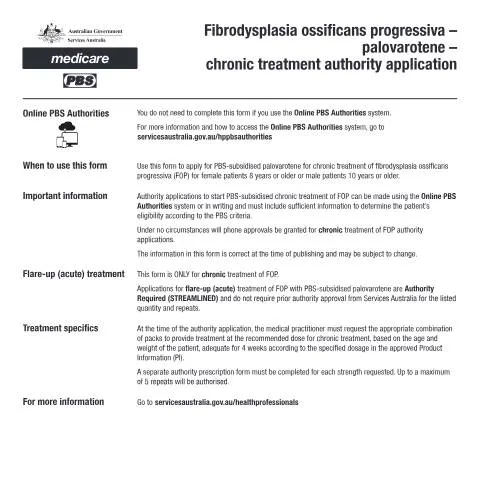
Navigating the PB387 Form: A Vital Step in Chronic Treatment Approval
When managing the complexities of Fibrodysplasia Ossificans Progressiva (FOP), patients often face myriad obstacles in accessing necessary treatments. One significant hurdle is the requirement to submit the Fibrodysplasia ossificans progressiva - palovarotene - chronic treatment authority application form (PB387). This document plays a crucial role in the approval process for chronic treatment, but many may not fully grasp its implications or how to navigate it effectively.
The Journey Begins: Initiating the Application Process
Understanding when and why to fill out the PB387 form is essential. Typically, the need for this document arises when a health professional determines that palovarotene is a suitable treatment option for a patient diagnosed with FOP. Health professionals must understand that submitting this form is not merely a formality; it is a critical step towards securing access to this specialized medication.
For patients and their families, the initiation of this application is often prompted by a combination of medical necessity and the desire for improved quality of life. The timeline kicks off with a consultation with a healthcare provider who is familiar with FOP and its treatment options.
Essential Role of Health Professionals
Health professionals must possess a thorough understanding of the PB387 form’s requirements and the broader context of the treatment authority process. Specifically, they need to be adept in:
- Assessing the patient’s medical history and current condition
- Determining the suitability of palovarotene for long-term management of FOP
- Providing comprehensive documentation to support the application
Breaking Down the PB387: Key Sections of the Form
The PB387 form comprises several sections, each designed to capture specific information critical to the application’s success. Here’s a detailed look at what each section entails and common pitfalls to avoid.
Patient Information
The initial section requires basic information about the patient, including:
- Name
- Date of birth
- Contact details
- Medicare number
This information must be accurate, as any discrepancies can lead to delays. It is essential for the applicant to verify that all details are spelled correctly and correspond with official documents.
Medical History and Diagnosis
The next component necessitates a detailed account of the patient’s medical history and the diagnosis of FOP. This section is critical, as health authorities rely heavily on it to assess the legitimacy of the request. Key elements to include are:
- Date of diagnosis
- Previous treatments attempted
- Current symptoms and their impact on daily life
Providing thorough and honest details can significantly enhance the likelihood of approval. However, applicants should be mindful not to omit any relevant information, as this could undermine the application.
Treatment Justification
In this section, the health professional must outline why palovarotene is the recommended treatment. This justification should include:
- Expected benefits of treatment
- Potential side effects
- Alternatives considered
It is imperative to back up claims with clinical evidence and patient-specific data, as the decision-makers will scrutinize this section closely.
Submitting the Application: Where and How
Once the PB387 form is completed, the next step involves submission. It is crucial to understand that this is not simply a matter of mailing a document. The submission process must adhere to specific guidelines established by Services Australia.
Submission Channels
Health professionals can typically submit the PB387 form through the following channels:
- Via secure online platforms
- By fax, ensuring compliance with privacy regulations
- In-person at designated Services Australia offices
Each submission method may have varying processing times, so professionals should advise their patients accordingly.
What Happens After Submission?
After the PB387 form is submitted, it enters a review process. Applicants should be prepared for a waiting period during which Services Australia will assess the application. This stage is pivotal, as it ultimately determines whether access to palovarotene will be granted.
Common outcomes include:
- Approval with specified conditions
- Request for additional information or clarification
- Denial with reasons provided
In the event of a denial, it is essential to review the feedback closely and consider avenues for appeal or re-submission, particularly if new information becomes available.
The Implications of Successful Approval
Securing approval through the PB387 form opens the door to essential treatment options for patients suffering from FOP. Understanding the implications of this approval can help patients and their families navigate their next steps effectively.
Access to Treatment
Upon approval, patients gain access to palovarotene, which may significantly improve their quality of life. This access includes:
- Receiving the medication through specified healthcare providers
- Regular monitoring by healthcare professionals to assess treatment efficacy
Patients should also be aware of potential follow-up requirements, such as ongoing reports to Services Australia regarding treatment progress and health outcomes.
Rights and Responsibilities
While approval is a significant milestone, it also comes with specific rights and responsibilities for patients and health professionals. Understanding these can help in managing expectations and ensuring compliance:
- Patients have the right to transparent communication regarding their treatment.
- Health professionals must ensure accurate documentation and reporting.
Failure to adhere to these responsibilities may jeopardize future treatment approvals or access.
Distinguishing the PB387 from Related Forms
Many individuals may confuse the PB387 form with other medical forms related to treatment approvals. Understanding the distinctions between these forms is crucial for proper navigation of the healthcare system.
Comparison with Similar Forms
| Form Code | Description | Specific Use |
|---|---|---|
| PB387 | Chronic treatment authority application for palovarotene | Specifically for Fibrodysplasia Ossificans Progressiva |
| PB123 | General treatment authority application | Broad treatment applications, not specific to FOP |
| PB456 | Medicare application for specific medications | General access to medications covered by Medicare |
This comparison illustrates that the PB387 form is uniquely tailored to the needs of patients with FOP, allowing for a focused approach in securing necessary treatments.
Understanding the Patient Profile: Who Benefits Most
The PB387 form is predominantly utilized by patients diagnosed with FOP, but it is essential to recognize the diverse profiles within this group. Different patient needs and circumstances may influence how the form is completed and submitted.
Variations in Patient Profiles
Some critical considerations regarding patient profiles include:
- Age of diagnosis: Children, adolescents, and adults may have different considerations.
- Stage of disease progression: Newly diagnosed patients may require different documentation than those with advanced conditions.
- Previous treatment history: Patients who have undergone other treatments may need to provide additional information.
These variations necessitate a tailored approach when completing the PB387 form, ensuring that all relevant information is accurately represented.
Timeline of the PB387 Process: From Submission to Decision
Understanding the timeline associated with the PB387 application is key for patients and healthcare providers alike. A clear timeline helps manage expectations and plan subsequent steps in patient care.
Key Dates and Milestones
The timeline generally follows this progression:
- Initial Consultation: The process begins with a health professional consultation.
- Form Completion: Patients and health professionals work together on the PB387 form.
- Submission: The completed form is submitted through the appropriate channels.
- Review Period: Services Australia typically reviews the application (duration may vary).
- Decision Notification: Applicants receive communication regarding the outcome.
- Initiation of Treatment: Upon approval, patients can begin medication promptly.
This timeline reinforces the importance of timely submission and thorough preparation of the PB387 form, which can significantly affect the overall process.
Final Thoughts: Maximizing the Impact of Your Application
In a landscape where timely access to medications can influence the health outcomes of patients with Fibrodysplasia Ossificans Progressiva, effectively navigating the PB387 form is paramount. By understanding its nuances, patients and health professionals can work collaboratively to ensure the best possible outcomes.
Ultimately, the successful completion and submission of the PB387 form not only represent a bureaucratic requirement but also a pivotal step in improving the quality of life for those affected by this rare condition. Remaining vigilant throughout the process and maintaining open lines of communication with Services Australia and healthcare providers will facilitate a smoother path toward treatment approval.
Understanding Fibrodysplasia Ossificans Progressiva (FOP)
Fibrodysplasia Ossificans Progressiva (FOP) is an extremely rare genetic disorder characterized by the abnormal development of bone in areas where bone normally doesn't exist, such as muscles, tendons, and ligaments. This condition is attributed to a mutation in the ACVR1 gene, leading to the inappropriate activation of bone-forming cells (osteoblasts). Individuals with FOP typically experience episodes of soft tissue swelling and inflammation, known as flare-ups, which may precede the formation of heterotopic ossification (HO) — the formation of bone in soft tissues. These episodes can be triggered by minor injuries, which complicates daily activities and increases the risk of morbidity.
Given the rarity of FOP, obtaining a diagnosis can be challenging, as many healthcare professionals may not be familiar with the condition. Diagnosis usually involves a clinical evaluation, a detailed patient history, and genetic testing to confirm the ACVR1 mutation. Early diagnosis is crucial, as it allows for more informed management of the condition and can help mitigate the frequency and severity of flare-ups.
Palovarotene: A Novel Treatment Option
Palovarotene is a revolutionary treatment option that has been explored for managing FOP. It is a selective retinoic acid receptor gamma (RARγ) agonist, which has shown promise in preclinical and clinical studies in reducing the formation of HO. The drug works by inhibiting the activity of pathways that lead to the abnormal bone formation associated with FOP. It is essential to understand that while palovarotene shows potential benefits, it is not a cure for FOP. Instead, it aims to manage symptoms and prevent the development of new bone formations.
Currently, palovarotene is undergoing various phases of clinical trials, and its efficacy and safety profile are still being evaluated. Patients interested in palovarotene should discuss with their healthcare provider whether they qualify for ongoing clinical trials or if they should consider applying for access through the Chronic Treatment Authority Application Form (PB387).
Completing the Chronic Treatment Authority Application Form (PB387)
The Chronic Treatment Authority Application Form (PB387) is a crucial document for patients seeking ongoing treatment with palovarotene for FOP. The application process can be tedious; thus, understanding how to effectively complete the form can significantly improve the likelihood of approval. The form requires comprehensive medical information, and applicants must provide detailed records of their diagnosis, treatment history, and current management strategies.
When preparing your application, it’s essential to include:
- Medical History: A thorough account of the patient's FOP diagnosis, including the onset of symptoms, any previous treatments, and their outcomes.
- Current Treatment Regimen: A detailed description of any existing medications, therapies, or interventions the patient is undergoing, along with their effectiveness.
- Supporting Documentation: This may include letters from specialists, imaging results, and genetic testing reports confirming the diagnosis of FOP.
Be prepared for the possibility that supplementary information may be requested by the authority reviewing the application. Ensuring that the form is completed accurately and comprehensively will assist in expediting the review process. Once submitted, applicants can track the status of their application via their myGov account, where they can access all relevant updates and communications from Services Australia.