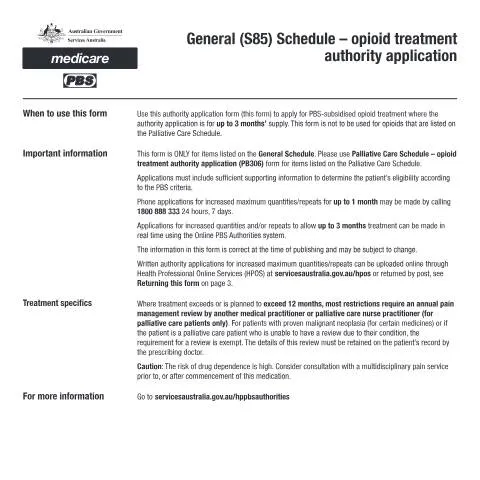
Understanding the Role of the General (S85) Schedule - Opioid Treatment Authority Application Form (PB294)
In the complex landscape of Australia's healthcare system, the General (S85) Schedule - Opioid Treatment Authority Application Form (PB294) stands as a crucial document for health professionals seeking to provide comprehensive care for patients undergoing opioid treatment. This form facilitates the authority required for practitioners to prescribe and dispense opioid pharmacotherapy, a vital component in the management of opioid dependence.
The Context of Opioid Treatment in Australia
Opioid dependence has emerged as a significant public health issue in Australia, necessitating the need for structured treatment protocols. The opioid treatment authority application, represented by the PB294 form, plays a pivotal role in ensuring that qualified health professionals can administer necessary treatments to patients effectively and safely. By regulating opioid prescriptions, this form helps to mitigate the risks associated with opioid misuse, providing a framework for responsible prescribing practices.
Who Needs to Submit the PB294 Form?
Primarily, this application form is aimed at medical practitioners who wish to obtain authority to prescribe opioid pharmacotherapy under the S85 schedule of the Pharmaceutical Benefits Scheme (PBS). Health professionals must meet specific criteria, including demonstrating qualifications, understanding treatment protocols, and ensuring patient management plans are adequately outlined.
Eligibility Criteria for Health Professionals
- Medical Qualifications: Practitioners must hold valid medical qualifications recognized in Australia.
- Understanding of Treatment Protocols: Applicants should demonstrate knowledge about opioid dependence treatment, including relevant guidelines.
- Patient Management: A clear outline of how patients will be managed throughout their treatment is essential.
Delving into the Various Sections of the Form
The PB294 form comprises several critical sections, each demanding precise and accurate information. It is essential to navigate these sections carefully to avoid common pitfalls that could delay the processing of the application.
Section Breakdown
| Section | Description | Pitfalls to Avoid |
|---|---|---|
| Personal Details | Includes name, qualifications, and contact information. | Inaccurate contact information can lead to application delays. |
| Practice Details | Information about the practice location and setup. | Not providing a clear location may raise concerns about accessibility. |
| Patient Management Plans | Detailed outlines of how patients will be treated. | Vague management plans can lead to application rejections. |
| Signature and Declaration | Confirmation of the information provided. | Omitting the signature can render the application invalid. |
Navigating the Application Submission Process
Once the PB294 form is completed, practitioners must determine the appropriate submission method. There are several avenues for submission, each with its own nuances.
Submission Avenues
- Online Submission: Accessible via myGov, this method is generally faster and allows for immediate confirmation of receipt.
- Paper Submission: While still available, paper submissions may take longer due to postal delays and manual processing.
- In-Person Submission: Submitting at a local Services Australia office can provide immediate feedback but requires an appointment.
What Happens After Submission?
Upon submission, the processing time for the PB294 form can vary, impacting when a practitioner can begin prescribing opioid treatment. Understanding the timeline is critical for both the practitioner and their patients.
Processing Timeframes
- Acknowledgment of Receipt: Usually received within a few days if submitted online.
- Assessment Period: Generally, allow several weeks for the application to be reviewed.
- Notification of Outcome: Practitioners will be informed via their preferred contact method about the decision made.
Handling Refusal or Missing Information
Receiving a refusal notice or being informed of missing information can be daunting. However, understanding how to address these situations can alleviate stress and streamline the process of resubmission.
Steps to Take After Refusal
In the event of a refusal, practitioners should:
- Review the Refusal Letter: Carefully examine the reasons outlined for the decision.
- Gather Required Documentation: Address any missing documents or clarifications as indicated.
- Submit an Appeal: If necessary, practitioners have the right to appeal the decision through the appropriate channels.
Common Challenges in Completing the PB294 Form
Completing the PB294 form can pose challenges, especially for practitioners unfamiliar with the specific requirements. Being aware of these challenges can help mitigate errors.
Common Challenges
- Overlooking Specific Details: Each section is crucial; missing even minor details can affect the overall application.
- Documentation Errors: Submitting incorrect or outdated qualifications can lead to automatic rejection.
- Misunderstanding Terminology: Ensuring clarity in terms and definitions used in the form is essential to avoid misinterpretation.
The Importance of Timely Application and Follow-Up
Practitioners must be proactive in both the application process and any required follow-up. Timeliness can significantly impact patient care and treatment initiation.
Best Practices for Timely Follow-Up
- Set Reminders: Keeping track of important dates can help ensure that follow-ups are conducted promptly.
- Maintain Communication: Regularly contacting Services Australia can provide updates on the application status.
- Prepare for Queries: Being ready to respond to any inquiries from the assessment team can expedite the process.
Final Considerations for Health Professionals
Successfully navigating the PB294 form and the associated application process is critical for health professionals involved in opioid treatment therapy. It is a step towards providing essential care for patients grappling with opioid dependence while adhering to the regulatory frameworks set forth by the Australian healthcare system.
Further Support and Resources
For more detailed guidance on the PB294 form and its requirements, health practitioners are encouraged to connect with Services Australia or consult the relevant health department resources. Accessing professional networks may also provide invaluable insights and peer support throughout the application process.
Understanding the General S85 Schedule and Its Relevance to Opioid Treatment
The General S85 Schedule is a critical framework within the context of opioid treatment in Australia, specifically relevant for healthcare providers and patients navigating the complexities of opioid dependency management. This schedule allows for the lawful prescribing and dispensing of certain medications under specific conditions, focusing on the safe and responsible use of opioids. It’s vital to recognize that this schedule is part of the broader regulatory landscape aimed at addressing the opioid crisis while ensuring that patients have access to necessary treatments.
When applying for authority under the General S85 Schedule, healthcare professionals must understand the various stipulations that come with it. This includes demonstrating medical necessity and having comprehensive patient management plans in place. The application process requires detailed documentation, and it's essential for practitioners to maintain accurate and up-to-date patient records, as these can be pivotal if the application is subject to review.
Furthermore, understanding the local jurisdictional variations is crucial. Each state or territory may have specific requirements or additional guidelines regarding the General S85 Schedule. Health professionals should consult local health departments or professional bodies for these nuances, ensuring compliance with all applicable laws and regulations.
Step-by-Step Guide to Completing the PB294 Application Form
Completing the PB294 application form for opioid treatment authority requires attention to detail and a thorough understanding of the necessary components. Here’s a step-by-step guide to assist practitioners in successfully navigating this process:
Step 1: Gather Necessary Documentation - Before getting started with the form, make sure to collect all relevant patient information, including demographics, medical history, and any previous treatments related to opioid use. A comprehensive overview of the patient’s condition will facilitate a stronger application.
Step 2: Familiarize Yourself with the Form Structure - The PB294 form is organized into multiple sections, each focusing on different aspects of the patient’s treatment plan. Take time to read through each section, understanding what is required and how to best present the information. Pay particular attention to sections that request specifics about the medication to be prescribed and the treatment regime.
Step 3: Detail the Treatment Plan - Clearly outline the proposed treatment plan in the form. This includes specifying the medication dosage, frequency, and duration of the treatment. Be prepared to justify why this regimen is appropriate for the patient based on their medical history and current circumstances.
Step 4: Review and Submit - Once the form is completed, review all sections to ensure accuracy and completeness. Mistakes or missing information can delay the processing of the application. After thorough checks, submit the form through the appropriate channels, as indicated on the application instructions.
Step 5: Follow Up - After submission, it’s advisable to follow up with the relevant authority to check on the status of your application. This ensures that any additional information required can be provided promptly, helping to expedite the approval process.
Compliance and Ongoing Responsibilities After Application Approval
Once the PB294 application is approved and the authority to prescribe has been granted, practitioners must adhere to ongoing responsibilities to ensure compliance with the General S85 Schedule. This includes regular monitoring of the patient's treatment outcomes and adjusting the treatment plan as necessary.
Practitioners should also be aware of their obligations regarding patient education. Patients need to be informed about the risks associated with opioid use, including the potential for dependency and withdrawal symptoms. It’s important to provide clear guidance on how to use the prescribed medication safely and effectively, as well as to establish a plan for monitoring their usage and response to treatment.
Moreover, maintaining comprehensive records of patient interactions, treatment plans, and any changes in the patient's condition is essential. These records not only support ongoing treatment but also ensure compliance with regulatory requirements and facilitate any future reviews or audits by relevant authorities.
It is also wise to participate in continuous professional development regarding opioid prescribing practices. This can enhance knowledge of current best practices and emerging treatments, helping to ensure that the care provided is aligned with the latest evidence-based guidelines.