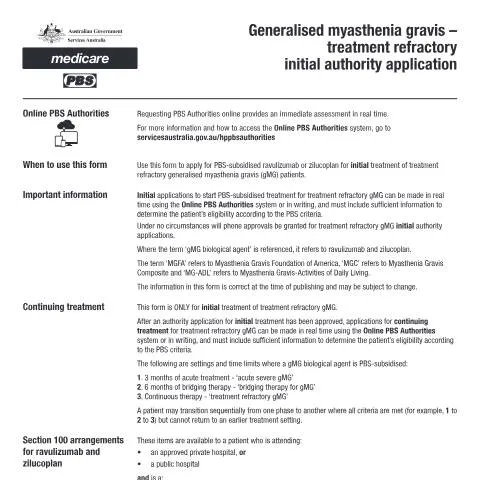
Understanding the PB396 Form: A Vital Step for Patients with Treatment-Refractory Generalised Myasthenia Gravis
When navigating the complexities of health services in Australia, the Generalised Myasthenia Gravis - Treatment Refractory Initial Authority Application Form (PB396) stands out as a critical document for individuals battling this challenging condition. This form plays a significant role in securing access to essential treatments that may not be available under standard pharmaceutical benefits. Understanding its purpose and the nuances of its completion is vital for both patients and healthcare professionals involved in the treatment journey.
Who Needs the PB396 Form? Profiles and Particular Cases
The PB396 form is specifically designed for patients diagnosed with generalised myasthenia gravis who are experiencing treatment resistance. Understanding the profiles of individuals likely to use this form can illuminate its importance and the expected outcomes.
Primary Patients: Adults with Generalised Myasthenia Gravis
Individuals over the age of 18, confirmed to have generalised myasthenia gravis, are the primary recipients of this application process. Often, these patients have tried multiple treatment options without satisfactory results.
Children and Adolescents: Special Considerations
While the primary focus of the PB396 form is on adults, there are circumstances where children and adolescents may need to apply. In such cases, a healthcare professional must represent the patient, ensuring that the application is filled out correctly in line with their unique medical needs.
Identifying Treatment-Refractory Cases
To qualify for the use of the PB396 form, patients must clearly demonstrate that standard therapies have been ineffective. This could include:
- Failure to respond to first-line treatments such as anticholinesterase medications.
- Adverse reactions to currently available treatments.
- Progression of symptoms despite ongoing therapy.
Navigating the Submission Process: Channels and Their Distinctions
Submitting the PB396 form can be accomplished via various channels, each offering distinct advantages and considerations. Understanding these can streamline the process and reduce delays in receiving treatment approval.
Online Submission through myGov
The most efficient way to submit the PB396 form is through the myGov platform. This digital channel allows patients to:
- Complete the form in a user-friendly environment.
- Directly link to their Medicare details for verification.
- Receive timely updates on the status of their application.
Paper Submissions: Traditional but Time-Consuming
For those less comfortable with digital processes, submitting a paper version of the PB396 form is still an option. However, this method can lead to:
- Longer processing times.
- Potential for lost documents during postal transit.
- Delayed communication regarding the application status.
In-Person Submissions: The Face-to-Face Option
Patients may also choose to deliver their application in person at their local Services Australia office. This method offers immediate confirmation of receipt but requires:
- Advance scheduling to avoid long wait times.
- Travel to the nearest Services Australia location.
Gathering Required Documents: Preparation for Success
Completing the PB396 form is only part of the process. Collecting supporting documents and evidence is crucial for a successful application. Below is a breakdown of essential documents based on different patient scenarios.
Standard Documentation Requirements
All applicants should prepare the following:
- Medical records detailing the diagnosis and treatment history.
- Letters from healthcare professionals endorsing the application.
- Any previous application outcomes if applicable.
For Children and Adolescents
If the applicant is a minor, additional documents may be required:
- Proof of guardianship or parental consent.
- Specialist reports tailored to pediatric care.
Complex Cases: Additional Considerations
For patients with unique or complex medical backgrounds, further documentation may be necessary:
- Detailed descriptions of previous treatments and their outcomes.
- Additional tests or diagnostic images that support treatment resistance.
The PB396 Form in the Bigger Picture: Contextualizing Its Role
The PB396 form does not exist in isolation; it is part of a broader healthcare framework aimed at ensuring patients receive necessary treatments. Understanding where this form fits can help applicants appreciate its importance in their treatment journey.
Link to Pharmaceutical Benefits Scheme (PBS)
Applications submitted using the PB396 form are assessed under the Pharmaceutical Benefits Scheme, which aims to provide patients with affordable access to medications. Approval of this form can significantly impact a patient’s ability to access subsidised drugs.
Interplay with Other Health Services
Patients may also find that their applications interact with other health services, including:
- Medicare for coverage of consultations and specialist visits.
- Disability support services if applicable, offering financial assistance during treatment.
Step-by-Step Walkthrough: From Application to Decision
Charting a course from the moment a patient decides to apply for treatment to their eventual decision requires an understanding of the application timeline and key milestones. This walkthrough provides clarity on the expected journey.
Step 1: Completing the Form
Patients begin by accurately filling out the PB396 form, ensuring all sections are completed and necessary documents attached.
Step 2: Submission
Depending on the chosen method, patients will submit their applications via the online portal, by mail, or in person.
Step 3: Acknowledgment of Receipt
Upon submission, patients should receive an acknowledgment confirming the receipt of their application. This confirmation is crucial for tracking progress.
Step 4: Review Process
Services Australia will review the application, which may involve contacting the submitting healthcare professional for additional information or clarification.
Step 5: Decision Notification
Once the review is complete, applicants will receive a decision notification, detailing whether the treatment request has been approved or denied. If denied, reasons will be provided, along with potential next steps for appeal.
Distinguishing the PB396: Avoiding Common Confusions
With a variety of forms available within the healthcare system, confusion can arise regarding the specific purpose of the PB396. Here’s how it stands apart from similar documents.
Comparison with Other Authority Application Forms
| Form | Use Case | Eligibility Criteria |
|---|---|---|
| PB396 | Treatment-refractory Generalised Myasthenia Gravis | Documented treatment resistance |
| PB123 | Chronic Illness Medications | Long-term chronic illness |
| PB456 | Specialised Therapeutics | Specific medical conditions under approved guidelines |
Each form has its own requirements and eligibility criteria, making it essential for applicants to use the correct document to avoid unnecessary delays.
Practical Tips for a Successful Application
For those looking to navigate the process smoothly, there are several practical strategies that can enhance the likelihood of a successful application.
Detailed Documentation
Ensure that all supporting documentation is thorough and addresses the criteria outlined in the PB396 application. A lack of detail can lead to rejection.
Follow-Up Communications
After submission, don’t hesitate to follow up with Services Australia to inquire about the status of the application, which can help clarify any potential issues in a timely manner.
Seek Professional Guidance
Healthcare professionals can provide invaluable assistance throughout the application process. Don’t hesitate to reach out to specialists who understand the specific requirements related to generalised myasthenia gravis and the PB396 form.
By comprehensively understanding the nuances of the PB396 form, patients and healthcare providers can work collaboratively towards securing the necessary treatment options for those in need, ensuring that the journey through the healthcare system is as smooth and efficient as possible.
Understanding the Initial Authority Application Process for Treatment-Refractory Myasthenia Gravis
The application process for obtaining an Initial Authority for treatment-refractory myasthenia gravis through the PBS (Pharmaceutical Benefits Scheme) can seem daunting. This process is specifically designed to ensure that patients with this chronic condition have access to necessary medications that are not available through standard treatment protocols. The PB396 form plays a crucial role in this application, requiring patients and their healthcare providers to provide comprehensive and accurate information to facilitate approval.
To initiate the process, it is essential to understand that treatment-refractory myasthenia gravis refers to patients who have not responded adequately to standard therapies, including oral anticholinesterase medications or immunosuppressive treatments. Healthcare providers must present a compelling case for why the usual treatments have been ineffective, often requiring a detailed history of the patient’s condition and the treatments they have undergone. It is advisable to gather all relevant medical records, including diagnostic tests and previous treatments, to support your application.
When completing the PB396 form, healthcare professionals must include specific clinical evidence and a thorough rationale as to why alternative therapies should be considered. It is not only about detailing the patient's past treatments but also about articulating the medical necessity for the proposed medication. This might include information on how the condition affects the patient’s quality of life, any complications arising from myasthenia gravis, and potential benefits of the requested treatment. Additionally, it may be beneficial to provide supporting documentation from specialists familiar with the patient’s condition.
Common Challenges and Strategies for Success in the Application Process
Even with a well-documented application, patients may encounter common challenges during the approval process for the Initial Authority. One prevalent issue is incomplete or unclear information, which can lead to delays in processing or even denial of the application. To ameliorate this risk, applicants should be meticulous in filling out the PB396 form. Each section must be filled out with precision, ensuring that all requested details are provided, and that the medical justification is articulated clearly.
Another challenge can arise from the medical evidence required to support the application. Healthcare providers must ensure that all documentation, including clinical notes and historical treatment data, is up to date and comprehensive. It may also be helpful to include letters from other healthcare professionals, particularly specialists who can corroborate the patient’s treatment history and the need for the proposed therapy.
If an application is denied, patients have the right to request a review through the Administrative Appeals Tribunal (AAT). In such cases, it’s crucial to seek expert advice and possibly legal representation to navigate the appeals process effectively. Having a thorough understanding of the reasons for the initial denial can provide a strategic advantage when presenting a case at the AAT.
The Role of Pharmacists in Supporting Patients with Myasthenia Gravis
Pharmacists can play a vital role in the treatment journey of patients with myasthenia gravis, particularly those who are navigating the complexities of the Initial Authority application. As well as dispensing medications, pharmacists have the expertise to provide important information about drug interactions, side effects, and how to manage them. This is particularly relevant for patients dealing with multiple medications due to the nature of their condition.
Pharmacists can assist patients in several ways during the application process. They can help patients understand the medications that are being requested, ensuring they know the purpose and the expected outcomes. Additionally, they can provide guidance on how to communicate effectively with healthcare providers about their needs and the significance of the medications in question.
Moreover, pharmacists can educate patients on the importance of medication adherence and the potential consequences of non-adherence, especially in chronic conditions like myasthenia gravis. They can provide practical tips on how to incorporate medications into daily routines and monitor any side effects that may occur, reporting these back to the healthcare team as necessary.
Furthermore, pharmacists can be advocates for their patients, helping to facilitate communication between patients and prescribers and ensuring that all necessary information is conveyed to support the authority application. Their role in this context is multifaceted; they act not only as dispensers of medication but also as educators, communicators, and advocates within the healthcare system.