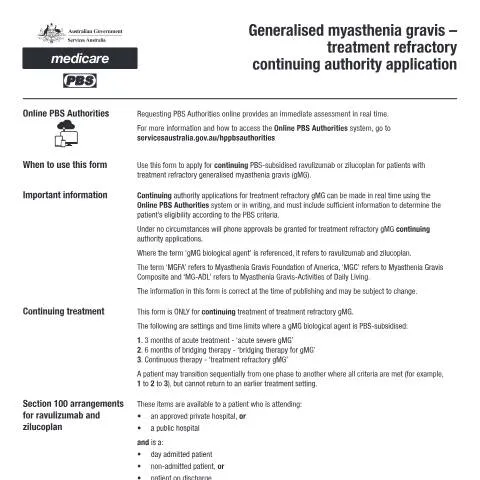
Navigating the PB397 Application: A Critical Step for Patients with Treatment-Refractory Myasthenia Gravis
Living with generalized myasthenia gravis (gMG) can be challenging, particularly when traditional treatments prove ineffective. For those seeking ongoing support from the Australian healthcare system, understanding the PB397 application process is crucial. This official document, known as the Generalised Myasthenia Gravis - Treatment Refractory Continuing Authority Application Form, plays a significant role in unlocking necessary treatments and support for eligible patients.
Understanding the Timeline: Key Dates and What Follows
Timing can significantly impact the processing and approval of the PB397 application. Generally, once a healthcare professional completes the application, there are specific timelines to keep in mind:
Initial Application Submission
- Applications can be submitted at any time. However, early submission is encouraged to ensure continuity of care.
- Upon submission, the processing timeframe typically spans several weeks, during which the application is reviewed by Services Australia.
What Happens After Submission?
After the application is submitted, patients and healthcare providers can expect the following:
- A notification will be sent out to confirm the receipt of the application.
- If approved, ongoing support for treatment will be communicated, including the specifics of coverage and any required follow-up documentation.
- If further information is needed, Services Australia will reach out to the applicant or the healthcare professional.
Who Should Submit the PB397 Form?
This application is specifically designed for individuals diagnosed with treatment-refractory generalized myasthenia gravis. However, various profiles may be involved in the submission process:
Patients with Specific Conditions
- Adults with gMG: Most applications will be submitted on behalf of adult patients experiencing limited response to standard therapies.
- Pediatric Cases: In instances involving children, a parent or guardian must complete the application, ensuring all medical details are accurately represented.
- Complex Cases: Individuals with comorbidities or unique medical histories may need to provide additional context to support their application.
Special Circumstances
Patients who are not Australian citizens or residents may face additional hurdles when submitting the PB397 application. These cases often require more meticulous documentation and a clear demonstration of need for treatment within Australia.
Preparing the Necessary Documentation: A Checklist
The success of the PB397 application largely hinges on the thoroughness of the provided documentation. Here’s how to prepare efficiently:
Essential Medical Documentation
- Diagnosis Confirmation: Ensure that a qualified healthcare professional provides a clear diagnosis of treatment-refractory gMG.
- Previous Treatments: Document all treatments attempted to date, including medications and their effectiveness.
- Current Health Status: A comprehensive report detailing the patient’s current health condition is crucial.
Additional Considerations
In some cases, supplementary reports or assessments may be required. These can include:
- Psychosocial evaluations to understand the broader impact of gMG on the patient’s life.
- Letters from specialists confirming the necessity for ongoing treatment.
Submission Channels: Where and How to Send Your Application
Understanding the various channels for submitting the PB397 application can streamline the process:
Online Submission via myGov
For many, the most convenient method is through the myGov platform, which provides a centralized location for managing healthcare-related applications:
- Log in to your myGov account and navigate to Services Australia.
- Locate the PB397 application form and complete it according to the guidelines provided.
- Ensure that you upload all required documentation before finalizing the submission.
Paper Submission
For those who prefer a traditional approach, the application can also be submitted via post:
- Print and fill out the PB397 form completely.
- Attach all necessary documentation.
- Send your complete application to the designated address provided by Services Australia.
What to Do in Case of Refusal or Request for More Information
Receiving a refusal or a request for additional information can be disheartening, but it’s essential to understand the possible next steps:
Understanding a Refusal
An application may be refused for various reasons, including insufficient documentation or failure to meet specific criteria. In the event of such outcomes:
- Carefully review the refusal notice to understand the specific reasons for the decision.
- Gather any additional required information that can address the concerns raised.
- Consider seeking support from a healthcare provider who can assist in strengthening the application for resubmission.
Responding to Requests for Information
If further information is requested, respond promptly and thoroughly:
- Compile the necessary documents as specified in the request.
- Submit the additional information via the same channel as the original application to maintain consistency.
- Keep a record of all communications for reference.
Managing Your Application: Tracking and Follow-Up
Once the application is submitted, staying informed about its status is essential:
Tracking Your Application
Services Australia provides mechanisms to track the status of your application:
- Online tracking through your myGov account allows real-time updates.
- For paper submissions, it’s recommended to maintain a log of any correspondence sent and received.
Follow-Up Procedures
If there seems to be an undue delay in processing:
- Contact Services Australia directly via their customer service channels. Having your application reference number on hand will expedite this process.
- Maintain professionalism and patience during these interactions, as processing times can vary widely based on workload.
The Regulatory Framework Behind PB397
The PB397 application is steeped in a broader regulatory context that governs healthcare support for Australians. Understanding this framework can empower patients and healthcare professionals alike:
Legislation Overview
The application process is guided by the Administrative Decisions (Judicial Review) Act 1977 (Cth), which ensures that individuals have the right to seek reviews of decisions made regarding their healthcare applications. This includes:
- The ability to appeal decisions made by Services Australia through appropriate channels.
- Merits review options available through the Administrative Appeals Tribunal (AAT) for more complex cases.
The Role of Healthcare Professionals
Healthcare professionals play an instrumental role in this framework, providing the necessary clinical insights that validate the need for treatment:
- They must be familiar with the requirements of the PB397 form to assist patients effectively.
- Understanding the legal context empowers professionals to advocate on behalf of their patients, particularly in cases of appeal.
Conclusion: Empowering Patients through the PB397 Process
Filling out the PB397 application can seem daunting, but it is a vital step toward gaining access to necessary treatments for those affected by treatment-refractory generalized myasthenia gravis. By understanding the timeline, preparing the right documents, knowing the submission channels, and staying informed about the regulatory framework, patients and healthcare providers can navigate this process with confidence. With perseverance and the right information, patients can ensure their voices are heard in securing the support they deserve.
Understanding Generalised Myasthenia Gravis: Symptoms and Implications for Treatment
Myasthenia gravis (MG) is an autoimmune neuromuscular disorder characterized by weakness and rapid fatigue of voluntary muscles. In its generalized form, this condition can lead to significant challenges in daily living. Patients may experience muscle weakness that affects the eyes, face, throat, and limbs. The severity and specific muscles affected can vary widely among individuals, leading to a range of symptoms that may include drooping eyelids, double vision, difficulty swallowing, and impaired mobility.
Understanding the implications of generalized myasthenia gravis is crucial for both patients and healthcare providers. The fluctuating nature of muscle strength in MG often results in periods of exacerbation and remission, complicating the treatment process. Patients may find that certain triggers, such as stress, illness, or specific medications, can worsen their symptoms. For many, managing these triggers becomes an integral part of living with the condition. This is where the relevance of a treatment plan tailored to the individual becomes evident, underscoring the importance of a collaborative approach between patients and their healthcare providers.
Treatment Options for Refractory Cases of Myasthenia Gravis
Treatment for generalized myasthenia gravis typically involves various strategies, depending on the severity and resistance of the condition. The first line of treatment often includes anticholinesterase medications that improve neuromuscular transmission, such as pyridostigmine. However, some patients may experience refractory symptoms that do not respond adequately to these initial therapies.
In refractory cases, alternative therapies such as immunosuppressants (e.g., corticosteroids, azathioprine, or mycophenolate mofetil) may be necessary to reduce the immune response that contributes to muscle weakness. In more severe situations, patients may be candidates for therapies like plasmapheresis or intravenous immunoglobulin (IVIG), which can provide temporary relief by removing antibodies from the bloodstream or altering the immune response.
For patients who do not respond to these treatments, surgical options such as thymectomy, the surgical removal of the thymus gland, may be considered. This procedure has been shown to improve symptoms in a significant number of patients, particularly those with thymoma or other thymic abnormalities.
Completing the PB397 Form: Specific Considerations for Patients
The PB397 form for a continuing authority application is a critical document for patients with treatment-refractory generalized myasthenia gravis looking to access subsidized medications. Completing this form accurately is essential to avoid delays in treatment. It’s important to include all necessary medical documentation that supports the need for ongoing therapy. This may include letters from healthcare professionals outlining the patient’s diagnosis, previous treatments undertaken, and the rationale for continuing medication.
Patients should also be aware of the specific requirements regarding the submission of the PB397 form. This includes ensuring that it is submitted to the appropriate agency, typically the Pharmaceutical Benefits Scheme (PBS). The form may require details such as the patient's Tax File Number (TFN) and Medicare number, and it's advisable to keep copies of all submitted documents for personal records.
In addition to the medical history and treatment details, patients may be asked to provide information on any side effects experienced from previous medications. This could play a significant role in the assessment of the application for ongoing treatment. As the application is reviewed, there may be a need for follow-up communication with the relevant authorities, so staying informed and responsive is key to navigating this process successfully.