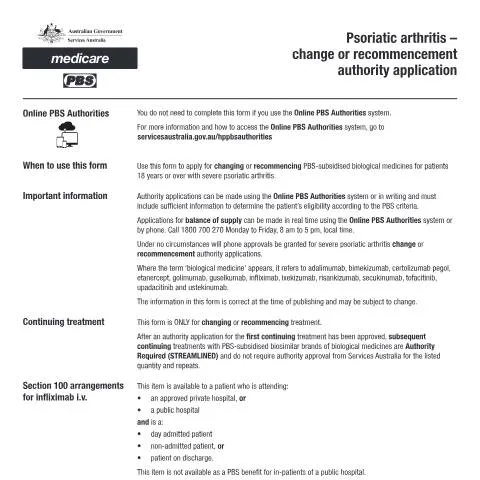
Understanding the Need for PB260: Psoriatic Arthritis Change or Recommencement Authority Application Form
For individuals dealing with psoriatic arthritis, navigating the complexities of health care services can be overwhelming. When a patient's health condition changes or requires a recommencement of treatment, the PB260 form becomes a pivotal document. This form is essential for healthcare providers and patients seeking to manage their treatment effectively under the Services Australia framework.
Who Should Consider Submitting PB260?
The PB260 form is not universally applicable; specific criteria determine who may need to submit it. Here, we delve into the profiles of potential applicants:
- Current Patients: Those already receiving treatment for psoriatic arthritis who may experience a change in their condition.
- New Diagnoses: Individuals recently diagnosed with psoriatic arthritis seeking to initiate treatment.
- Caregivers and Health Professionals: Family members or healthcare providers acting on behalf of patients who need to manage treatment transitions.
- Minors: Patients under the age of 18 may require special considerations and assistance in completing the form.
Case Scenarios Requiring PB260 Submission
Various scenarios underpin the necessity for submitting the PB260 form:
- Change in Treatment Regimen: If a patient's existing treatment is no longer effective and adjustments are needed.
- Resumption of Treatment: When a patient who had previously halted treatment due to side effects or other reasons wishes to recommence.
- Change in Healthcare Provider: Patients switching to a new practitioner who may need to validate the ongoing need for treatment.
Completing the PB260: A Step-By-Step Guide
Filling out the PB260 form requires careful attention to detail. Here’s a breakdown of the steps involved:
- Gather Necessary Information:
- Personal Details: Full name, date of birth, and contact information.
- Medical History: A summary of previous treatments and current health status.
- Supporting Documentation: Any letters or reports from healthcare providers that validate the need for change or recommencement.
- Accessing the Form:
- The PB260 form is available through Services Australia. It is advisable to obtain it online via the myGov portal for the most current version.
- Filling Out the Form:
Complete each section of the form attentively, ensuring that all responses are clear and accurate. Avoid leaving any mandatory fields blank.
- Review: Always double-check the completed form for any inaccuracies or omissions that could delay the process.
- Submission: Submit the form through the specified channel, which may include online submission or mailing it to a designated service center.
Where and How to Submit PB260
Once the PB260 form is completed, the next step is ensuring it reaches the correct office. Here’s how to proceed with the submission:
- Online Submission: For faster processing, consider submitting the form through the myGov portal. This requires a registered myGov account linked to your Services Australia profile.
- Physical Submission: If opting for postal submission, ensure that the envelope is addressed correctly. Use the return address provided in the guidelines of the form.
Who Receives the Form?
The completed PB260 form must be submitted to Services Australia offices. It's important to ensure that the form is sent to the appropriate department that handles health-related applications to avoid unnecessary delays.
What Happens After Submission?
Understanding the timeline and process following the submission of the PB260 form can alleviate anxiety for patients awaiting decisions:
- Processing Time: Typically, after submitting PB260, applicants can expect a response from Services Australia within a specified timeframe. It's essential to set expectations accordingly.
- Notification: Patients will be informed of the decision via mail or through their myGov account, depending on how the application was submitted.
- Follow-Up: Should additional information be required, Services Australia will communicate this to the applicant to expedite the decision process.
Addressing the Uncertainties: What If Your Application is Denied?
Receiving a denial can be disheartening, but understanding the options available is crucial:
- Review the Decision: The first step post-denial is to carefully review the reasons outlined in the notification.
- Request a Review: If you believe the decision was incorrect, you may request a review under the Administrative Decisions (Judicial Review) Act 1977. This formal process allows for reconsideration based on merits.
- Seek Support: Engaging a healthcare provider for additional documentation or a letter of support can strengthen your case during the review process.
Additional Considerations
During the review process, keep in mind the following:
- Timeframes for appeals and reviews can vary, so staying informed about deadlines is crucial.
- Document all communications with Services Australia for reference.
Special Circumstances: Minors and Other Vulnerable Groups
Submitting PB260 for minors or individuals with special needs requires additional steps:
- Parental Consent: A parent or legal guardian must complete the form on behalf of the minor. Their relationship to the child must be clearly indicated in the application.
- Supporting Information: Additional documentation proving guardianship or responsibility may be required to accompany the application.
Conclusion: Empowering Patients through PB260
The PB260 form plays a crucial role in facilitating the management of psoriatic arthritis treatments, especially when circumstances surrounding a patient's health undergo changes. By understanding the nuances of this process, from completion to submission and potential outcomes, patients are better equipped to advocate for their health needs. For individuals facing administrative hurdles, staying informed and proactive is essential in navigating the healthcare landscape in Australia.
Understanding the Psoriatic Arthritis Change or Recommencement Authority Application Process
The Psoriatic Arthritis Change or Recommencement Authority Application Form (PB260) is a crucial document for patients seeking access to medication and treatments specifically for managing psoriatic arthritis. Understanding the intricacies of this form and the application process can significantly impact the outcome of the request. This section will explore the required information, eligibility criteria, and common pitfalls in the submission of PB260.
When completing the PB260 form, applicants must ensure that all relevant medical details are accurately reported. This includes a comprehensive history of their psoriatic arthritis diagnosis, previous treatments undertaken, and the outcomes of these treatments. The treating physician’s report is essential; it should detail the patient’s condition, previous medications prescribed, and the reasoning behind the request for change or recommencement of treatment.
Eligibility criteria may vary based on the specific medications requested and the health status of the patient. It is advisable for applicants to review the PBS guidelines, which outline medications covered under the Pharmaceutical Benefits Scheme (PBS) for psoriatic arthritis. Furthermore, coordinating with healthcare professionals can provide valuable insights into whether the changes being requested align with PBS regulations.
One common pitfall applicants encounter is failing to provide sufficient clinical evidence. In cases where the requested treatment is considered non-standard or experimental, a detailed justification backed by clinical data may be required to support the claim. Therefore, maintaining clear communication with healthcare providers is vital to ensure that all necessary documentation is submitted alongside the application.
Key Considerations for Submitting the PB260 Application
Before submitting the PB260 application, there are essential considerations that applicants should be aware of to improve their chances of a successful outcome. This includes understanding the nuances of the application process, potential timeframes, and the appeals process if the application faces rejection.
Firstly, timing can play a crucial role in the success of your application. It’s important to submit the form at the right time, ideally when the patient's symptoms are exacerbating, to reinforce the need for a change in treatment. Applicants should be proactive in following up on their application status through the Services Australia channels, as this can provide insights into any additional information that may be required.
Secondly, in the event that an application is rejected, understanding the reasons for the denial is critical. Applicants have the right to request a review of the decision. Familiarity with the appeals process under the Administrative Decisions (Judicial Review) Act 1977 (Cth) can empower patients to navigate through bureaucracies effectively. This process allows individuals to challenge the decision based on merits, giving them a chance to present additional evidence or argumentation.
Lastly, engaging with support groups or advocacy organizations specializing in psoriatic arthritis can provide valuable resources and guidance throughout the PB260 application process. Connecting with others who have faced similar challenges can offer insights and strategies that may enhance the application’s effectiveness.
The Role of Healthcare Professionals in the PB260 Application
The involvement of healthcare professionals is paramount in successfully navigating the Psoriatic Arthritis Change or Recommencement Authority Application Form (PB260). Doctors, specialists, and allied health providers not only provide the necessary medical documentation but also play an integral role in communicating the patient’s needs effectively to the authorities.
Firstly, it is essential for healthcare professionals to be well-informed about the PBS guidelines and the criteria for medications available for psoriatic arthritis. GPs or specialists should be prepared to discuss alternative treatments or medication options with their patients, enabling informed decision-making prior to submitting the application. Documentation from these practitioners should clearly articulate the clinical rationale for any requested changes, as well as detailing previous treatment failures.
Moreover, patient-doctor communication is vital. Patients should feel empowered to discuss their symptoms and treatment experiences candidly, ensuring that their healthcare providers have the full picture before completing the PB260 form. This collaborative approach can significantly influence the tone and content of the medical report submitted with the application.
Ultimately, the submission of the PB260 form is a partnership between the patient and their healthcare team. Understanding the roles and responsibilities of both parties can streamline the process and enhance the likelihood of achieving the desired treatment outcomes.