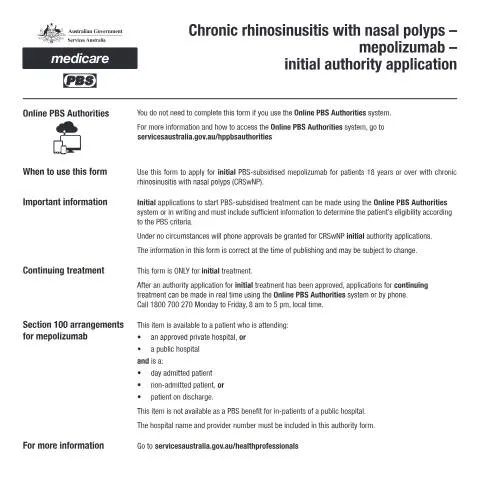
Navigating the PB348 Form: A Comprehensive Guide for Health Professionals
When it comes to managing chronic rhinosinusitis with nasal polyps (CRSwNP), health professionals play a crucial role in ensuring that patients receive the appropriate treatments. The Chronic rhinosinusitis with nasal polyps - mepolizumab - initial authority application form (PB348) is an essential document that facilitates access to the medication Mepolizumab for eligible patients. Understanding how to properly navigate and utilize this form can significantly impact patient care and treatment outcomes.
Who Needs to Submit the PB348 Form?
The PB348 form is specifically designed for health professionals who are responsible for prescribing Mepolizumab to patients diagnosed with CRSwNP. This includes specialists such as:
- Ear, Nose and Throat (ENT) specialists
- Allergists
- Respiratory medicine professionals
- General practitioners with expertise in chronic sinus conditions
Each health professional must ensure that their patients meet the eligibility criteria established by Services Australia. This includes confirming a definitive diagnosis of CRSwNP and that previous treatment options have been exhausted.
Understanding Patient Eligibility: Key Considerations
Eligibility for Mepolizumab under the PB348 application hinges on several factors:
- Confirmed Diagnosis: Patients must have a documented diagnosis of CRSwNP, supported by relevant medical history and test results.
- Previous Treatments: A history of inadequate response to conventional treatments such as intranasal corticosteroids should be established.
- Age Restrictions: This treatment is typically prescribed for adults and adolescents aged 12 years and older, though specific guidelines from Services Australia should be consulted.
Health professionals must carefully assess each case to ensure compliance with these requirements, as incomplete or inaccurate applications can lead to delays or denials of treatment authorization.
Steps to Complete the PB348 Form
Filling out the PB348 form entails a series of methodical steps that are crucial for a successful application. Here’s a breakdown of the process:
- Access the Form: The PB348 form is available through the Services Australia portal, specifically for health professionals registered with myGov.
- Patient Identification: Clearly state the patient’s details, including full name, date of birth, and Medicare number.
- Diagnosis Documentation: Provide comprehensive clinical notes detailing the diagnosis of CRSwNP, including any relevant imaging or endoscopic findings.
- Treatment History: Document previous treatments attempted, including medications or therapies prescribed, and the outcomes of those interventions.
- Health Professional Details: Fill in your qualifications, contact details, and any professional identifiers required by Services Australia.
It's essential that all entries are clear and accurate, as this will facilitate a smoother review process.
Submitting Your Application: Methods and Considerations
Once the form is completed, the next step is to submit it for review. There are several submission methods, each with its own advantages:
- Online Submission: Preferred for its efficiency, applications can be submitted digitally through the myGov portal, allowing for quicker processing times.
- Mail Submission: If online submission is not feasible, the completed form can be sent via postal service to Services Australia. Be mindful of postal delays.
- In-person Submission: For those who prefer direct interaction, forms can be submitted at designated Services Australia offices, ensuring immediate receipt and potential for clarification on any uncertainties.
Whichever method you choose, ensure that you keep a copy of the submitted application for your records, including any reference numbers received upon submission.
Tracking Your Application: What to Expect
After submitting the PB348 form, health professionals can anticipate a review period during which Services Australia will assess the application. Here’s how to effectively track its progress:
- Confirmation of Receipt: Upon submission, you should receive a confirmation email or message via myGov indicating that your application has been received.
- Review Timeline: While specific timelines may vary, requests are typically processed within a few weeks. Regular checking via myGov can provide updates on the status of the application.
- Communication from Services Australia: If further information is required, Services Australia will reach out. Prompt responses to any queries can expedite the process.
Maintaining open lines of communication with the patient is vital as well; they should be informed of the application status and any potential delays.
Responding to Challenges: Handling Denials or Missing Information
In cases where an application is denied or requires additional information, it’s crucial to understand the next steps to take:
- Review the Decision: Carefully read through the denial notice, which will outline the reasons for non-approval.
- Gather Necessary Documentation: If the denial was due to missing information, compile the required documents, including any additional test results or clarifications regarding treatment history.
- Resubmit the Application: You may be able to resubmit the application, addressing the concerns raised in the denial notice. Include a cover letter that outlines how the issues have been resolved.
If the situation escalates or if substantial discrepancies arise, it may be necessary for the patient to seek advice from an advocate or consider pursuing a formal review through the Administrative Appeals Tribunal (AAT).
What If There Are Errors in the Submission?
Errors can happen during the completion of the PB348 form, whether they are typographical mistakes or incorrect information. Here’s how to address them:
- Identify the Error: As soon as you realize there’s a mistake, document what the error is and what the correct information should be.
- Contact Services Australia: Reach out to the agency as soon as possible. They can guide you on whether the error can be corrected informally or if a new application is necessary.
- Follow Up in Writing: If advised to provide formal correction, submit a written request detailing the error and the correction needed. Include any supporting documents.
Timely communication can mitigate the impact of errors on the application’s processing time.
Understanding the Implications of the PB348 Form
The completion of the PB348 form and its subsequent approval carries significant implications for both patients and health professionals. Here are important aspects to consider:
- Access to Treatment: Approval opens the door for patients to receive Mepolizumab, which can lead to substantial improvements in their symptoms and quality of life.
- Financial Considerations: Successfully obtaining authority for this medication may alleviate some financial burdens associated with chronic treatment costs.
- Documentation and Compliance: Proper handling of the PB348 form promotes adherence to treatment protocols and documentation, essential for ongoing patient care and future prescriptions.
Health practitioners should not underestimate the importance of their role in this process, as it ultimately shapes the patient’s experience and outcomes.
Understanding Chronic Rhinosinusitis with Nasal Polyps (CRSwNP)
Chronic rhinosinusitis with nasal polyps (CRSwNP) is a complex and often debilitating condition characterized by prolonged inflammation of the nasal and sinus mucosa. Patients suffering from CRSwNP frequently experience nasal obstruction, loss of smell, and facial pain. The presence of nasal polyps—soft, painless growths on the lining of the nasal passages—further complicates the symptomatology. It's crucial to understand the underlying mechanisms of CRSwNP, which can include genetic, environmental, and immunological factors.
CRSwNP is often associated with other conditions such as asthma, allergies, and aspirin sensitivity, making the management of CRSwNP a multi-faceted challenge. Diagnosis typically relies on a combination of patient history, endoscopic evaluation, and imaging studies. Understanding the patient's profile can also help tailor treatment options, which may range from nasal corticosteroids to surgical interventions. The goal of treatment is to reduce inflammation, alleviate symptoms, and improve quality of life.
The Role of Mepolizumab in CRSwNP Management
Mepolizumab is an anti-inflammatory monoclonal antibody that targets interleukin-5 (IL-5), a cytokine involved in the growth and survival of eosinophils—white blood cells that play a significant role in the inflammatory process associated with CRSwNP. By inhibiting IL-5, mepolizumab effectively reduces eosinophilic inflammation, leading to symptom relief and a reduction in nasal polyp size.
For patients who have not responded adequately to conventional therapies, mepolizumab presents a promising therapeutic option. Clinical trials have demonstrated the efficacy of mepolizumab in reducing nasal polyp size, improving nasal symptoms, and enhancing overall quality of life for individuals diagnosed with CRSwNP. It's important to note that treatment with mepolizumab is typically administered as an injection, and ongoing monitoring by healthcare professionals is essential to assess treatment effectiveness and manage any potential side effects.
As with any medication, determining eligibility for mepolizumab involves a comprehensive assessment of the patient’s medical history, previous treatments, and current symptoms. This thorough evaluation helps healthcare providers make informed decisions regarding the initial authority application for the medication under the Pharmaceutical Benefits Scheme (PBS) in Australia.
Completing the Initial Authority Application Form (PB348)
When seeking access to mepolizumab through the Pharmaceutical Benefits Scheme (PBS), healthcare providers must complete the Initial Authority Application Form (PB348). This form serves as a formal request to obtain approval for a medication that falls under the authority category, ensuring that patients have access to necessary treatments based on specific clinical criteria.
The PB348 form requires detailed information about the patient's medical history, including previous treatments for CRSwNP, the severity of the condition, and any co-existing health issues. It's essential to provide comprehensive and accurate information, as this will be reviewed by the Pharmaceutical Benefits Advisory Committee (PBAC) to determine eligibility for subsidised access to mepolizumab.
In the application process, healthcare providers should focus on detailing the patient's response to previous therapies, including any side effects experienced or reasons for treatment failure. Additionally, any relevant diagnostic test results, such as computed tomography (CT) scans showing sinus involvement or endoscopic findings, should be included. This level of detail will assist in constructing a robust case for the patient's need for mepolizumab.
Once the form is completed, it should be submitted electronically via the myGov platform, where applicable, or sent directly to the relevant health authority for processing. It's advisable for healthcare providers to follow up on the status of the application, as prompt approval is crucial for the patient's treatment timeline.