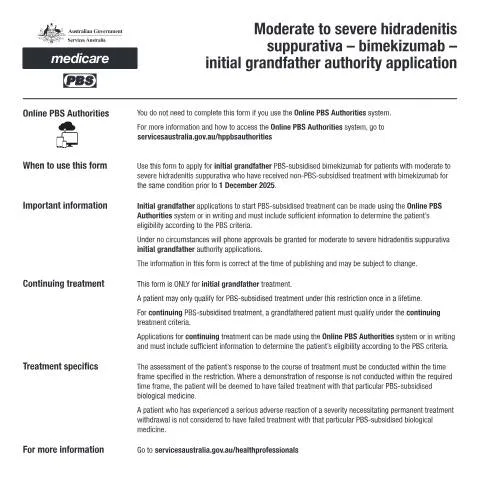
Understanding the Importance of PB364: A Critical Tool for Managing Hidradenitis Suppurativa
For patients suffering from moderate to severe hidradenitis suppurativa, the Moderate to severe hidradenitis suppurativa - bimekizumab - initial grandfather authority application form (PB364) serves as an essential mechanism in accessing necessary medical treatments. This official document, administered by Services Australia, plays a pivotal role in facilitating timely access to bimekizumab, which can significantly enhance the quality of life for those affected. This article delves deeply into the intricacies of the PB364 form, offering guidance for both healthcare professionals and patients navigating the application process.
The Journey Toward Treatment: Why Timing Matters
Understanding the timeline associated with the PB364 form is crucial for both healthcare providers and patients. The process typically begins with the diagnosis of hidradenitis suppurativa and the subsequent evaluation by a healthcare professional to determine the suitability of bimekizumab as a treatment option. Once the patient meets the necessary criteria, the completion and submission of the PB364 form must occur within a specified timeframe to ensure that treatment can commence promptly.
Initial Consultation and Decision-Making
- Consultation with a Specialist: Patients need to consult with a dermatologist or a healthcare professional experienced in managing hidradenitis suppurativa to discuss treatment options.
- Assessment of Eligibility: The healthcare provider must assess whether the patient qualifies for bimekizumab based on their medical history and the severity of the condition.
Once a decision is made to pursue treatment, the next steps involve the careful filling out of the PB364 form and submitting it before the cut-off date, ensuring that patients do not miss out on the opportunity for timely treatment.
Navigating the Submission Process: How to Lodge the PB364
Submitting the PB364 form can be done through various channels, each offering different advantages depending on the circumstances of the patient and the preferences of the healthcare provider. Understanding these options is vital for efficient processing.
Online Submission via myGov
For those accustomed to digital interactions, submitting the PB364 form online through the myGov platform streamlines the process considerably:
- Access to myGov requires a registered account. Users can log in securely to manage their health-related applications.
- The online form is user-friendly, guiding applicants through each section, reducing the likelihood of errors.
Paper Submission: A Traditional Route
Alternatively, some patients may prefer or require a paper-based approach. Submitting the form via standard mail involves:
- Obtaining a physical copy of the PB364 form, which can be printed from a reliable source or requested via a healthcare provider.
- Ensuring that all sections are thoroughly completed before mailing to the designated Services Australia address. This route may take longer due to postal processing times.
Deciphering the PB364: A Closer Look at Each Section
The PB364 form is structured into various sections, each requiring specific information that is critical for the assessment of the application. Understanding what each section entails can assist in avoiding common pitfalls that could delay approval.
Personal Information Section
This section gathers essential personal details about the patient. Include:
- Name and contact information
- Date of birth and Medicare number
- Tax File Number (TFN) if applicable
Ensure all information is accurate; discrepancies can lead to processing delays.
Medical History and Treatment Details
Here, the healthcare provider must elaborate on the patient's medical history, specifically related to hidradenitis suppurativa:
- Severity and duration of the condition
- Previous treatments attempted and their outcomes
- Current medications being taken
Complete and detailed descriptions will support a strong case for the necessity of bimekizumab treatment.
Healthcare Provider Information
This section requires information about the healthcare provider completing the form, including:
- Name and qualifications
- Contact information and practice details
It is important that the healthcare provider’s information is accurate to ensure any follow-up communication can occur without issue.
Consent and Signatures
Lastly, consent for the submission must be indicated. Both the healthcare provider and the patient (or their guardian, if a minor) need to sign off on the application:
- Ensure that all parties understand the implications of the consent.
- Double-check that signatures are dated appropriately.
What Happens After Submission? The Evaluation Phase
After the PB364 form is submitted, the next phase involves a thorough evaluation by Services Australia. It is essential to understand the potential outcomes and what steps to take next.
Processing Timeframes
While the exact processing times can vary, it is generally expected that applicants will receive notification of the outcome within a few weeks. During this period:
- Applicants should monitor any communication from Services Australia, as they may request additional information or clarification.
- Staying in contact with the healthcare provider can also be beneficial should the need for additional documents arise.
Possible Outcomes of the Application
Once evaluated, the application may result in one of the following:
- Approval: If approved, the patient can proceed with the treatment plan involving bimekizumab.
- Request for Additional Information: If the application lacks sufficient detail, Services Australia may request further documentation before making a decision.
- Denial: If the application is denied, the patient has the right to seek a review of the decision through the Administrative Appeals Tribunal (AAT).
Complex Cases and Special Circumstances
There are instances where the submission and evaluation process may involve complexities. Understanding how to navigate these scenarios is key for patients and healthcare providers alike.
Applying on Behalf of a Minor
When the application involves minors, the process requires additional considerations:
- Guardian consent is mandatory, and proper identification must be provided.
- Healthcare providers should ensure that all information pertaining to the minor’s medical history is documented with clarity.
Handling Urgent Cases
In situations where treatment is urgently required, it is advisable for healthcare providers to:
- Annotate the application with the reasons for urgency, providing clear medical justification.
- Consider follow-up communication with Services Australia to emphasize the critical nature of the case.
Beyond the Application: Continuous Management of Hidradenitis Suppurativa
Once access to bimekizumab has been granted, ongoing management of the condition becomes paramount. The PB364 form is just one component of a broader treatment strategy:
- Regular Monitoring: Continuous assessment by healthcare providers can help gauge the efficacy of the treatment and make necessary adjustments.
- Support Networks: Encouraging patients to connect with support groups for hidradenitis suppurativa can provide emotional and practical assistance.
Tips for a Successful Application Experience
To enhance the chances of a successful application and subsequent treatment for hidradenitis suppurativa, consider the following strategic approaches:
- Engage in open communication with the healthcare provider throughout the application process.
- Document all medical appointments and treatments received for a comprehensive history.
- Be proactive in seeking clarity on any sections of the PB364 form that are unclear.
In navigating the PB364 form and the associated processes, both patients and healthcare providers can ensure that those suffering from moderate to severe hidradenitis suppurativa receive the timely and efficient care they need.