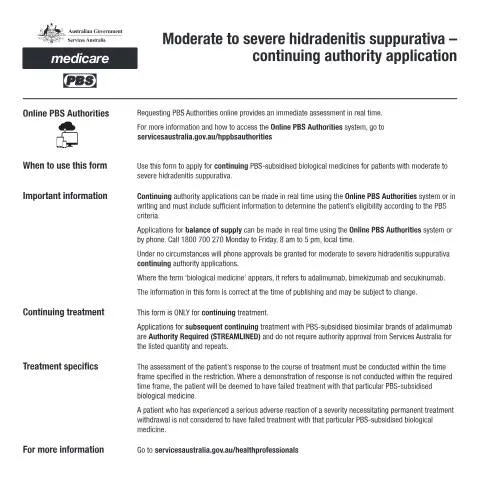
Navigating the PB219 Form: A Lifeline for Individuals with Hidradenitis Suppurativa
For those battling moderate to severe hidradenitis suppurativa (HS), the journey towards managing their health can be fraught with challenges. An essential component of this journey lies in the Moderate to Severe Hidradenitis Suppurativa - Continuing Authority Application Form (PB219), administered by Services Australia. This document serves as a critical tool for healthcare professionals to assist patients in accessing necessary treatments and support.
Understanding the PB219 Form: Who Will Benefit?
The PB219 form is specifically designed for individuals diagnosed with moderate to severe hidradenitis suppurativa. This condition, characterized by painful lumps and abscesses in areas such as the armpits, groin, and under the breasts, often necessitates ongoing medical treatments. The form facilitates the continuation of subsidized medications and treatments that can significantly impact the quality of life for those affected.
Beyond patients, the PB219 form is also crucial for health professionals, including general practitioners and specialists, who play a pivotal role in the treatment and management of HS. By completing and submitting this form, they can advocate for their patients’ needs effectively, ensuring they obtain the right medications and care.
Chronological Breakdown: From Diagnosis to Submission
Completing the PB219 form involves several key steps that must be followed meticulously to ensure a smooth submission process. Here's how to navigate through it:
- Diagnosis Confirmation: The first step is a confirmed diagnosis of moderate to severe hidradenitis suppurativa from a qualified healthcare provider. This diagnosis should ideally be well-documented.
- Gathering Required Information: Before filling out the form, collect all necessary medical documentation, including treatment history and current medications. This may include pathology reports, treatment plans, and any prior approvals.
- Filling Out the Form: The form must be completed with accurate and detailed information. This includes personal details, medical history, and the specifics of the prescribed treatment.
- Submission Process: Once the form is completed, it should be submitted to Services Australia through the appropriate channels, which may include electronic submission via myGov or postal mail.
What Happens After Submission? Understanding the Timeline
After submitting the PB219 form, applicants often wonder about the timeline and the subsequent steps in the review process:
| Stage | Description | Estimated Duration |
|---|---|---|
| Initial Review | Services Australia will conduct an initial assessment of the submitted form and accompanying documents. | 1-2 weeks |
| Further Information Request | If additional information is required, Services Australia will notify the applicant or their healthcare provider. | Varies |
| Final Decision | A decision will be made, and the applicant will be notified of the outcome, including any approval or rejection. | 2-4 weeks |
Dealing with Rejections: Navigating Challenges
Receiving a rejection for the PB219 application can be disheartening. However, applicants have options to address this situation:
- Review the Feedback: Understanding the reason for rejection is crucial. The notification from Services Australia will include details on why the application was not approved.
- Gather Additional Evidence: If the rejection was due to insufficient documentation or unclear medical history, gather the necessary information or new evidence that supports the case.
- Request a Review: Applicants can request a review of the decision through the Administrative Appeals Tribunal (AAT) if they believe the rejection was unjust. It’s advisable to seek assistance from healthcare providers or support organizations during this process.
Special Circumstances: When Unique Situations Arise
Certain scenarios may complicate the submission of the PB219 form:
- Non-Citizens and Temporary Visa Holders: Individuals who are not Australian citizens or are on temporary visas may face additional requirements or limitations regarding access to health services. It’s essential to check specific eligibility criteria with Services Australia.
- Minors: For applicants under the age of 18, a parent or guardian may need to fill out the form on their behalf. It’s essential to have a clear understanding of the child’s medical history and treatment plans.
- Emergency Situations: In the case of urgent medical needs, immediate action should be taken to consult a healthcare professional. While the PB219 form is crucial for long-term treatment, emergency care should not be delayed.
The Regulatory Framework: Behind the PB219 Form
The PB219 form is governed by a set of regulations that ensure its proper use and the protection of patient rights. The framework includes the Administrative Decisions (Judicial Review) Act 1977 (Cth), which provides a pathway for individuals to seek review of administrative decisions. This legal backdrop affirms the importance of transparency and accountability in health services.
Understanding this regulatory framework is vital for both health professionals and patients alike, as it not only outlines the rights and responsibilities associated with the use of the PB219 form but also assures that there is a formal process in place for grievances and appeals.
Empowering Patients: Rights and Responsibilities
As you embark on the process of completing and submitting the PB219 form, it’s important to recognize both your rights and responsibilities:
- Right to Access: Patients have the right to access necessary treatments and medications for their condition.
- Responsibility to Provide Accurate Information: It is essential to ensure all information provided in the application is accurate and complete to avoid delays or rejections.
- Right to Appeal Decisions: If an application is denied, patients have the right to understand the reasons and appeal the decision.
Being aware of these rights can significantly influence the experience of navigating the healthcare system, ensuring that patients feel empowered in their journey.
Conclusion: The Path Forward
Completing the PB219 form is more than just a bureaucratic step; it represents a critical avenue for individuals suffering from hidradenitis suppurativa to gain access to essential treatments and support. By understanding the nuances of the application process, the potential challenges, and the rights involved, patients and healthcare providers can work together to navigate this essential aspect of health management. The goal is to ensure effective treatment and improve the well-being of those affected by this challenging condition.
Understanding the Application Process for Hidradenitis Suppurativa
When applying for financial support or medical assistance related to moderate to severe hidradenitis suppurativa through the continuing authority application form (PB219), it is imperative to fully understand the application process established by Services Australia. The form is primarily designed to streamline the process of requesting ongoing treatment and support, ensuring that patients receive the necessary medical care while alleviating the financial burden associated with long-term management of this chronic condition.
The application process typically involves providing detailed medical documentation to substantiate the diagnosis of hidradenitis suppurativa. This may include clinical assessments, treatment histories, and any related surgical procedures that have been undertaken. It is crucial to ensure that all relevant medical professionals involved in your care provide comprehensive reports, making the application more robust and credible in the eyes of Services Australia.
Moreover, applicants should be aware of potential waiting periods for approvals and the necessity of regularly updating their information in the myGov system, where the PB219 form is submitted. This includes keeping track of any changes in treatment plans or new medical recommendations. Being proactive in maintaining communication with healthcare providers is essential to ensure a smooth and expedient approval process.
Common Misunderstandings About PB219 and Patient Rights
Many patients navigating the PB219 application may encounter several common misunderstandings regarding their rights and the responsibilities of Services Australia. It is vital to know that as an applicant, you have specific rights that are protected under Australian law. For instance, you are entitled to receive clear information about the status of your application and the reasons for any decisions made regarding your support. If your application is denied, you have the right to request a review of the decision through the Administrative Appeals Tribunal (AAT).
Additionally, many applicants mistakenly believe that they must provide exhaustive evidence from the onset of their application. While thorough documentation is crucial, it is essential to understand that Services Australia may request additional information at different stages of the application process. Thus, being prepared to respond to these requests in a timely manner can significantly enhance the likelihood of a successful application.
Furthermore, there is often confusion surrounding the implications of receiving a continuing authority grant. It’s important to clarify that while the grant may provide ongoing financial support, it does not equate to a permanent status. Renewals may be requested periodically, and adherence to treatment plans is usually expected to justify continued assistance.
Practical Tips for Completing the PB219 Form
Completing the continuing authority application form (PB219) can be a daunting task, particularly for individuals already struggling with the physical and emotional challenges posed by hidradenitis suppurativa. To simplify this process, here are some practical tips that can facilitate the completion of the form and improve the overall quality of the application.
Firstly, gather all necessary documents and health records before starting the application. This includes medical history, treatment summaries, and any relevant correspondence with healthcare providers. Having these documents at hand can help ensure that you do not overlook crucial information that could affect your application.
Secondly, pay close attention to the language used in the form. Using clear and concise language, while avoiding overly technical jargon, can make your application more accessible to reviewers. If you are unsure about certain medical terms or how to describe your condition’s impact on your daily life, consider seeking assistance from healthcare professionals who are familiar with the PB219 application process.
Additionally, it may be beneficial to review sample completed forms or seek advice from patient advocacy groups that specialize in hidradenitis suppurativa. These resources can provide insights into common pitfalls and successful strategies for completing the application. Lastly, consider keeping a copy of your submitted application for your records, which can be helpful for future reference or renewals.