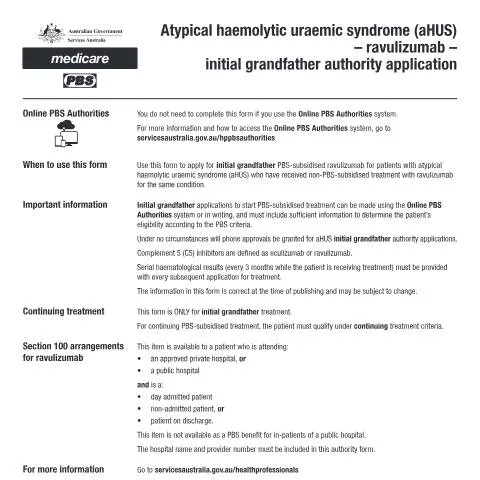
Navigating aHUS: The Initial Grandfather Authority Application
Imagine a scenario where a patient, recently diagnosed with atypical hemolytic uremic syndrome (aHUS), faces overwhelming choices regarding their treatment options. The introduction of ravulizumab, a novel medication, brings both hope and complexity. For individuals in Australia, navigating the healthcare system often involves completing specific forms to access necessary treatments. Among these, the Initial Grandfather Authority Application Form (PB359) stands as a critical document for patients and their healthcare providers alike.
The Significance of the PB359 Form in aHUS Treatment
In the context of Australian healthcare, the PB359 form serves a pivotal role in facilitating access to ravulizumab for eligible patients with aHUS. This application is primarily designed for healthcare professionals who submit it to Services Australia on behalf of their patients. The form is part of a broader regulatory framework aimed at ensuring that patients receive appropriate and timely access to new and effective treatments under the Pharmaceutical Benefits Scheme (PBS).
Understanding the Authority Framework
The authority framework establishes guidelines under which specific medications can be prescribed and funded. The PB359 form allows healthcare providers to request an initial grandfather authority for the use of ravulizumab, thereby enabling eligible patients to receive the medication at subsidized rates. It is important to recognize that the success of this application hinges on the completeness and accuracy of the submitted information.
Who Should Submit the PB359 Form?
This form is intended for healthcare professionals who are directly involved in the management of aHUS patients. Specifically, nephrologists or other specialists in kidney disorders typically take the lead in submitting this application. The requirements may vary depending on whether the patient is a minor or an adult, and the urgency of their medical condition can also influence the submission process.
Considerations for Special Cases
- Minors: For patients under 18 years, the application must include parental consent and possibly additional medical documentation.
- Non-residents: If the patient does not hold Australian residency, additional eligibility criteria may be required to access PBS-listed medications.
- Urgent Situations: In cases where immediate treatment is critical, healthcare providers may need to expedite the application process.
Deciphering the PB359: Step by Step
Completing the PB359 form may initially appear daunting, but breaking it down into manageable sections can simplify the process for healthcare providers and their patients alike. Each section of the form is designed to gather essential information about the patient’s medical history, treatment requirements, and the rationale for requesting the medication.
Key Sections of the PB359 Form
- Patient Information: This section requires demographic details such as name, date of birth, and Medicare number.
- Medical History: Providers must detail the patient's diagnosis, past treatments, and specific reasons for prescribing ravulizumab.
- Clinical Evidence: Including relevant clinical notes and test results can strengthen the application and justify the need for the medication.
- Health Provider Details: Information about the prescribing doctor and their qualifications, along with their registered provider number, is essential.
Avoiding Common Pitfalls
While filling out the form, it's crucial to be meticulous. Missing or incorrect information can lead to delays or denials in the approval process. Healthcare professionals should ensure that:
- All fields are comprehensively filled out.
- Attachments are properly labeled and included.
- The application is submitted within any provided time frames.
The Submission Process: From Application to Approval
Once the PB359 form is completed, the next crucial step is the submission process. Understanding how to properly lodge the application can significantly affect the timeline of approval.
Steps to Submit the PB359 Form
- Review: Double-check the completed form for any potential errors or omissions.
- Submission: Applications can often be submitted electronically through the myGov portal or directly through Services Australia channels.
- Tracking Status: After submission, keeping track of the application’s status can be done via the myGov account or by contacting Services Australia.
What Happens After Submission?
Following the submission of the PB359 form, healthcare providers and patients may experience a period of anticipation as the application is reviewed by Services Australia. The processing times can vary based on the complexity of the application and the volume of requests being handled at that time.
Anticipating the Decision
Once processed, the applicant will receive a notification regarding the approval or denial of the authority request. In the event of approval, patients can commence treatment with ravulizumab, often with financial assistance through the PBS. Conversely, if denied, the notification will typically include reasons for the decision, providing an opportunity for healthcare providers to rectify issues and resubmit if necessary.
Understanding the Regulatory Landscape
The PB359 form is situated within a broader legal framework that governs medication access in Australia, particularly the Administrative Decisions (Judicial Review) Act 1977 (Cth). This legislation ensures that patients have a fair avenue to challenge decisions made by services such as Services Australia if they feel their application was unjustly denied.
Importance of Legal Protections
For patients facing difficulties, understanding their rights under this legislation is vital. In the case of a rejected application, patients can seek a merits review through the Administrative Appeals Tribunal (AAT). This process can potentially lead to a reconsideration of their application based on the merits of their case, providing a crucial layer of protection for patients needing access to essential medications.
Effective Follow-Up Strategies
Following the submission of the PB359 form and the initial application response, proactive follow-up strategies are essential. Whether the decision is pending or if there are additional requirements to be addressed, staying engaged with Services Australia can streamline the process.
Proactive Communication
Healthcare professionals should consider the following strategies to enhance communication and expedite the process:
- Establish regular follow-up points to check on the application status.
- Be prepared to provide additional documentation swiftly if requested by Services Australia.
- Maintain open lines of communication with the patient and their family, ensuring they are informed about any developments.
The Broader Implications for Patients and Healthcare Practitioners
For healthcare practitioners, understanding the intricacies of the PB359 form and the associated processes is imperative for providing effective patient care. Successfully navigating this application can significantly impact treatment timelines, patient outcomes, and overall healthcare satisfaction.
Enhancing Patient Care through Knowledge
By familiarizing themselves with the details of this form and the submission process, healthcare professionals can empower their patients, ensuring they receive timely and effective treatments. Additionally, keeping abreast of any changes in regulations or treatment protocols related to aHUS further enhances the quality of care provided.
Final Thoughts on the PB359 Application Process
In summary, the PB359 Initial Grandfather Authority Application Form is a critical tool for accessing pivotal treatments for patients with atypical hemolytic uremic syndrome (aHUS) in Australia. By understanding the form's requirements, the submission process, and the importance of effective follow-up and communication, both healthcare professionals and patients can work towards optimizing treatment pathways. The journey through this administrative process might seem complex, but with diligence and proper guidance, it can lead to significant positive outcomes in managing aHUS.