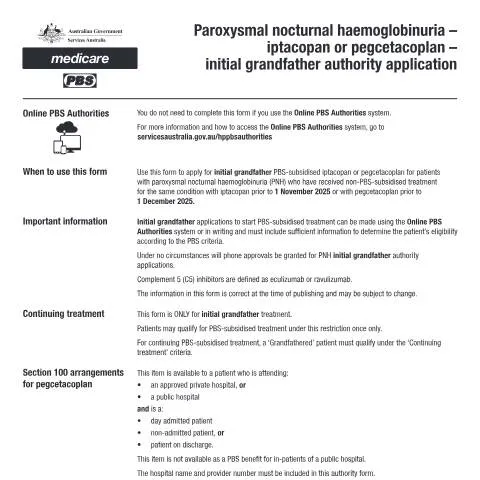
Understanding the PB345 Form: A Lifeline for PNH Patients
When dealing with Paroxysmal Nocturnal Hemoglobinuria (PNH), understanding the nuances of medical treatments and their related authorizations is crucial. The PB345 form, specifically designed for the initial grandfather authority application for iptacopan or pegcetacoplan, serves as a pivotal tool for patients needing these treatments. This form is essential for healthcare professionals to facilitate access to potentially life-saving medications, paving the way for a better quality of life for those affected by PNH.
The Journey Begins: Who Needs to Submit the PB345 Form?
The PB345 form is primarily submitted by healthcare professionals on behalf of patients diagnosed with PNH. This includes specialists such as hematologists, who are responsible for determining the patient's eligibility for treatment with iptacopan or pegcetacoplan. The application process aims to ensure that patients who have been stable on these therapies can continue to access them under the grandfather authority provisions.
Who is Considered a Patient in Need?
- Patients diagnosed with PNH who have been previously treated with the specified medications.
- Individuals currently experiencing symptoms that qualify them for these treatments.
- Patients transitioning from other treatments that require a change to these medications.
Decoding the PB345 Form: Essential Sections Explained
Completing the PB345 form accurately is vital for a smooth approval process. Each section of the form has specific requirements, and understanding these can help avoid delays.
Section 1: Patient Information
This section requires detailed information about the patient, including their full name, contact details, and Medicare number. It's crucial to ensure that all information is current and accurate.
- Tip: Double-check spelling and numbers to prevent any administrative errors.
Section 2: Medical History
Detailing the patient's medical history related to PNH is essential. This includes previous treatments, current medications, and any other relevant health conditions. This section provides context to the treating healthcare professional’s recommendation.
- Tip: Provide comprehensive details; vague responses can lead to further questions from Services Australia.
Section 3: Treatment Information
In this part, the healthcare provider must specify the requested treatment and justify its necessity. This includes any clinical evidence that supports the need for treatment with iptacopan or pegcetacoplan.
- Tip: Attach additional documentation if necessary, such as test results or previous treatment outcomes.
What Happens After Submitting the PB345 Form?
After submitting the PB345 form, the processing time can vary. Services Australia will review the application, assessing the medical necessity and the validity of the information provided.
Monitoring Your Application Status
Patients and healthcare providers can track the progress of the application. Regular follow-ups can ensure any issues are addressed promptly.
- Utilize the online myGov portal for updates.
- Contact Services Australia directly if there are delays beyond the expected timeframe.
Pitfalls to Avoid: Ensuring a Smooth Application Process
Filing the PB345 form can be straightforward, but there are common pitfalls that can result in delays or refusals. Here are several key considerations:
Incomplete Information
Failure to provide comprehensive information can lead to incomplete applications. It's crucial to answer every question thoroughly and accurately.
Missing Supporting Documents
Not including required documentation can result in an application being returned for additional information. Always verify the necessary attachments before submission.
Understanding the Grandfather Clause
The grandfather clause allows certain patients who were previously stabilized on treatments to continue access without interruption. However, understanding the specifics of this eligibility is essential.
Special Circumstances: Navigating Complex Cases
Certain situations may complicate the application process for the PB345 form. Here’s a look at specific cases that require additional attention:
International Patients
Patients who are not Australian residents or are visiting on a temporary basis face additional requirements. Usually, they need to demonstrate their eligibility for treatment under Australian guidelines.
Minors and Guardianship Issues
Applications for patients who are minors must include consent from a guardian along with detailed medical histories. This addition can complicate the process slightly but is necessary for legal and ethical reasons.
Urgent Medical Needs
If a patient’s situation is urgent, it’s important to communicate this clearly in the application. Include any relevant medical documentation that indicates the necessity for expedited processing.
Submission Channels: Online vs. Paper Applications
Submitting the PB345 form can be done via different channels, each with its own advantages and disadvantages.
Online Submission via myGov
The online method through the myGov portal is generally the most efficient. It allows for quicker processing times and the ability to track your application status in real-time.
- Ensure you have a verified myGov account linked to Services Australia for seamless submission.
Paper Submission
For those who prefer or require paper submissions, forms can be mailed directly to Services Australia. However, this method may involve longer wait times.
- Keep copies of all submitted documents for your records.
- Consider sending via registered mail to ensure delivery confirmation.
In the Event of Refusal or Additional Information Requests
Receiving a refusal or a request for additional information can be disheartening. Here’s what to do next:
Understanding the Refusal
If an application is refused, Services Australia will provide reasons for the decision. It’s essential to understand these grounds thoroughly in order to address them effectively in any subsequent applications.
Resubmission Strategies
When resubmitting the application, ensure that all previously noted issues are rectified. Providing additional supporting information can strengthen the case.
Conclusion: The Path Forward
The PB345 form plays a crucial role in ensuring that patients with PNH can access needed medications. By understanding the complexities of the application process, healthcare professionals and patients can navigate this crucial step more effectively. Whether it’s submitting the form accurately, following up on applications, or handling refusals, equipping oneself with knowledge about the PB345 form can significantly impact patient care.