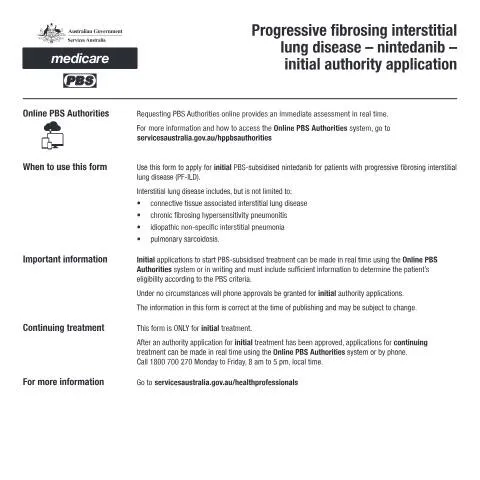
Understanding the PB332 Application Process for Nintedanib
Navigating the complexities of healthcare applications can be daunting, especially when dealing with conditions such as progressive fibrosing interstitial lung disease (PFILD). For health professionals, the PB332 form, officially known as the Progressive fibrosing interstitial lung disease - nintedanib - initial authority application form, acts as a critical gateway to secure access to necessary treatments for patients. It is essential to understand the purpose and the details involved in filling out this application.
Who Submits the PB332 Form?
The PB332 form is primarily submitted by registered health professionals, including doctors and specialists, who are treating patients diagnosed with PFILD. These practitioners must ensure that they are familiar with the nuances of the patient's health conditions and treatment history. Below are specific profiles that typically require this application:
- Respiratory specialists: Typically the first point of contact for patients with interstitial lung diseases.
- General practitioners: May refer patients for treatment and need to complete the form to facilitate care.
- Pulmonologists: Often involved in the ongoing management of PFILD patients.
In some cases, patients may also be involved in ensuring their healthcare providers have submitted the correct information. Health professionals need to confirm that they are equipped with all necessary medical data, as any oversight could delay treatment access.
Decoding the PB332 Form
Completing the PB332 form requires attention to detail. Each section is designed to gather specific information relevant to the patient's treatment. Let’s explore the critical components of the form:
Patient Information
This section requires comprehensive details about the patient, including:
- Full name
- Date of birth
- Address
- Medicare number
It is crucial that all information is accurate; errors could result in processing delays. Ensure every entry is double-checked for accuracy, especially the Medicare number, as this is linked directly to patient records.
Clinical Details
The next segment seeks information on the patient's diagnosis. Practitioners must specify:
- The date of diagnosis
- Any relevant clinical history
- Results from recent tests, including lung function tests
It's vital for professionals to provide a detailed account of the patient's condition, as this serves as the basis for determining the necessity of nintedanib treatment. Omissions or inaccuracies can lead to a rejection of the application.
Treatment History
This part of the form requires practitioners to outline previous treatments the patient has undergone. Including:
- Other medications attempted
- Responses to these treatments
- Adverse reactions, if any
Clear documentation here can significantly strengthen the application by illustrating the patient's treatment journey and justifying the need for nintedanib.
The Timeline for Submission
Understanding the timeline related to the PB332 form submission is crucial. Here’s a breakdown of the process:
- Submission Period: Applications can be submitted any time during the patient's treatment progression. However, early submission is encouraged to prevent treatment delays.
- Processing Time: After submission, the expected timeframe for review can vary. It's advisable to follow up within a specific period to check on the status.
- Decision Notification: Health professionals will receive notification of the outcome via their registered correspondence method.
Being proactive about these timelines can greatly affect patient outcomes, ensuring they receive necessary medications without unnecessary delays.
Addressing Common Challenges
Even with careful preparation, practitioners may encounter obstacles during the application process. Common issues include:
- Incomplete information: Double-checking details before submission can help mitigate this risk.
- Missing documentation: Ensure all required attachments, such as tests and treatment history, are included.
- Refusal notifications: If the application is denied, reviewing the reasons provided can guide the next steps.
In case of a refusal, it’s crucial to consider options such as resubmitting with additional documentation or seeking further clarification from Services Australia.
Distinguishing the PB332 from Other Forms
It’s essential to differentiate the PB332 from similar applications, as confusion can lead to incorrect submissions. Here are some key distinctions:
| Form | Purpose | Specificity |
|---|---|---|
| PB332 | Application for nintedanib for PFILD | Specific to PFILD and treatment with nintedanib |
| Other Authority Application Forms | General applications for a variety of medications | Not specific to PFILD or nintedanib |
Understanding these differences ensures health professionals select the correct form, streamlining the application process and decreasing the likelihood of errors.
What Happens After Submission?
Once the PB332 form is submitted, several steps follow, which include:
- Review Process: Services Australia will evaluate the application based on the provided details.
- Outcome Notification: Notification will be sent to the healthcare provider regarding the approval or refusal of the application.
- Appeals: Should the application be refused, practitioners can submit an appeal or request a review.
Understanding the post-submission process helps set realistic expectations for patients awaiting treatment.
Helpful Tips for Successful Submission
To enhance the chances of a successful outcome when submitting the PB332 form, consider the following strategies:
- Thoroughly review the application: Ensure all sections are completed and all necessary documents are attached.
- Stay updated with guidelines: Healthcare professionals should regularly consult Services Australia for any changes in procedures or requirements.
- Maintain clear communication: If in doubt, contact Services Australia for guidance before submission.
Implementing these practices can significantly improve the efficiency of the application process and ensure that patients receive the treatments they urgently need.
Understanding the Role of Nintedanib in Treating PF-ILD
Nintedanib is an oral medication that has gained attention for its effectiveness in managing progressive fibrosing interstitial lung disease (PF-ILD). This medication functions as a tyrosine kinase inhibitor, which plays a crucial role in inhibiting the processes that lead to fibrosis in the lungs. A significant understanding of its mechanism is essential for both healthcare providers and patients alike.
When considering the application for Nintedanib under the Pharmaceutical Benefits Scheme (PBS), it is important to recognize the specific indications for its use. The drug is primarily prescribed for patients with PF-ILD who are experiencing a decline in lung function and whose disease is not amenable to other treatments. Thus, comprehensive medical records detailing the patient's condition, previous treatment responses, and any worsening symptoms are critical elements of the application process.
Moreover, healthcare practitioners must stay abreast of clinical guidelines and emerging research related to the use of Nintedanib, as new data can influence prescribing practices and the management of PF-ILD. It’s also important for patients to discuss any concerns or side effects they may be experiencing while on Nintedanib with their healthcare provider to ensure the best possible outcomes.
Application Process for Initial Authority for Nintedanib (PB332)
The Initial Authority Application Form (PB332) for Nintedanib presents specific requirements that healthcare providers must follow to secure access to this medication for their patients. The process involves several key steps that ensure compliance with PBS guidelines and facilitate a smooth application process.
First and foremost, the prescriber must be a duly authorized medical practitioner. This ensures that the application is being completed by someone with the appropriate qualifications to evaluate the patient's condition thoroughly. The form requests detailed patient information, including confirmation of a diagnosis of PF-ILD, lung function test results, and previous treatment histories.
Once the prescriber completes the PB332 form, the next step is to submit it through the appropriate channels. This typically involves submitting the form electronically via the myGov portal, which is linked to Services Australia. It is crucial to ensure that all supporting documentation is included at the time of submission to avoid delays. Any missing information can lead to a request for further evidence, which can prolong the approval process.
After submission, the application will be reviewed by the relevant health authorities. It is advisable for prescribers to keep track of the application status and be prepared to address any queries that may arise during the review period. Once approved, patients will receive access to the medication, allowing them to proceed with their treatment plan as outlined by their healthcare provider.
Patient Support and Resources for Nintedanib Users
Patients diagnosed with PF-ILD and prescribed Nintedanib are encouraged to take advantage of several support resources available in Australia. Understanding the implications of using Nintedanib, including potential side effects and the importance of adherence to treatment regimens, can significantly impact their health outcomes.
One resource is the Pharmaceutical Benefits Scheme (PBS) website, which provides essential information regarding the eligibility criteria for Nintedanib, including detailed guidelines on what constitutes a valid authority application. Additionally, patients can access educational materials that outline the expected outcomes and challenges of their treatment.
Support groups, both online and in-person, are also invaluable for patients. Engaging with others who are facing similar health challenges can provide emotional support and practical advice regarding living with PF-ILD. These groups often facilitate discussions on managing side effects, lifestyle modifications, and coping strategies that can enhance the quality of life for individuals undergoing treatment.
Furthermore, healthcare providers may refer patients to pulmonary rehabilitation programs that focus on improving lung function, physical endurance, and overall well-being. These programs are tailored to the needs of individuals with chronic lung diseases, providing them with coping strategies and a structured exercise regimen to manage their symptoms effectively.
In summary, while the application for Nintedanib through the PB332 form is a critical step in accessing treatment, ongoing support and resources play an equally vital role in ensuring patient success in managing progressive fibrosing interstitial lung disease.