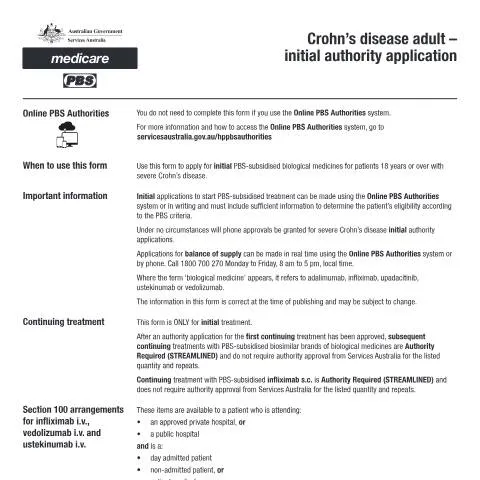
Navigating the Crohn’s Disease Adult - Initial Authority Application Form (PB087)
When living with Crohn’s disease as an adult, accessing timely and appropriate healthcare treatments is critical. The PB087 form is a crucial component in the journey toward managing this chronic condition. It serves as a gateway for patients to obtain necessary medications and therapies that can significantly improve their quality of life.
Understanding the Role of the PB087 Form in Healthcare Access
Before diving into the complexities of filling out the PB087 form, it’s essential to appreciate its role within the broader healthcare system in Australia. This application form is designed to grant initial authority for prescribing certain medications specifically for adults suffering from Crohn’s disease. It forms part of a process governed by Services Australia, which ensures that patients receive the supports and treatments they require to manage their health effectively.
The Importance of Timeliness
The timeline for submitting this application can influence the speed at which treatments commence. Patients are encouraged to submit the PB087 application as soon as their healthcare professional recommends an appropriate treatment. Delays can lead to worsened health conditions, making proactive engagement crucial.
Who Should Complete the PB087 Form?
While the PB087 form is specifically for adults diagnosed with Crohn’s disease, variations in individual circumstances can affect who needs to fill it out. Here are some profiles that may require the completion of the form:
- New Patients: Individuals recently diagnosed who need to initiate treatment.
- Patients Transitioning Care: Those switching prescribers or moving to a different treatment plan.
- Recurrent Cases: Patients whose previous authority has expired and are looking to renew their treatment plan.
Special Considerations for Different Profiles
Importantly, not every patient will fit neatly into these categories. Some may encounter unique circumstances that necessitate additional considerations, such as:
- Patients with a history of complex health issues that may affect their Crohn’s disease.
- Individuals migrating from another country who need to establish local treatment.
- People experiencing exacerbations of their condition requiring immediate intervention.
Breaking Down the PB087 Form: Key Sections and Their Importance
The PB087 application is structured in a way to collect comprehensive information about the patient’s health history and treatment needs. Each section has specific requirements that must be accurately addressed to avoid delays. Below is a breakdown of critical sections:
Section 1: Patient Details
This section captures essential personal information, including:
- Name
- Date of Birth
- Contact Information
Accuracy in this section is vital as it establishes the patient’s identity and connection to their health records.
Section 2: Medical History
Here, the applicant will provide detailed insights into their medical background, including:
- Previous diagnoses related to gastrointestinal health.
- Other chronic conditions that could affect treatment.
- Current medications or therapies undertaken.
Be thorough in this section to provide healthcare professionals with the context needed to make informed decisions.
Section 3: Treatment History
This part of the form often requires patience and honesty. It focuses on:
- Previously prescribed medications and their effects.
- Any adverse reactions experienced with past treatments.
Be prepared to discuss these aspects with your healthcare provider to clarify the most suitable treatment moving forward.
Completing and Submitting the PB087 Form
Once the form is thoroughly completed, the next step is its submission. Here’s a clear pathway to ensure your application is processed smoothly:
Where to Submit
Applications can generally be submitted online through myGov, where one can link to Services Australia. This digital submission streamlines the process and ensures the form reaches the appropriate office without delay.
Documentation and Additional Information
In certain cases, the healthcare provider may need to include supporting documents with the application. This might involve:
- Medical reports outlining the diagnosis.
- Evidence of previous treatments.
However, ensure any extra documentation is relevant and clearly denotes the necessity for the requested authority.
Post-Application Process: What Happens Next?
After submission, applicants will typically wait for a response from Services Australia regarding their authority application. The timeline for this can vary, depending on individual circumstances and the completeness of the application submitted.
Understanding Outcomes
There are generally three potential outcomes of the application:
- Approval: The most favorable outcome, allowing the patient to access their prescribed treatments.
- Conditional Approval: This might require further information or additional steps before full treatment commences.
- Denial: In case of denial, it is essential to understand the reasons behind the decision and seek clarification on how to rectify any issues.
The Role of Healthcare Professionals
Throughout this process, the healthcare provider plays a pivotal role. They can assist by:
- Providing the necessary medical information.
- Advising on the completion of the form.
- Following up with Services Australia on behalf of the patient if needed.
Special Circumstances: Individuals Facing Unique Challenges
Not everyone’s journey will be straightforward, and some individuals may face unique challenges in their health management. Special considerations include but are not limited to:
Minors and Dependents
Applications for minors require additional steps, including:
- Parent or guardian consent on the application.
- Clear articulation of how the diagnosis affects the child’s daily activities and treatment needs.
Emergency Situations
In instances where immediate treatment is necessary due to sudden health declines, patients or their representatives should communicate urgency clearly when submitting the form. Documentation supporting the emergency may also be beneficial.
Conclusion: A Patient’s Empowerment Through the PB087 Form
Understanding and effectively navigating the PB087 form is an important step for adults living with Crohn’s disease in Australia. By fully engaging with each section, seeking assistance when necessary, and being aware of individual circumstances, patients can better position themselves for timely access to the treatments they need. Patient advocacy is key in this process—knowing your rights and requirements can lead to more empowered health management.
Understanding the Importance of PB087 in Navigating Support for Crohn's Disease
For adults diagnosed with Crohn’s disease, applying for financial support through Centrelink can be an essential step in managing the implications of their condition. The PB087 form, which is formally known as the "Initial Authority Application Form," serves as a pivotal document in this process. This form allows individuals to request specific supports that can alleviate some of the financial burden associated with managing a chronic illness like Crohn’s.
It's critical to understand that Crohn's disease is classified as a permanent disability under Australian law, which means that individuals may be eligible for various benefits such as the Disability Support Pension (DSP). When completing PB087, applicants must provide detailed medical evidence confirming their diagnosis and its impact on their daily life. This evidence might include specialist letters, medical reports, and documentation of hospital visits, all aimed at illustrating how the condition limits the applicant's ability to work or carry out daily activities.
Additionally, applicants should be mindful of the eligibility criteria for the DSP and other supports. Factors such as age, income, and residency status can affect one's eligibility. For instance, individuals applying must generally be over 16 years old and meet specific income and asset tests. The PB087 form helps to initiate this assessment process, setting the stage for a comprehensive review of the individual's circumstances.
Support Resources Available for Individuals with Crohn's Disease
While completing the PB087 form is a crucial step, individuals dealing with Crohn’s disease should also explore various support resources available to them. Support services can significantly aid in managing both the medical and emotional challenges of living with a chronic illness.
The Crohn’s & Colitis Australia (CCA) is an invaluable resource that provides information, advocacy, and community support for individuals affected by inflammatory bowel diseases. They offer programs to assist with managing the condition, such as helplines, online support groups, and educational material tailored to help patients understand their illness and treatment options.
Furthermore, obtaining a Health Care Card through Centrelink can provide additional benefits such as cheaper prescription medications and bulk-billed doctor visits, which can be critical for someone dealing with the ongoing costs of Crohn’s disease management. Applying for this card is a separate process but can often be done concurrently with the PB087 application.
Local community health services may also offer programs and resources tailored to individuals with Crohn's disease. Engaging with these services can lead to better management of health conditions through dietetic support, counselling, and peer support networks. Connecting with others in similar situations can be both empowering and informative, fostering resilience in managing the chronic nature of the disease.
Maximizing Your PB087 Submission: Tips for a Successful Application
Submitting the PB087 form is an important step in securing financial support for those with Crohn's disease. However, to enhance the likelihood of a successful application, there are several strategies applicants can employ.
Firstly, ensure that all required information is accurately filled out. Double-checking for completeness can prevent delays in processing. It's advisable to keep a photocopy of the submitted form for your records. The clarity of your responses is vital; be sure to avoid jargon and use straightforward language that can be easily understood by the assessors.
Next, gather all necessary medical documentation before starting the application process. As mentioned earlier, detailed medical evidence is crucial, and it can spare applicants from unnecessary back-and-forth communication with Centrelink. It's wise to include letters from specialists outlining the severity of the disease, treatment plans, and any limitations it imposes on daily activities.
Another tip is to engage with your healthcare providers regarding your application. They are often able to provide additional insights or documentation that may enhance your application. Some may also be willing to advocate on your behalf if Centrelink requires further clarification about your condition.
Finally, consider seeking assistance from advocacy groups or local community services. These organizations often have experience navigating the application process and can provide you with tailored advice and support. By leveraging their expertise, applicants may better understand the nuances of the PB087 form and the associated administrative processes.