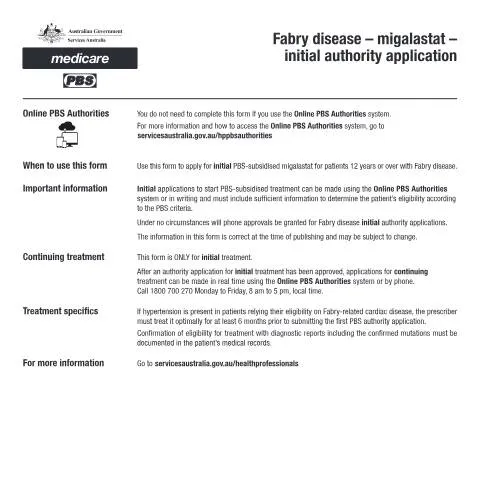
Understanding the Fabry Disease Migalastat Application Process
Fabry disease is a rare genetic condition that can have serious health implications. For patients diagnosed with this condition, accessing effective treatment options is crucial. The Fabry disease - migalastat - initial authority application form (PB373) serves as an essential tool within the healthcare system in Australia, facilitating access to necessary medications and therapies.
Historical Context: The Emergence of PB373
The introduction of the PB373 form is linked to the evolving understanding of Fabry disease and the therapeutic advancements available. Over the years, the Australian healthcare system has sought to incorporate innovative treatments that can improve patient outcomes. This form was established under the guidelines set forth by Services Australia, aiming to streamline the application process for health professionals when requesting authority for migalastat, a medication that addresses the underlying cause of Fabry disease.
The Role of Services Australia
Services Australia is responsible for managing various health and social security services, including the funding and approval of medications through the Pharmaceutical Benefits Scheme (PBS). The PB373 form is a critical part of this process, allowing qualified health professionals to submit applications for patients in need of migalastat treatment.
Application Channels: Navigating Options for Submission
Completing the PB373 application can be accomplished through various submission channels, each with unique characteristics:
- Online Submission: The most encouraged method, as it allows for quick processing through the myGov portal. Health professionals can log in and upload the completed form directly, streamlining the review process.
- Paper Submission: Although less common, it remains an option. Completed forms can be printed and mailed directly to Services Australia. This method may result in longer processing times.
- In-Person Submission: For those who prefer face-to-face interaction, some offices may accept in-person submissions. However, this varies by location, and it is advisable to check beforehand.
Decoding the PB373 Form: Essential Sections and Considerations
When filling out the PB373 form, understanding each section is crucial to ensure a smooth application process. Below is a breakdown of the key components:
| Section | Description | Common Pitfalls |
|---|---|---|
| Patient Information | Details about the patient, including personal identification and medical history. | Omitting critical health details may delay approval. |
| Diagnosis Confirmation | Verification that the patient has been diagnosed with Fabry disease. | Failure to provide sufficient documentation can lead to rejection. |
| Previous Treatments | Information on treatments the patient has previously undergone. | Inaccurate history might affect the assessment of the current application. |
| Clinical Justification | A statement outlining the necessity of migalastat for the patient. | Weak justification can lead to queries or denial of the application. |
Key Considerations
Each section of the PB373 form requires careful attention to detail. Here are some essential tips:
- Ensure all patient identifiers are correct to avoid mix-ups.
- Attach any relevant medical reports or evidence of prior treatments to support the application.
- Double-check the clinical justification to ensure it aligns with current treatment protocols for Fabry disease.
A Step-by-Step Walkthrough of the Application Process
For health professionals seeking to submit the PB373 form, understanding the chronological flow of the application process is vital:
- Diagnosis: Confirm the patient’s diagnosis of Fabry disease through appropriate assessments.
- Completion of PB373: Fill out all necessary sections of the document with accurate and comprehensive information.
- Documentation: Gather supporting documents, such as medical history and previous treatment records.
- Submission: Choose your preferred channel (online, paper, or in-person) and submit the application.
- Await Review: Once submitted, the application will undergo a review process by Services Australia.
- Receive Decision: The applicant will be notified of the decision, and if approved, further steps for accessing migalastat will follow.
Timelines: Understanding the Application Journey
While the exact timeline for processing the PB373 application can vary, applicants should be aware of the typical phases:
- Initial Review Period: Generally, applications are reviewed within a certain number of weeks. During this time, Services Australia assesses the completeness and validity of the submission.
- Decision Notification: Following the review, a formal decision is communicated to the applicant, outlining the outcome and any additional steps.
- Accessing Treatment: If approved, arrangements for initiating treatment with migalastat can begin, which may involve coordinating with pharmacies and healthcare providers.
It’s crucial for health professionals to inform their patients about what to expect at each phase, allowing for better preparation and understanding of the process.
The Real Impact: What This Means for Patients
Successfully navigating the PB373 application has significant implications for patients with Fabry disease:
- Access to Treatment: An approved application allows patients to receive migalastat, which can help manage their condition effectively.
- Healthcare Rights: Patients have a right to advocate for their treatment options, and successful applications reinforce the system's responsiveness to their needs.
- Ongoing Obligations: Patients may need to engage in follow-up assessments or provide additional information to continue their treatment beyond initial approval.
Final Thoughts: Supporting Patients and Professionals
The PB373 form is a pivotal element in ensuring that individuals diagnosed with Fabry disease can access necessary treatments like migalastat. Awareness of the application process, thorough understanding of the form, and proactive engagement are essential for both health professionals and patients. By fostering open communication and providing clear guidance, the complexities surrounding the PB373 form can be effectively navigated, ultimately leading to better health outcomes for those affected by Fabry disease.
Understanding Fabry Disease and Its Management in Australia
Fabry disease is a rare genetic disorder that results from a deficiency of the enzyme alpha-galactosidase A. This deficiency leads to the accumulation of certain types of fats in various organs, which can cause symptoms such as pain, kidney dysfunction, heart problems, and skin rashes. It is part of the class of lysosomal storage disorders and is inherited in an X-linked manner, primarily affecting males, though females can also exhibit symptoms.
In Australia, the management of Fabry disease often involves a multidisciplinary approach, including primary care physicians, nephrologists, cardiologists, and genetic counselors. Patients may require regular screenings for kidney function, cardiac health, and neurological assessments. Treatment options vary, with enzyme replacement therapy (ERT) being common. However, for certain patients, particularly those with mild-to-moderate forms of the disease, migalastat (an oral pharmacological chaperone) is a viable treatment option that may be more convenient compared to ERT.
Eligibility Criteria for Migalastat Treatment
To qualify for migalastat therapy under the Pharmaceutical Benefits Scheme (PBS) in Australia, patients must meet specific clinical criteria. This involves not only having a confirmed diagnosis of Fabry disease through genetic testing but also demonstrating a certain level of residual enzyme activity. The prescribing doctor must provide clear evidence of the patient's condition and the potential benefits of migalastat therapy.
As part of the initial authority application process (specifically using form PB373), it is critical to provide detailed clinical information, including:
- Results from enzymatic assays that confirm the level of alpha-galactosidase A activity.
- Documented symptoms and how they impact the patient's quality of life.
- Previous treatments and their outcomes, if applicable.
Each application is thoroughly reviewed, and the Therapeutic Goods Administration (TGA) will assess whether the treatment aligns with the PBS's criteria for cost-effectiveness and clinical benefit. Furthermore, a well-completed PB373 form can enhance the chances of approval, as it demonstrates the treating physician's commitment to ensuring the best outcomes for the patient.
Steps to Complete the Initial Authority Application Form (PB373)
The completion of the PB373 form is a vital step in securing access to migalastat for eligible patients. Below is a step-by-step guide to help you through the process:
- Gather Required Documentation: Collect all necessary medical records, including the patient’s diagnosis confirmation, treatment history, and any relevant test results.
- Complete Patient Details Section: Ensure that the patient's personal details are accurately filled out, including their Medicare number, which is essential for processing the application.
- Clinical Information: In this section, provide comprehensive clinical information that supports the patient’s need for migalastat. Be sure to include your findings regarding the patient's enzyme levels and how these relate to their symptoms.
- Attach Additional Supporting Evidence: If applicable, include any letters from specialists or additional test results that may bolster the application.
- Sign and Submit: Ensure that the application is signed by the prescribing doctor. Once complete, submit the form through the appropriate channels, which may be via mail or electronically through myGov.
It is also advisable to keep a copy of all submitted documents for your records. Following submission, there may be a wait period during which the application is being reviewed, and the prescriber should be prepared to provide further information if requested by Services Australia.