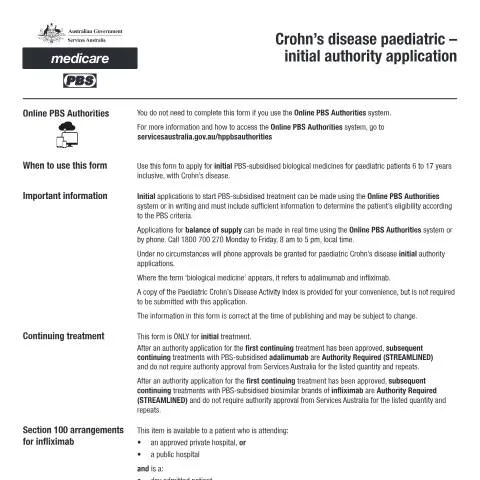
Understanding the PB085: A Crucial Step in Managing Crohn's Disease for Children
For families navigating the complexities of health services in Australia, the Pediatric Crohn's Disease Initial Authority Application Form (PB085) stands as a vital document. This form is not merely a bureaucratic necessity; it serves as a gateway for children suffering from Crohn's disease to access essential treatments and support. The importance of this form cannot be overstated, as it directly impacts a child's health management journey.
Who Initiates the PB085 Process?
The responsibility of completing and submitting the PB085 primarily falls on health professionals. Typically, this includes pediatricians and gastroenterologists who manage a child's care. However, it is crucial for the parents or guardians to be closely involved in this process as they provide the necessary background information and consent for treatment.
- Health Professionals: Must be accredited and familiar with the process.
- Parents/Guardians: Their active participation is essential for accurate completion.
Collaboration between the healthcare provider and the child's family can significantly streamline the application process, ensuring all necessary details are accurately captured and submitted.
Diving Deep into the PB085 Sections: A Guide to Completion
The PB085 is structured to capture comprehensive information about the child's condition, treatment plan, and medical history. Each section requires careful attention to detail. Here’s a breakdown of some key sections:
Patient Information
In this foundational section, accurate personal details are crucial. You will typically need to provide:
- Full name and date of birth
- Address and contact information
- Medicare number (if applicable)
Any discrepancies in this data can lead to unnecessary delays in processing.
Diagnosis Details
This section is where the healthcare provider details the diagnosis of Crohn's disease. It's vital to include:
- The specific type of Crohn's disease diagnosed
- Date of diagnosis and any relevant test results
Providing detailed information helps to substantiate the need for treatment and justifies the application.
Treatment Plan Description
Here, the practitioner outlines the proposed treatment and its necessity. Clear rationale should be included, detailing:
- The specific medications required
- Expected duration of treatment
A well-articulated treatment plan can significantly enhance the likelihood of swift approval.
Submission Channels: Navigating Your Options
Once the form is completed, understanding the submission channels is essential. The PB085 can be submitted via various methods:
| Submission Method | Details |
|---|---|
| Online via myGov | The fastest option, allowing for immediate confirmation of submission. |
| Postal Submission | May take longer, but is suitable for those who prefer traditional methods. |
| In-Person at Service Australia | Provides an opportunity to ask questions directly and ensure accuracy. |
Choosing the right method depends on the urgency of the situation and personal preference. Online submissions are generally recommended for their speed and efficiency.
Timeline Expectations: What to Anticipate After Submission
After submitting the PB085, understanding the anticipated timeline is critical. Typically, the processing period can vary based on demand and the completeness of the application.
- Initial Acknowledgment: You should receive confirmation of receipt shortly after submission.
- Assessment Period: An evaluation phase usually follows, where the submitted information is reviewed.
- Outcomes Notification: Depending on the complexity, you may hear back within a few weeks. However, this can vary.
It’s advisable to keep track of the submission date and follow up if you have not received any communication within the expected timeframe.
Following Up: Ensuring Your Application Moves Forward
Persistence can be key in navigating administrative processes. If the response from Services Australia seems delayed, don't hesitate to reach out. Parents and guardians can:
- Call the designated helpline for updates
- Check the status via myGov if submitted online
- Contact the health professional who submitted the form for assistance
Keeping communication lines open can often expedite the process and help resolve any potential issues.
The Bigger Picture: PB085 Within the Healthcare Ecosystem
The PB085 is not an isolated form; it exists within a broader network of healthcare administration relating to chronic illness management. Understanding its role can provide clarity on subsequent steps:
- Medicare Benefits: Successful completion of the PB085 may open the door to specific Medicare subsidies for treatment.
- Accessing Specialist Care: Approval can facilitate referrals to specialists or additional healthcare services.
Fostering an understanding of how the PB085 interlinks with various services can empower families to better navigate the healthcare landscape.
Final Thoughts: Empowering Families in Health Navigation
The journey through the complexities of Crohn's disease management can be daunting, especially for families with children affected by this condition. The PB085 form represents a crucial initial step in ensuring that children receive the care they require. By equipping yourself with knowledge about the form, its completion, submission, and the broader implications within the healthcare system, you can advocate more effectively for your child's health needs.
For specific queries about the PB085 process, always consider reaching out directly to Services Australia or your healthcare professional. Each child's case is unique, and personalized guidance can provide clarity and reassurance during this challenging process.
Understanding the PB085 Form: Key Sections Explained
The PB085 form, also known as the Initial Authority Application Form for Crohn's disease, is essential for securing necessary support for children suffering from this chronic condition. Understanding the key sections of this form can significantly improve the application process and ensure that all required information is accurately provided.
Firstly, the application requires comprehensive personal details of the child. This includes the child's full name, date of birth, and address, which establishes the child's identity in the system of Services Australia. Additionally, parents or guardians must provide their own contact details, including their Tax File Number (TFN) to link the application with existing financial records.
The next crucial section is the medical history. Applicants must detail the child's diagnosis of Crohn's disease, including the date of diagnosis, the healthcare provider who confirmed the diagnosis, and any relevant medical history. This part of the form may require supporting documents, such as medical reports or letters from healthcare professionals, to validate the diagnosis and the severity of the condition.
Further sections involve outlining the impact of Crohn's disease on the child's daily life. This involves detailing symptoms, treatment regimens, and how the condition affects their education and social interactions. Specific examples can enhance the application’s strength by illustrating the challenges faced by both the child and the family. It's advisable to consider including statements from teachers or social workers who can corroborate the child's struggles with daily activities due to their condition.
Support Available for Families Dealing with Crohn's Disease
Families navigating the complexities of Crohn's disease in children often find themselves in need of additional support beyond medical treatment. In Australia, various resources and support networks are available to assist families through the emotional and logistical challenges associated with managing this chronic illness.
One of the primary support services is the National Crohn's and Colitis Australia (CCFA), which provides resources, advice, and community support for individuals affected by inflammatory bowel diseases, including Crohn's disease. They offer informational brochures, helplines, and workshops that can help families understand the condition better and connect with others who are experiencing similar challenges.
In addition, many hospitals and health services have dedicated pediatric gastroenterology departments that offer specialized care and resources for children with Crohn's disease. These services often include access to dietitians, psychologists, and social workers who can provide holistic support tailored to the needs of the child and their family.
Financial assistance programs are also vital for families facing the high costs of treatment. Depending on the severity of the condition and the child's needs, families may qualify for various forms of financial aid, including Centrelink payments and subsidies for medications through the Pharmaceutical Benefits Scheme (PBS). Understanding eligibility requirements for these programs can help families alleviate some of the financial burdens associated with managing a chronic illness.
The Importance of Detailed Medical Documentation
When applying for assistance via the PB085 form, the importance of precise and comprehensive medical documentation cannot be overstated. The application process heavily relies on medical evidence that substantiates the child's diagnosis and the impact it has on their life.
Medical documentation should include a clear diagnosis from a qualified healthcare professional, along with detailed descriptions of the child's treatment plan, including any medications, dietary considerations, and lifestyle modifications recommended to manage their condition. This documentation serves as a critical component in verifying the child's eligibility for support and benefits.
In addition to formal medical letters, parents are encouraged to keep comprehensive records of all medical appointments, treatments, and any changes in the child's condition over time. This ongoing documentation may prove invaluable in future applications or reviews, particularly if the child's situation changes or if they require further support as they grow older.
Another practical tip is to maintain a symptom diary. This diary should detail the frequency and severity of symptoms the child experiences, tracking how these symptoms affect their day-to-day activities. Such records can highlight patterns and provide healthcare providers with insights into the child's condition, contributing to a stronger case when submitting the PB085 form.