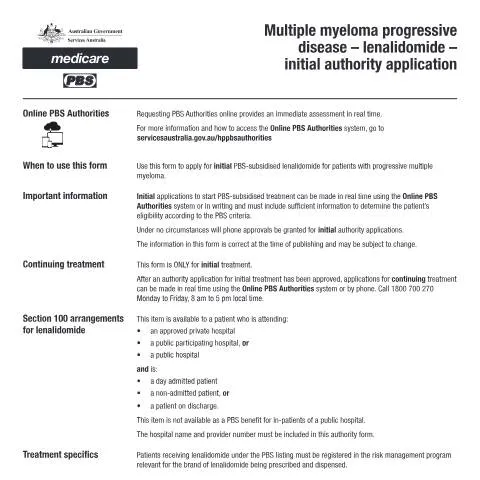
Navigating the PB158 Form: A Comprehensive Guide to Initial Authority Applications for Lenalidomide in Multiple Myeloma
For patients facing the complexities of multiple myeloma, the path to accessing lenalidomide can often feel overwhelming. The Multiple Myeloma Progressive Disease - Lenalidomide - Initial Authority Application Form (PB158) serves as a critical gateway for health professionals to secure necessary treatment approvals on behalf of their patients. Understanding how to effectively navigate this form is essential not just for medical practitioners, but also for patients and caregivers who play an instrumental role in the application process.
The Importance of PB158 in the Treatment Journey
The PB158 form is not merely a bureaucratic hurdle; it represents a vital step in ensuring that patients receive the medications they need when dealing with a progressive disease like multiple myeloma. Lenalidomide is often prescribed when conventional therapies are insufficient, making its timely approval paramount. This form acts as a formal request to Services Australia for the authority to prescribe and dispense this medication under the Pharmaceutical Benefits Scheme (PBS).
For health professionals, submitting this form signifies a commitment to their patient's well-being, ensuring that they have access to necessary therapies without facing prohibitive costs. It is crucial to appreciate the role this document plays within the broader healthcare framework that prioritizes patient access to essential medicines.
Who is Responsible for Submitting the PB158?
The responsibility for completing and submitting the PB158 form lies primarily with registered medical practitioners. These professionals must have a thorough understanding of both the medical and administrative aspects of the application process. However, the roles of patients and caregivers should not be underestimated; they often provide vital information and support throughout the submission process.
In scenarios involving minors or patients unable to advocate for themselves, it becomes even more critical for caregivers to assist in gathering the necessary documentation and ensuring that the application is completed accurately and promptly.
Responsibilities of Healthcare Providers
- Ensuring that all patient information is accurate and up-to-date.
- Clearly documenting the medical justification for prescribing lenalidomide.
- Being aware of any state-specific regulations or guidelines that may affect the application process.
Step-by-Step Guide to Completing the PB158 Form
Filling out the PB158 form requires careful attention to detail. Each section of the form must be completed accurately to avoid delays in processing. Here’s a breakdown of how to approach this task:
Section Breakdown
| Section | Details Required |
|---|---|
| Patient Identification | Full name, date of birth, address, and contact information. |
| Clinical Information | Diagnosis details, treatment history, and current health status. |
| Medication History | Previous treatments and responses, including any adverse effects. |
| Supporting Documents | Relevant medical reports and documents that justify lenalidomide use. |
It is advisable to collate all supporting documents prior to filling out the form. This helps in streamlining the process and ensures that nothing is overlooked. Additionally, health professionals should be thorough in their medical justification for the requested medication, as this is a key consideration in the approval process.
Submitting the PB158: The Process Unveiled
Once the PB158 form is complete, the next step is submission. Health professionals can typically submit the form electronically through the myGov portal, which centralizes various government services and simplifies the submission process.
Electronic Submission Guidelines
- Ensure that all required fields in the myGov portal are filled out.
- Attach all necessary documentation as outlined in the form.
- Double-check for any errors prior to submission to prevent unnecessary delays.
For those who may not have access to electronic submission, paper forms may still be submitted via mail. However, this method may lead to longer processing times, so it is generally recommended to utilize the online platform whenever possible.
Anticipating Outcomes: What Happens After Submission?
Once the application is submitted, it enters the review process by Services Australia. The timeframe for assessing the application may vary; however, applicants should be prepared for a waiting period as the medical justification is evaluated.
Following Up on Your Application
Health professionals and patients alike can take proactive steps to follow up on the status of the application:
- Keep a record of the submission confirmation and any reference numbers provided.
- Set reminders to check back on the application status after a predetermined period.
- Contact Services Australia directly should there be any concerns or questions regarding processing times.
Staying informed about the application's status is crucial, as it allows for timely intervention if additional information is requested or if there are any issues that may delay the approval.
What Sets the PB158 Apart from Similar Forms?
It is easy to confuse the PB158 with other authority application forms that pertain to different medications or patient conditions. Understanding the specific focus of PB158 helps healthcare providers navigate their responsibilities more effectively.
Comparative Overview: PB158 vs Similar Forms
| Form | Focus | Key Differences |
|---|---|---|
| PB157 | Other anti-cancer medications | Different clinical criteria and documentation requirements. |
| PB159 | Chronic disease treatments | Broader patient eligibility and varied medication profiles. |
| PB158 | Lenalidomide for multiple myeloma | Specific focus on progressive disease with stringent documentation standards. |
Recognizing these distinctions can help health practitioners ensure that they are using the correct forms for their patients' needs, ultimately making the process smoother and more efficient.
Preparing Justifications: Unique Considerations for PB158
The medical justification presented within the PB158 form must be robust and clearly articulated. Various factors can influence what is deemed acceptable, and health professionals should be aware of the specific considerations that apply to multiple myeloma and lenalidomide therapy.
Elements of a Strong Justification
- Clear explanation of the patient's current health status and progression of the disease.
- Detailed account of previous treatments and their outcomes.
- Evidence-based rationale for why lenalidomide is the most appropriate treatment option at this stage.
Engaging in thorough documentation and justification increases the likelihood of a favorable outcome. Additionally, keeping abreast of any updates to guidelines from Services Australia regarding multiple myeloma treatment can bolster the justification presented in the application.
In sum, the journey through the PB158 form reflects a commitment from both health professionals and their patients to navigate the complexities of accessing crucial medication. By understanding the nuances of this application, participants can enhance their chances of a successful outcome in the pursuit of effective treatment for multiple myeloma.
Understanding the Initial Authority Application Process for Lenalidomide
Navigating the Initial Authority Application Process for lenalidomide, particularly for patients with multiple myeloma (MM) progressive disease, requires a clear grasp of the necessary steps and documentation. The application form PB158 is designed to streamline access to this medication, but it's essential to understand the specific criteria that must be fulfilled to ensure your application is successful.
Firstly, it's crucial to confirm that the diagnosis of progressive multiple myeloma is supported by appropriate medical documentation. This includes a detailed pathology report and clinical notes from the treating physician outlining the progression of the disease. It is advisable to ensure that all documentation is current and reflects the patient's medical history accurately. The initial authority application is assessed by the Pharmaceutical Benefits Scheme (PBS), which evaluates applications based on the medical need and the evidence presented.
In addition to the necessary documents, it is essential to provide a clear treatment history, including previous therapies and the patient's response to those treatments. This information should ideally detail any side effects experienced and rationale for moving to lenalidomide. The PBS focuses on ensuring that lenalidomide is prescribed in circumstances that align with the evolving treatment standards for multiple myeloma, so presenting a comprehensive treatment history is vital.
Furthermore, once the PB158 form is completed, it should be submitted electronically via the myGov platform, ensuring that it is linked to your Medicare account. This step not only secures your submission but also allows for tracking the application status. If there are issues or additional information required, the treating physician will typically be contacted by Services Australia (the administrative body managing PBS applications).
Criteria for Approval: Clinical Considerations and Patient Profiles
When applying for lenalidomide for progressive multiple myeloma, specific clinical considerations must be met for a successful application. The Pharmaceutical Benefits Scheme outlines these criteria, which revolve around the patient's clinical status and the urgency of treatment.
Prior Treatment Evaluation: Patients must demonstrate that they have undergone at least one previous line of therapy and provide evidence regarding the failure or intolerance of that treatment. For instance, if a patient was treated with bortezomib and did not respond, this should be documented. The PBS closely examines the therapeutic history to confirm the appropriateness of lenalidomide as the next step.
Biomarker Testing: Recent advancements have highlighted the importance of biomarker testing in multiple myeloma treatment. Some applications may require specific tests that identify genetic abnormalities or protein expressions that could influence treatment efficacy. Patients may need to submit results from tests such as FISH (Fluorescence In Situ Hybridization) or other relevant molecular diagnostics to support their case.
Consultation with Hematology Specialists: Engaging with a hematology specialist is often beneficial for patients applying for lenalidomide. These professionals can provide insights into the latest treatment protocols and potentially strengthen an application through their expert endorsement and additional commentary on the necessity of lenalidomide for the patient's ongoing care.
It's also essential to consider patient profiles when assessing eligibility and approval likelihood. Factors such as age, comorbidities, and overall health can significantly influence the decision. For example, younger patients with fewer comorbidities may have a higher chance of approval if they exhibit a clinical need for lenalidomide compared to older patients who might have other health complications.
The Role of Ongoing Monitoring and Support in Treatment Outcomes
Once lenalidomide is approved and treatment commences, ongoing monitoring and support become critical for managing both the disease and the side effects associated with the medication. Regular follow-ups with healthcare providers are essential to:
Monitor Treatment Efficacy: Patients should have scheduled assessments to evaluate the effectiveness of lenalidomide in controlling their multiple myeloma. This typically includes blood tests to measure blood cell counts and assess the levels of monoclonal proteins, which are indicative of disease activity.
Managing Side Effects: Lenalidomide can cause various side effects, including fatigue, risk of infections, and potential hematological complications. Patients should be educated on recognizing these side effects and encouraged to report any issues to their healthcare team promptly. Effective management strategies and supportive care interventions should be discussed before treatment begins.
Psychosocial Support: The diagnosis and treatment of multiple myeloma can significantly impact a patient's mental health. Access to psychosocial support services is vital, as these services can provide counseling, support groups, and resources to help patients cope with the emotional challenges of their diagnosis and treatment journey.
Regular monitoring and an integrated support approach not only enhance treatment outcomes but also empower patients to take an active role in their healthcare. Education about their condition, treatment options, and the importance of adherence to prescribed therapies allows for better engagement and ultimately leads to improved health results.
By understanding the nuances of the Initial Authority Application for lenalidomide and the ongoing requirements post-approval, patients can navigate their treatment pathways more effectively and work towards optimal management of their multiple myeloma.