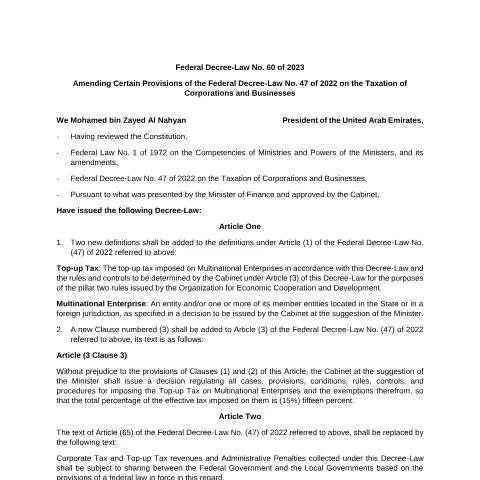
Overview of the Recent Amendments to UAE Corporate Tax Legislation
The Federal Decree-Law No (60) of 2023 introduces significant updates to the existing corporate and business taxation framework within the United Arab Emirates (UAE). This legislative update aims to enhance the UAE’s tax system, ensuring alignment with international standards and fostering a more transparent, efficient, and competitive business environment. It is essential for corporate entities, legal advisors, and tax professionals operating within the UAE to understand the scope and implications of these amendments.
Scope and Objectives of the Decree-Law
The primary objective of Federal Decree-Law No (60) of 2023 is to amend certain provisions of the previous legislation—namely, Federal Decree-Law No (47) of 2022—pertaining to the taxation of corporations and businesses. These amendments are designed to clarify existing rules, introduce new compliance requirements, and streamline tax procedures across different sectors and jurisdictions within the UAE.
The law applies to all entities engaged in commercial, industrial, or professional activities within the UAE, including free zones, provided they meet the criteria specified under the law. It also extends to foreign entities with operations or income derived from the UAE, emphasizing the government’s commitment to a broad and inclusive tax regulation framework.
Key Provisions and Changes Introduced
Refinement of Taxable Income and Deductions
The amendments specify more precise definitions of taxable income, ensuring consistency in how income is calculated and reported. They also introduce clarified guidelines regarding allowable deductions, encouraging compliance and reducing ambiguities for taxpayers. These adjustments aim to create a fair and predictable tax environment that aligns with international best practices.
Enhanced Compliance and Reporting Requirements
One of the notable changes involves strengthening the compliance framework. Entities are now required to maintain detailed financial records and submit comprehensive tax declarations through the designated electronic platforms. The amendments emphasize digitalization, leveraging the UAE’s robust e-government infrastructure to facilitate efficient and transparent tax administration.
Alignment with International Tax Standards
The law incorporates measures to align UAE tax policies with global standards, including provisions related to transfer pricing, anti-avoidance, and information exchange. These updates are part of the UAE’s broader strategy to enhance its reputation as a compliant and transparent jurisdiction for international business.
Implications for Businesses and Taxpayers
Adapting to New Compliance Procedures
Businesses operating within the UAE should review their internal accounting and reporting processes to ensure conformity with the new legal requirements. This may involve updating financial systems, training staff, and consulting with tax advisors to interpret the amended provisions effectively.
Impact on Tax Planning and Strategy
The amendments may influence corporate tax planning, particularly regarding allowable deductions and transfer pricing arrangements. Companies should reassess their tax strategies in light of the clarified rules and enhanced compliance obligations to optimize their tax positions legally.
Utilization of Digital Platforms for Tax Filing
The UAE’s digital infrastructure facilitates the submission of tax declarations and related documentation via online portals, such as the Federal Tax Authority’s (FTA) digital services platform. Entities are encouraged to utilize these electronic channels to ensure timely and accurate filings, benefiting from the efficiency and security of digital transactions.
Conclusion: Navigating the Updated Tax Framework
The amendments introduced by Federal Decree-Law No (60) of 2023 reflect the UAE’s ongoing commitment to modernize and strengthen its tax legislation. By clarifying key provisions, enhancing compliance mechanisms, and aligning with international standards, the law aims to support sustainable economic growth and maintain the UAE’s reputation as a global business hub. Stakeholders are advised to stay informed about these legislative changes and seek professional guidance to ensure full compliance and optimal tax management within this evolving legal landscape.