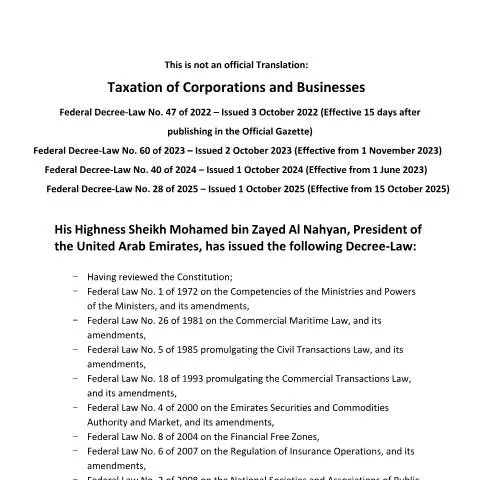
Overview of Federal Decree-Law No (47) of 2022 on the Taxation of Corporations and Businesses
The United Arab Emirates (UAE) has introduced a comprehensive legal framework governing the taxation of corporations and businesses through Federal Decree-Law No (47) of 2022. This legislation signifies a pivotal step in aligning the UAE’s fiscal policies with international standards, promoting transparency, and fostering a conducive environment for sustainable economic growth. It is essential for business owners, legal advisors, and financial professionals operating within the UAE to understand the scope, key provisions, and implications of this decree to ensure compliance and optimize their tax obligations.
Scope and Object of the Legislation
The primary objective of this decree is to establish a clear and unified legal structure for the taxation of corporate entities and commercial activities across the UAE. It aims to regulate the assessment, collection, and management of taxes applicable to various types of businesses, including local and foreign entities engaged in economic activities within the federation. The legislation also seeks to foster a fair and competitive business environment by defining tax obligations, exemptions, and administrative procedures.
Key Provisions and Principles
Taxable Persons and Entities
The decree specifies the types of legal entities subject to corporate taxation, including limited liability companies, joint-stock companies, branches of foreign companies, and other commercial entities operating within the UAE. It clarifies the criteria for determining tax residency and the scope of taxable income, ensuring that all relevant entities are covered under the new legal framework.
Tax Rates and Calculation
While the decree sets out the overarching principles for tax calculation, specific rates and thresholds are determined through subsequent regulations issued by the Federal Tax Authority (FTA). The legislation emphasizes principles of fairness and transparency, ensuring that the tax base accurately reflects the economic activities of businesses while providing clarity on deductibility and exemptions.
Tax Administration and Compliance
The decree empowers the Federal Tax Authority (FTA) to oversee tax registration, filing, and payment processes. It introduces digital procedures to streamline compliance, including online registration and submission of tax returns via the FTA’s e-services portal. Businesses are required to maintain detailed financial records and cooperate with the authority during audits or inquiries.
Double Taxation and International Agreements
To prevent double taxation and promote international cooperation, the law provides mechanisms for mutual agreement and recognition of tax treaties. It aligns with global standards to facilitate cross-border trade and investment, offering clarity on tax treatment for foreign entities and income sources.
Impacts on Businesses and Future Developments
This legislation marks a significant evolution in the UAE’s fiscal landscape, transitioning towards a more structured and transparent tax system. Businesses operating within the federation must adapt their financial and compliance practices to meet the new legal requirements. This includes implementing appropriate accounting systems, registering with the FTA, and understanding their tax obligations under the decree.
Further regulations and detailed guidelines are expected to be issued by the Federal Tax Authority to elaborate on specific rates, exemptions, and procedural requirements. Stakeholders are encouraged to stay informed through official channels and seek professional advice to ensure full compliance with the evolving legal framework.
Conclusion
Federal Decree-Law No (47) of 2022 on the Taxation of Corporations and Businesses represents a strategic move by the UAE to modernize its tax system, foster economic competitiveness, and align with international standards. For businesses and legal practitioners, understanding the scope and principles of this legislation is crucial to navigate the new fiscal environment effectively. Compliance with the law not only ensures legal adherence but also enhances the reputation and operational stability of businesses within the UAE.