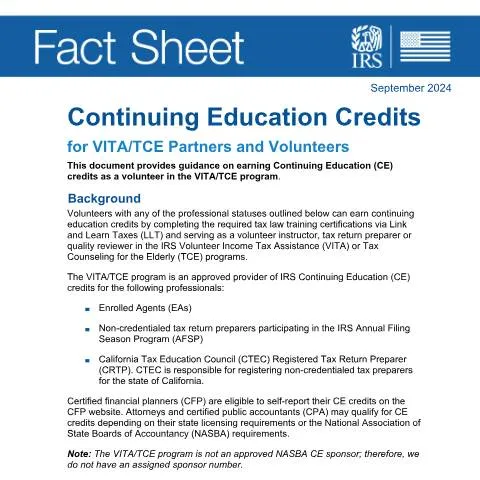
Navigating the IRS Publication 5362: Essential Insights for VITA/TCE Volunteers
Volunteering for the IRS Volunteer Income Tax Assistance (VITA) or Tax Counseling for the Elderly (TCE) programs is more than just a community service; it’s a pathway to professional development through Continuing Education (CE) credits. IRS Publication 5362 outlines the requirements and guidelines for volunteers wishing to earn these credits. For those involved in these programs, understanding the nuances of this publication is crucial for maximizing their learning experience and ensuring compliance with IRS standards.
A Timeline of Opportunities: Registration, Training, and Service
To fully appreciate the process of earning CE credits, it’s essential to be aware of the timeline that governs this endeavor. Successful volunteers typically follow a structured pathway, commencing from registration to completion of educational requirements and finally, to service delivery.
- Registration Phase: Volunteers must register on the Link & Learn Taxes (LLT) platform to begin the process. This includes filling out necessary personal and professional details that will later populate Form 13615.
- Training Requirements: Completion of training sessions, including the Volunteer Standards of Conduct (VSC) and specialized tax law training, must be accomplished ahead of volunteer service. Each volunteer is expected to pass their respective tests with a score of at least 80%.
- Volunteer Service: After fulfilling the training prerequisites, volunteers are required to serve a minimum of 10 hours in their chosen capacity, be it as a tax return preparer, quality reviewer, or tax law instructor.
Throughout this timeline, it's crucial for volunteers to keep track of their progress and ensure they meet all requirements within the specified timeframe to qualify for CE credits.
Breaking Down the Components: Form 13615 and Required Fields
The completion of Form 13615 is a pivotal moment in the CE credit process. This form not only certifies a volunteer's commitment but also verifies their professional status, which is essential for obtaining credits. Understanding the required fields can help avoid common pitfalls.
Key Information to Include
- Name: Ensure that the name entered matches exactly with the Preparer Tax Identification Number (PTIN) on file to prevent issues during validation.
- PTIN: For certain volunteers, including Enrolled Agents and California Tax Education Council return preparers, entering a valid PTIN is mandatory. Incorrect entries can lead to rejection during validation.
- CTEC Number: If applicable, volunteers must include their California Tax Education Council number, ensuring it follows the prescribed format.
Each of these components serves a critical role in the verification process. Inaccuracies can lead to disqualification from receiving CE credits, emphasizing the importance of meticulous attention to detail.
Understanding the CE Credit System: Types and Limits
The IRS has structured a system of CE credits that categorizes different types of training and their corresponding credit values. Understanding this structure can help volunteers strategically choose their educational paths.
| Training Type | Credit Hours |
|---|---|
| Volunteer Standards of Conduct (Ethics) | 1 |
| Federal Tax Law Updates | 3 |
| Federal Tax Law | 10 |
| Specialty Federal Tax Law Course | 4 |
| Total Allowable CE Credits | 18 |
Volunteers can earn up to 18 CE credits by engaging with various training modules, which enhances their skills and knowledge while also fulfilling IRS requirements. Each training module not only contributes to their CE credits but also equips them with essential tools and insights necessary for effective volunteer work.
The Regulatory Framework: How IRS Publication 5362 Fits In
IRS Publication 5362 exists within a broader framework of federal guidelines aimed at governing volunteer programs. The publication is rooted in the IRS's commitment to providing guidance on tax law and ensuring that volunteers are appropriately trained and certified.
This framework establishes the necessary structure for the VITA/TCE programs and outlines the specific requirements that volunteers must meet. It reflects the IRS's ongoing efforts to maintain high standards in tax assistance programs while fostering a learning environment for volunteers.
Addressing Hurdles: What to Do in Case of Issues with Your Application
Despite careful preparation, unforeseen issues can arise during the CE credit application process. Understanding how to effectively address these problems can save volunteers time and stress.
Common Issues and Solutions
- Rejection of Form 13615: If the form is rejected, volunteers need to promptly verify all entered details, specifically the PTIN and CTEC number, ensuring they are accurate and complete.
- Missing Credits: In instances of missing CE credits, volunteers should confirm that their volunteer hours were properly logged and that the necessary training was completed and documented.
- Delays in Processing: CE credit processing typically concludes by late July. For volunteers needing credits earlier, exploring alternative ways to earn credits might be necessary.
Addressing these hurdles with proactive measures and thorough verification of information can mitigate potential setbacks and ensure a smoother journey through the volunteering process.
The Value of Continuous Learning: Long-term Benefits of Participation
Engaging with the VITA/TCE programs goes beyond immediate CE credits; it cultivates a culture of continuous learning. Volunteers benefit from the acquired knowledge, which can enhance their professional profiles and expand networking opportunities within the tax preparation field.
Moreover, the experience gained through hands-on practice in tax preparation not only boosts confidence but also instills a sense of community contribution. Volunteers often find that the skills honed during their tenure in these programs translate into greater professional opportunities, whether they decide to pursue tax preparation full-time or maintain it as a secondary vocation.
Assessing the Impact: A Broader Look at Community Engagement through VITA/TCE
The role of volunteers in the VITA and TCE programs extends beyond individual growth; it significantly impacts the communities they serve. By providing tax assistance, volunteers help ensure that low-income individuals and the elderly can navigate their tax responsibilities effectively, thus contributing to the financial well-being of their communities.
As such, IRS Publication 5362 and the associated CE credits serve as vital components in fostering a well-trained volunteer workforce that upholds the IRS's mission of providing equitable tax assistance across diverse populations.
Understanding IRS Publication 5362: A Comprehensive Overview
IRS Publication 5362 serves as a vital resource for taxpayers navigating the complexities surrounding the taxation of individuals and businesses involved in specific types of transactions. This publication is particularly relevant for those who deal with international transactions, providing guidance on how to comply with U.S. tax laws while engaging in cross-border activities.
One of the core purposes of Publication 5362 is to clarify the reporting requirements and obligations that individuals and entities must adhere to when they engage in foreign transactions. These may include sales of goods, services, or any forms of income derived from foreign sources. Understanding the specifics can minimize potential penalties and enhance compliance with federal tax regulations.
As the IRS continually updates its guidelines to align with changing legislation and international tax treaties, it is essential for taxpayers to stay informed about any amendments to this publication. Regularly checking the official IRS website (.gov) ensures that you have the most current information, especially if you engage in ongoing foreign transactions or investments.
Who Should Refer to IRS Publication 5362?
Publication 5362 is not just for large corporations or seasoned tax professionals. A wide array of individuals and entities should consider consulting this document, including:
- U.S. Citizens Living Abroad: Americans residing outside the United States must understand how their foreign income is taxed and what forms they need to file. This includes the requirement to report foreign bank accounts, which can often be overlooked.
- Businesses Engaging in Exporting or Importing: Companies involved in international trade must comprehend the implications of tariffs, duties, and potential tax credits or deductions available under U.S. and international tax law.
- Tax Professionals: Accountants and financial advisors who assist clients with international dealings should regularly reference Publication 5362 to offer informed guidance on compliance and strategic planning.
For each segment of taxpayers, the publication delineates the necessary forms and schedules that must be submitted to the IRS, as well as the implications of failing to comply with these requirements. This attention to diverse user needs highlights the publication’s role as a comprehensive tool in navigating U.S. tax law as it pertains to international transactions.
Common Scenarios Addressed in IRS Publication 5362
Publication 5362 encompasses a variety of scenarios that taxpayers may encounter, providing detailed examples that elucidate the practical aspects of compliance. Here are a few common scenarios addressed:
- Income from Foreign Sources: The publication outlines how to report various types of income earned abroad, such as wages, rents, and dividends. It emphasizes the importance of converting foreign currency to U.S. dollars using the appropriate exchange rates at the time the income was received.
- Foreign Tax Credit: Taxpayers may be eligible for a foreign tax credit to prevent double taxation. Publication 5362 explains how to claim this credit and the necessary documentation required to support the claim.
- Gifts and Inheritance from Foreign Persons: The publication addresses the tax implications of receiving gifts or inheritances from non-resident aliens. Understanding the thresholds for reporting these transactions is crucial to avoid unintended tax liabilities.
These scenarios not only clarify the obligations of taxpayers but also offer insight into the nuanced tax considerations specific to international dealings. By utilizing this publication, individuals and businesses can better understand their responsibilities and make informed decisions regarding their tax planning strategies.