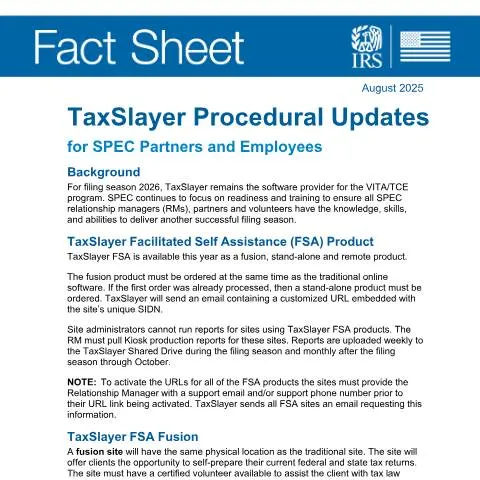
Navigating the Intricacies of IRS Publication 5361
As tax season approaches, the importance of accurately navigating the myriad of IRS forms cannot be overstated. One document that stands out in this landscape is the IRS Publication 5361, which serves as a critical resource for Volunteer Income Tax Assistance (VITA) and Tax Counseling for the Elderly (TCE) programs. This publication not only outlines the procedural updates for SPEC partners and employees but also enhances the effectiveness of the volunteer-led tax preparation initiatives across the United States.
Understanding the Context: Why IRS Publication 5361 Matters
IRS Publication 5361 focuses on the essential updates for those involved in the VITA and TCE programs, specifically concerning the TaxSlayer software. This guide is pivotal for volunteers, site administrators, and coordinators as they prepare for tax filing season. The publication encapsulates everything from software functionalities to strict security protocols, ensuring that all parties are well informed and equipped to assist taxpayers effectively.
Key Updates for the Upcoming Filing Season
- TaxSlayer Facilitated Self Assistance (FSA) - New configurations in FSA for the 2026 filing season allow for a fusion product, a stand-alone version, and a remote model to empower taxpayers.
- Site Configuration - Each site must ensure the availability of certified volunteers and appropriate resources to guide taxpayers through the software efficiently.
- Security Enhancements - The integration of reCAPTCHA security measures guarantees a safer online environment for both volunteers and users.
Breaking Down the Components: A Closer Look at Publication 5361
When dealing with IRS Publication 5361, understanding its components is vital for proper implementation. Each section of the publication is designed to address specific needs within the VITA/TCE communities, ensuring that tax preparers have the necessary tools at their disposal.
TaxSlayer FSA: The New Paradigm
The TaxSlayer Facilitated Self Assistance (FSA) represents a significant step forward in self-preparation initiatives. There are three distinct types of sites where the FSA can be utilized:
- Fusion Site: This site maintains the same physical location as a traditional VITA/TCE site, allowing taxpayers to self-prepare their tax returns with assistance from certified volunteers.
- Stand-Alone Site: A dedicated site with its own operating hours, allowing clients to use the self-prep software while still having access to volunteer assistance.
- Remote Site: This model allows for email-based support and remote assistance, increasing accessibility for taxpayers who may not have the ability to visit a physical location.
Preparing Documentation: Ensuring Compliance and Accuracy
Completing tax forms requires meticulous preparation of documentation. For IRS Publication 5361, certain pieces of information are pivotal:
- Taxpayer Identification: Ensure you have the correct Social Security Numbers (SSNs) for both the taxpayer and their dependents.
- Income Documentation: Gather all necessary income documents, such as W-2s, 1099s, and any other relevant tax documents.
- Deductions and Credits: Collect information on potential deductions and credits that the taxpayer may be eligible for to maximize their refund or minimize their liability.
Timelines: From Initial Preparation to Filing
Understanding the timeline for IRS Publication 5361 is crucial for volunteers and taxpayers alike. Here’s a step-by-step breakdown:
- Preparation Phase: Volunteers should review and familiarize themselves with the publication well before the filing season begins, ideally starting in early January.
- Tax Season Kickoff: VITA and TCE sites typically open around mid-January, aligning with the IRS's opening of the e-filing system.
- Filing Deadlines: Tax returns are generally due by April 15; however, those filing for extensions must be aware of the implications of this choice.
Common Pitfalls and Best Practices
While IRS Publication 5361 is a comprehensive guide, pitfalls still exist. Awareness of these traps can save time and trouble:
- Inaccurate Information: Double-check all entered data, especially SSNs and income figures; simple typographical errors can lead to rejected returns.
- Missing Documentation: Ensure all necessary documents are collected before filing to avoid delays or complications.
- Volunteer Training: Ongoing training and refresher courses for volunteers are essential to maintain knowledge of tax law changes and software updates.
Responding to Errors or Rejections
In the event of an error or rejection of a tax return filed through the VITA/TCE program, IRS Publication 5361 provides a clear pathway for resolution:
- Identify the Error: Review the rejection notice carefully to determine whether the issue is related to missing information or other discrepancies.
- Gather Relevant Documentation: Assemble any paperwork needed to correct the mistakes identified in the rejection notice.
- File an Amended Return: Depending on the nature of the error, you may need to file an amended return using Form 1040-X.
Integrating IRS Publication 5361 into Broader Tax Preparation Efforts
IRS Publication 5361 does not exist in a vacuum; it plays an integral role in the broader context of tax preparation activities:
- Community Engagement: By utilizing the guidance in Publication 5361, volunteers can better connect with the communities they serve, providing personalized assistance.
- Impact Measurement: The effectiveness of the VITA/TCE programs can be assessed through the implementation of strategies outlined in this publication, helping to secure future funding and support.
- Continuous Improvement: Feedback from volunteers and taxpayers can lead to ongoing updates and enhancements to the services offered, ensuring they remain relevant and effective.
TaxSlayer: A Key Component of Publication 5361
Understanding how TaxSlayer integrates with IRS Publication 5361 is vital for all stakeholders:
- Software Training: Volunteers must undergo training on the latest version of TaxSlayer to ensure proficiency in its use during tax preparation.
- Security Protocols: The introduction of security measures such as reCAPTCHA ensures that sensitive taxpayer information remains protected throughout the filing process.
- Customer Portal Features: The Customer Portal allows clients to securely upload documents, reducing the reliance on physical paperwork and streamlining the filing process.
Final Thoughts on IRS Publication 5361
The comprehensive nature of IRS Publication 5361 encapsulates the crucial updates and operational guidelines needed for successful navigation of tax filing seasons. By understanding the intricacies of the publication, volunteers and site administrators can significantly enhance their efficacy in assisting taxpayers, ultimately contributing to the greater good of community financial health.
Understanding the Importance of IRS Publication 5361
IRS Publication 5361, also known as the "Other Income" publication, provides essential guidance regarding various forms of income that taxpayers must report on their federal tax returns. This document is critical for ensuring compliance with the Internal Revenue Service regulations and for taxpayers to accurately report all forms of income, which can include compensation from various sources, investment income, or income earned from side businesses. Understanding the implications of this publication can significantly affect your overall tax liability and potential deductions.
One of the key aspects of IRS Publication 5361 is its distinction between different types of income. It categorizes income into various segments—ordinary income, capital gains, and other specific income types—which can significantly influence your filing status. For example, capital gains may be taxed at a different rate than ordinary income. Furthermore, the publication provides detailed definitions and examples of what constitutes "other income," which can include things like prizes, awards, and even certain types of debt cancellation. Taxpayers should be vigilant in tracking all income streams and understanding how each is classified to avoid potential penalties or issues with the IRS.
Moreover, it's crucial to recognize that, based on the type of income reported, taxpayers may be entitled to different deductions or credits. For instance, if you receive income from a hobby, the IRS allows for certain deductions that can offset this income, though it’s important to navigate these rules carefully to ensure compliance. Publication 5361 outlines conditions under which these deductions can be claimed, offering guidance tailored to various taxpayer situations.
Common Misconceptions About Reporting Other Income
When it comes to IRS Publication 5361, many taxpayers harbor misconceptions that can lead to costly mistakes. One common misunderstanding is that all income types are treated uniformly under taxation laws. In reality, the IRS places different tax implications on various forms of income. For instance, many individuals assume that income earned from side hustles or freelance work is not fully taxable because it was earned outside a traditional employment setting. This is incorrect; all income, regardless of its source, must be reported on Form 1040 and is subject to taxation.
Another misconception involves the notion that informal income—such as cash payments or bartering—is exempt from taxation. The IRS clearly states in Publication 5361 that all income must be reported, even if you do not receive a Form 1099 or similar documentation. Failure to report such income can result in penalties, fines, or even audits, which can be time-consuming and stressful for taxpayers.
Additionally, some taxpayers believe that they can avoid reporting income if they are below a certain threshold. While there are indeed minimum income requirements for filing taxes, any income earned must be reported accurately, regardless of the amount. Publication 5361 emphasizes that even small windfalls—like cash gifts or prizes—count as income and should be reported accordingly.
Utilizing IRS Publication 5361 for Better Tax Planning
Tax planning is an essential aspect of financial health, and IRS Publication 5361 should be a key resource in that process. By understanding the nuances of different income types and their implications, taxpayers can make more informed decisions throughout the tax year. For example, if you anticipate receiving income from a new venture or investment, Publication 5361 provides insight into how such income should be reported and the potential deductions that may apply.
One practical approach to utilizing this publication is to maintain meticulous records of all potential income sources. By categorizing income as advised in Publication 5361, taxpayers can better prepare their tax return, ensuring that no income is overlooked. This practice not only helps in compliance but can also reveal opportunities for tax savings through applicable deductions and credits.
Moreover, Publication 5361 can guide taxpayers in strategizing their financial activities. For instance, understanding how capital gains are taxed compared to ordinary income can inform decisions around selling investments or managing other assets. Taxpayers might choose to hold onto investments longer to benefit from lower long-term capital gains tax rates, or they might decide to take losses on certain investments to offset gains elsewhere. The strategic insights available in IRS Publication 5361 can empower taxpayers to optimize their overall tax situations.