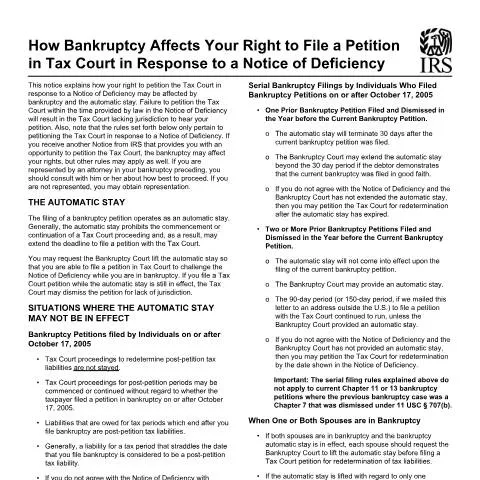
Navigating IRS Form 1421: A Critical Tool in Tax Disputes During Bankruptcy
Understanding the Context of Form 1421
When taxpayers face a Notice of Deficiency from the IRS, the stakes can be high. This notice indicates that the IRS believes you owe more taxes than you reported. In circumstances where a taxpayer has also filed for bankruptcy, the path to challenge this notice can become convoluted. Form 1421 plays a pivotal role in this process, serving as a guide for understanding how bankruptcy interacts with your right to petition the Tax Court. The IRS notice can be a source of stress, especially for individuals already grappling with financial hardship. Understanding how bankruptcy affects the ability to address these tax disputes is essential for anyone navigating these turbulent waters. Form 1421 steps in to clarify these intersections, ensuring that taxpayers are informed of their rights and obligations.The Role of Bankruptcy in Tax Court Petitions
In the midst of ongoing bankruptcy proceedings, a taxpayer might receive a Notice of Deficiency. At this juncture, the automatic stay that comes with filing for bankruptcy plays a crucial role. This stay typically prevents ongoing legal actions against the taxpayer, including Tax Court proceedings. However, Form 1421 outlines situations where the automatic stay may not be effective, especially regarding post-petition tax liabilities. The Importance of the Automatic Stay Once a bankruptcy petition is filed, the automatic stay halts any collection efforts, including those from the IRS. However, there are key nuances to be aware of:- Tax Court Proceedings for Post-Petition Tax Liabilities: These proceedings may continue even if the taxpayer is in bankruptcy. This means if you owe taxes from a period after your bankruptcy filing, the IRS can still initiate proceedings to collect those taxes.
- Requesting to Lift the Stay: Taxpayers can petition the Bankruptcy Court to lift the stay for the purpose of filing a Tax Court petition. If granted, this allows the taxpayer to challenge the Notice of Deficiency.
Key Deadlines and Timelines
Understanding the timeline concerning Form 1421 and related IRS actions is crucial for proper navigation through the process. The rules governing the timing of Tax Court petitions post-bankruptcy are strict, and missing a deadline can severely impair your ability to challenge a tax deficiency. Critical Deadlines to Remember:| Event | Timeframe |
|---|---|
| Filing a Tax Court Petition after Automatic Stay is Lifted | 90 days (or 150 days if outside the U.S.) |
| Adding Additional Time Post-Automatic Stay | +60 days |
Preparing for the Tax Court Petition
When preparing to file a Tax Court petition, taxpayers must collect relevant documentation and ensure their submission meets IRS standards. The preparation phase is critical; thus, understanding the necessary steps can streamline the process significantly. Steps to Prepare for Your Petition:- Gather all relevant documentation that supports your case against the IRS’s claim, including tax returns, records of payments, and any correspondence with the IRS.
- Consult with a tax professional or attorney who specializes in bankruptcy and tax law to review your documents and provide guidance on your position.
- Carefully fill out the Tax Court petition form, ensuring all information is accurate and complete to avoid any delays.
- Submit the petition to the Tax Court, making sure to adhere to your specific filing deadline as outlined in the Notice of Deficiency.
Distinct Features of Form 1421 Compared to Other IRS Forms
Form 1421 is unique in its focus on the interaction between bankruptcy and tax disputes. Many taxpayers may confuse it with other IRS forms that handle general tax disputes or other aspects of bankruptcy. Comparison of Form 1421 and Other Related IRS Forms:| Form Name | Purpose | Unique Feature |
|---|---|---|
| Form 1421 | Addressing tax disputes during bankruptcy | Specifically addresses timing and rights in Tax Court |
| Form 1040 | Individual Income Tax Return | General tax filing form |
| Form 843 | Claim for Refund and Request for Abatement | Focused on refund claims, not bankruptcy |
Common Scenarios Affecting Your Rights in Tax Court
Various situations can impact a taxpayer’s right to petition the Tax Court following a bankruptcy filing. These scenarios illustrate the complexities involved and highlight the importance of careful navigation through the process. Common Scenarios Include:- Multiple Bankruptcy Filings: If you have previously filed for bankruptcy and your petition was dismissed, the automatic stay may not apply in the same way. Specifically, if you filed more than one bankruptcy in the year leading up to your current petition, additional rules come into play.
- Joint Filings: If both spouses have filed for bankruptcy, it is crucial for each to request that the automatic stay be lifted, should they wish to pursue a Tax Court petition.
The Next Steps After Filing Your Petition
Once the Tax Court petition is filed, taxpayers enter a new phase of the process. At this point, understanding the subsequent steps is critical to ensure correct compliance with legal requirements and to prepare for potential hearings. What Happens Next:- The Tax Court will notify you about the acceptance of your petition and provide further instructions on the next steps.
- If your case proceeds, you might be scheduled for a hearing where you will present your arguments against the IRS’s Notice of Deficiency.
- Prepare to engage in discovery, where both parties exchange pertinent information relevant to the case.
Conclusion: Empowering Your Tax Decisions
Navigating the intersection of tax disputes and bankruptcy can be daunting. Form 1421 serves as a vital resource, illuminating the legal landscape for taxpayers facing a Notice of Deficiency amidst ongoing bankruptcy proceedings. By understanding the form's implications, adhering to critical timelines, and preparing thoroughly for Tax Court petitions, individuals can empower themselves to make informed decisions about their tax liabilities. Informed taxpayers are better equipped to navigate the complex nature of tax law, ultimately leading to more favorable outcomes in their financial journeys.Understanding the IRS Form 1421: Key Sections and Guidelines
The IRS Form 1421, often referred to as the "Application for Determination of Workers' Compensation Benefits," plays a significant role in the landscape of employee benefits and tax regulations. This form is crucial for individuals who have received workers' compensation benefits and need to determine the tax implications of these benefits. Understanding the key sections of Form 1421 is vital for ensuring compliance with federal tax regulations.
One of the most important sections of Form 1421 is the "Claimant Information" section. Here, individuals are required to provide their Social Security Number (SSN), which serves as the primary identifier for taxpayers in the U.S. The IRS uses this information to track tax obligations and ensure that the workers' compensation benefits are correctly reported.
Another crucial part of the form is the "Details of Workers' Compensation Benefits" section. Taxpayers must disclose information about the total amount of benefits received, the duration of the benefits, and the source of those benefits. This helps the IRS assess whether the payments are subject to taxation under federal law. It’s essential to be as accurate and detailed as possible in this section to avoid potential audits or penalties.
Additionally, Form 1421 includes a section for "Signature and Date," which is vital for the authenticity of the application. The claimant must sign and date the form, indicating their consent to the information provided. This section also serves as a legal acknowledgment of the consequences of supplying false information to the IRS, which can lead to severe penalties.
Common Mistakes to Avoid When Filing Form 1421
When filing Form 1421, there are several common mistakes that taxpayers should be aware of to ensure a smooth filing process. Understanding these pitfalls can help individuals avoid delays and complications with the IRS.
First and foremost, a frequent error involves providing incorrect or incomplete personal information. A simple typo in your Social Security Number or name can lead to significant issues, including delays in processing or even denial of benefits. Double-checking your information before submission can save you from these hassles.
Another common mistake is failing to report all sources of workers' compensation benefits. Taxpayers often overlook small amounts received from various state programs or insurance companies. It's crucial to report all benefits accurately, as underreporting can lead to penalties and interest on unpaid taxes.
Moreover, some individuals neglect to keep proper documentation of their workers' compensation benefits. Having detailed records, including payment stubs and correspondence with compensation boards, can be invaluable if the IRS requests evidence of your benefits. This documentation supports your claims and demonstrates compliance during any audits.
Lastly, many filers forget to sign and date the form. This might seem minor, but a missing signature can result in the IRS returning your application or denying it. Always ensure your form is signed and dated appropriately before submission.
Tax Implications of Workers' Compensation Benefits Reported on Form 1421
Understanding the tax implications of workers' compensation benefits is crucial for any taxpayer who has received such benefits. These implications can vary widely depending on the nature of the benefits and the individual’s overall tax situation.
Generally, workers' compensation benefits are not subject to federal income tax. This is a significant advantage for recipients, as it allows them to retain the full amount of their benefits without worrying about immediate tax liabilities. However, there are exceptions to this rule. For instance, if a taxpayer has received benefits and also claims other income, such as Social Security disability benefits, the IRS may require a portion of these benefits to be reported, depending on total income levels.
Another critical aspect is distinguishing between different types of compensation payments. Permanent disability benefits may have different tax treatments compared to temporary benefits. It is essential to categorize the benefits received accurately and consult with a tax professional if uncertain about the classifications.
Moreover, some individuals may encounter situations where they have received a lump-sum payment for back workers' compensation benefits. In such cases, the taxpayer must report the total amount accurately on Form 1421, ensuring that they are in compliance with IRS regulations regarding income reporting.
Finally, it's advisable to prepare for potential changes in tax laws that may affect the treatment of workers' compensation benefits in the future. Staying informed about legislative changes can help taxpayers minimize any negative implications on their tax filings and overall financial situation.