Navigating IRS Form N1036: A Comprehensive Guide
Tax season can often feel overwhelming, especially for employers trying to navigate the complexities of payroll taxation. Among the essential resources at their disposal is the IRS Notice 1036, which provides vital information regarding the percentage method tables for income tax withholding. Understanding this document is crucial for compliance and accurate payroll processing.
The Purpose Behind Form N1036
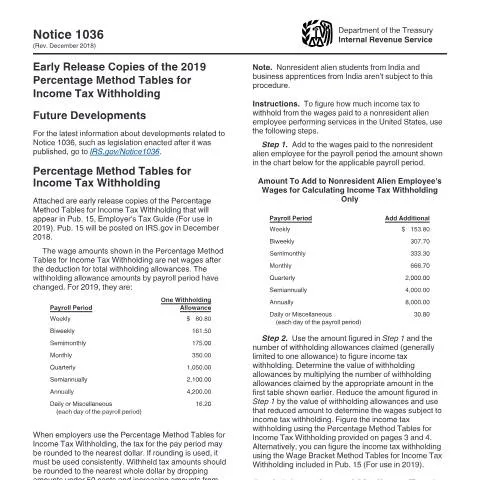
IRS Notice 1036, revised in December 2018, serves as a roadmap for employers outlining the percentage method tables for income tax withholding applicable for the 2019 tax year. This notice plays a pivotal role in ensuring that employers calculate the amount to withhold from their employees' wages accurately. It contains updated wage amounts for withholding allowances and provides specific instructions for handling nonresident alien employees.
Understanding the Percentage Method Tables
The percentage method tables included in Notice 1036 are designed to simplify the withholding calculation process for employers. These tables outline how much federal income tax should be withheld based on an employee’s wages and the number of withholding allowances they claim. The wage amounts specified are net wages after the deduction for total withholding allowances.
- Weekly: $80.80 per allowance
- Biweekly: $161.50 per allowance
- Semimonthly: $175.00 per allowance
- Monthly: $350.00 per allowance
- Quarterly: $1,050.00 per allowance
- Semiannually: $2,100.00 per allowance
- Annually: $4,200.00 per allowance
- Daily or Miscellaneous: $16.20 per allowance
Employers must round withholding amounts consistently to the nearest whole dollar, which can impact total taxes withheld over time.
Who is Impacted by IRS Notice 1036?
The implications of Notice 1036 extend beyond just employers; they affect various profiles within the workforce. Understanding these nuances is vital for compliance.
Employers and Payroll Administrators
Employers must utilize the updated tables to ensure accurate withholdings. Payroll administrators need to be especially vigilant in implementing these changes, as incorrect withholding could lead to tax liabilities or penalties.
Employees with Withholding Allowances
Employees claiming one or more withholding allowances on their W-4 forms are directly affected, as these allowances dictate the amount of federal income tax withheld from their wages.
Nonresident Alien Employees
Special consideration is required for nonresident alien employees. For these individuals, additional steps come into play when calculating tax withholdings.
Filing and Using the Information from Form N1036
Employers must be meticulous when using the information from Notice 1036 to calculate federal tax withholdings, especially when it comes to nonresident alien employees. This document serves as both a reference and a guide for compliance.
Steps for Using Notice 1036 in Payroll Processing
- Determine the employee's wages for the pay period.
- Identify the number of withholding allowances the employee has claimed on their W-4.
- Refer to the applicable percentage method tables outlined in Notice 1036.
- Calculate the withholding amount based on the wages and allowances.
- Round the total amount to the nearest dollar for consistency.
Following these steps can help ensure compliance and reduce the risk of errors during payroll processing.
Different Filing Channels: Online Versus Paper Submission
Employers may wonder about the best channels for submitting information related to payroll and withholdings. While Notice 1036 itself is not submitted to the IRS, the methods of filing tax returns and associated documents are crucial for compliance. Here’s a breakdown of the filing channels:
| Filing Method | Advantages | Disadvantages |
|---|---|---|
| Online Filing |
|
|
| Paper Filing |
|
|
Choosing the right method can significantly affect tax processing efficiency. Employers should weigh the pros and cons based on their specific circumstances.
The Interconnection of IRS Notice 1036 with Broader Tax Procedures
Understanding how Notice 1036 fits within the broader context of tax compliance is essential for employers. It is one piece of a larger puzzle involving accurate payroll management and tax reporting.
Relation to Other IRS Publications
Notice 1036 works in tandem with other IRS publications, notably:
- Publication 15: Employer's Tax Guide contains detailed instructions for calculating and depositing payroll taxes.
- Form W-4: This form helps employees determine their withholding allowances, directly impacting the calculations in Notice 1036.
- Form 941: Employers file this quarterly to report income taxes, social security tax, and Medicare tax withheld.
Understanding this interconnection can help employers maintain compliance and streamline their payroll processes.
After Filing: What Comes Next?
Once employers have completed the payroll calculations using Notice 1036, the next steps are crucial for ensuring compliance and accuracy.
Verification of Withheld Amounts
Employers should regularly review their payroll records to verify that the withheld amounts align with the calculations provided in Notice 1036. This can help in identifying any discrepancies early on, thereby reducing potential penalties.
Annual Reconciliation and Reporting
At the end of the tax year, employers must reconcile their payroll records and ensure that the totals match what was reported on Form 941 and the employees’ W-2 forms. Discrepancies could lead to audits or penalties from the IRS.
Additional Considerations for Employers
Employers must stay informed about any changes in tax law or IRS guidelines that might affect their withholding practices. Monitoring updates through official IRS channels is essential for ongoing compliance.
Staying Updated on IRS Notices
Employers should regularly check the IRS website for updates regarding Notice 1036 and other related publications. Changes can occur due to new legislation, so staying informed is crucial.
Utilizing Professional Services
For some employers, seeking assistance from tax professionals or payroll services can provide additional support in navigating these complex requirements. They can offer tailored advice and ensure compliance with the latest regulations, potentially reducing the risk of errors in tax filing.
Conclusion: The Critical Role of IRS Notice 1036 in Payroll Compliance
The IRS Notice 1036 is not just a mere document; it is an essential tool that impacts employers and employees alike. By understanding its role and implications, employers can ensure they meet their tax obligations accurately and efficiently. Proactive management of payroll processes, informed by resources like Notice 1036, can enable a smoother tax season and foster compliance with federal regulations.
Understanding the IRS Form 1036: Key Purpose and Uses
The IRS Form 1036, also referred to as the "Application for the Extension of Time to File Certain Tax Returns," plays a critical role for taxpayers seeking an extension on their federal income tax filings. It’s essential to grasp the specific contexts where this form becomes relevant. Typically, the most common scenario involves individuals or entities unable to meet the standard April 15 deadline for filing their annual tax returns. This form allows taxpayers to request a six-month extension, pushing the deadline to October 15. However, it is vital to note that this extension is solely for filing the tax return and does not defer the obligation to pay any taxes owed by the original due date.
Additionally, understanding the implications of not filing Form 1036 when needed can lead to penalties and interest charges on any outstanding tax liabilities. The IRS imposes a failure-to-file penalty if the return is not filed by the deadline, which can accumulate quickly. Therefore, submitting Form 1036 can be a strategic move that provides taxpayers with the necessary time to ensure accurate reporting, thus minimizing potential errors that could result in additional tax liabilities.
Eligibility Criteria and Filing Procedures for IRS Form 1036
Filing Form 1036 is not universally applicable to all taxpayers. Several criteria determine eligibility for an extension. Primarily, individuals must be in good standing with the IRS, meaning there should be no outstanding tax issues or previous penalties that could prevent the granting of an extension. Furthermore, this form is typically intended for individual taxpayers, self-employed persons, and certain business entities. However, the nuances of eligibility can depend on various factors, such as residency status, type of income, and specific tax situations. For instance, non-resident aliens must adhere to different guidelines when seeking an extension.
When filling out Form 1036, taxpayers must provide certain personal information, including their Social Security Number (SSN) or Employer Identification Number (EIN), and indicate the tax year for which the extension is being requested. The form is relatively straightforward, but accuracy is crucial. Any discrepancies or missing information could result in processing delays and issues with the IRS. To file, taxpayers can submit Form 1036 electronically via the IRS e-file system or mail a paper form to the appropriate address listed on the form’s instructions. It is advisable to keep records of the submission, including confirmations of electronic filing or certified mail receipts for paper submissions, as proof of compliance and for future reference.
Common Mistakes to Avoid When Filing IRS Form 1036
Despite its straightforward nature, many taxpayers still encounter pitfalls when completing and submitting IRS Form 1036. One of the most prevalent mistakes is failing to file the form on time. The extension request must be submitted by the original due date of the tax return—April 15 for most taxpayers. Neglecting this deadline can lead to automatic penalties, rendering the extension moot. Additionally, taxpayers often forget to pay any taxes owed by the original deadline, leading to interest accrual and possible penalties, even if the extension is granted.
Another common error is providing incorrect or incomplete information on the form. It is crucial to accurately fill in the required fields, as any inaccuracies can lead to delays in processing. For example, typos in the SSN or EIN can result in the IRS rejecting the extension request. Moreover, taxpayers should be cautious about the assumptions regarding tax liability when filing Form 1036. Many believe that an extension means they can delay paying taxes, which is not the case. This misconception can lead to financial hardship if adequate funds are not available by the initial due date.
To avoid these mistakes, taxpayers should familiarize themselves with the IRS guidelines regarding Form 1036. Consulting the latest version of the instructions available on the official IRS website can provide valuable insights. Additionally, utilizing tools such as tax preparation software or seeking professional tax advice can ensure compliance and accuracy when filing.