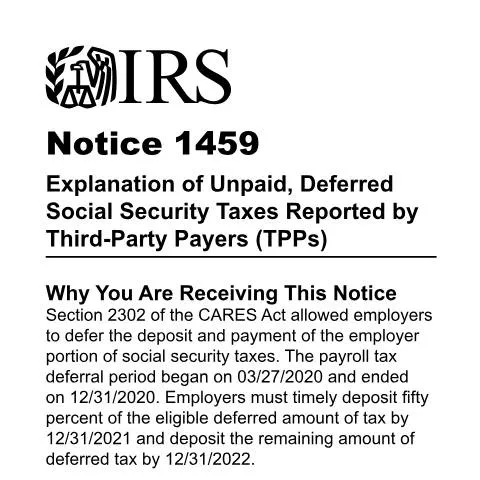
Navigating IRS Notice 1459: Understanding Its Importance and Your Response
Receiving IRS Notice 1459 can bring a wave of confusion, especially if you're a business owner or part of a payroll system. This notice stems from the provisions of the CARES Act, specifically targeting those who have had social security taxes deferred due to economic circumstances. If you're among the affected individuals or organizations, grasping the nuances of this notice is crucial for maintaining compliance and avoiding future complications.
Who is Affected by Notice 1459?
This notice primarily impacts common-law employers (CLEs) who utilized third-party payers (TPPs) for payroll processing during the payroll tax deferral period between March 27, 2020, and December 31, 2020. If you fall into one of the following categories, you should pay particular attention:
- Common-Law Employers (CLEs): If you directed a TPP to defer your social security taxes.
- Employees: Those whose employers opted for a TPP and have deferred portions of their social security taxes.
- Third-Party Payers: Certified Professional Employer Organizations (CPEOs) and other TPPs that handle payroll on behalf of employers.
Understanding the Tax Deferral Period
The payroll tax deferral period allowed employers to postpone the deposit and payment of the employer portion of social security taxes. This deferral means that while employers could delay payments, they remain ultimately responsible for these obligations. The timeline is crucial:
| Action | Deadline |
|---|---|
| Deposit 50% of deferred taxes | December 31, 2021 |
| Deposit remaining deferred taxes | December 31, 2022 |
Breaking Down IRS Notice 1459: Content and Implications
The content of Notice 1459 is direct; it details the unpaid, deferred social security taxes reported by TPPs. It's essential to note that the notice you receive is not a final balance but rather reflects a specific amount due related to your deferred social security tax:
- The notice will reference Form 3552, which shows the unpaid deferred tax amounts associated with your Tax Identification Number (TIN).
- It’s crucial to understand that the amount displayed is likely only part of what you might owe, as it does not account for penalties or interest.
Next Steps After Receiving Notice 1459
Upon receipt of this notice, you have several options to consider:
- Payment: If you agree with the amount shown, you can pay it directly either online via the IRS website or by mailing a check with the notice.
- Discrepancies: Should you find that the reported amount does not align with your records, the first step is to contact the TPP that reported it. They will need to provide corrected documentation to the IRS.
- IRS Contact: If there are separate payments you've made regarding the unpaid deferred tax that were not applied to the current notice, reach out to the IRS directly using the contact number provided on the notice.
Dealing with Errors and Missing Documentation
Errors or missing documentation can complicate your situation significantly. Here’s how to navigate such challenges:
Identifying Components of the Notice
Review the notice closely for:
- Tax Year: Ensure the tax year listed matches your records.
- Amount Due: Verify the total amount against your own records to ensure accuracy.
- TPP Information: Confirm that the TPP has reported your withheld taxes accurately.
Steps to Rectify Discrepancies
If you discover discrepancies:
- Reach out to your TPP for clarification. They should assist in correcting any inaccuracies in reporting.
- If necessary, maintain records of all communications with your TPP for future reference.
- Consider documenting your own payments made under your TIN to facilitate discussions.
Special Circumstances: Foreign Entities and Minors
Certain unique situations might complicate the handling of IRS Notice 1459:
For Foreign Employers
Foreign employers who have deferred taxes through a TPP may encounter additional complexities due to their non-resident status. It's vital for these employers to:
- Understand their tax obligations within the U.S. framework.
- Ensure that their TPP is compliant with IRS regulations regarding foreign entities.
- Consult with a tax professional familiar with international tax laws.
Handling Situations Involving Minors
If the employer is a minor or if the employee involved is a minor, the legal implications can become convoluted. Here’s what to know:
- Minors may have limited legal capacity to enter contracts, impacting employment status.
- The TPP must ensure compliance with state and federal labor laws, especially concerning minors.
- It’s advisable to consult with a legal professional to navigate these waters.
Avoiding Common Pitfalls
Understanding Notice 1459 also involves recognizing common pitfalls that can exacerbate your situation:
Confusing IRS Notices
The IRS communicates through various notices that may appear similar to one another. Notice 1459 often gets mistaken for:
- Other IRS Notices: Such as those related to general tax liabilities or different tax years.
- Payment Notices: These may include balances due without specific reference to deferred taxes.
Staying Informed on Tax Obligations
To avoid confusion, it’s essential to:
- Regularly monitor communications from the IRS.
- Keep updated with any changes to tax regulations, especially those regarding social security taxes.
The Path Forward: Your Responsibility and Compliance
The responsibility of ensuring compliance with IRS regulations lies heavily on the shoulders of the employer. As a recipient of Notice 1459, here’s your path forward:
- Understand Your Obligations: Familiarize yourself with tax liabilities, including the deferred amounts and deadlines for payment.
- Maintain Communication: Keep open lines of communication with your TPP and the IRS to ensure all information is correct and timely.
- Document Everything: Maintain records of all transactions, communications, and payments related to your deferred taxes.
By taking these proactive measures, you can navigate the complexities of IRS Notice 1459 and ensure your compliance with federal tax obligations.