Understanding IRS Publication 5970: A Critical Resource for Tax Compliance
Navigating the complexities of tax compliance is no small feat, especially for U.S. citizens with financial interests abroad. IRS Publication 5970 serves as a vital guide for understanding the implications of Foreign Bank and Financial Accounts (FBAR) regulations. This publication is particularly relevant for individuals and entities required to report their foreign financial accounts to avoid substantial penalties. In this article, we will delve into the significance of Publication 5970, its key components, and how it directly impacts taxpayers.
Decoding the Purpose of Publication 5970
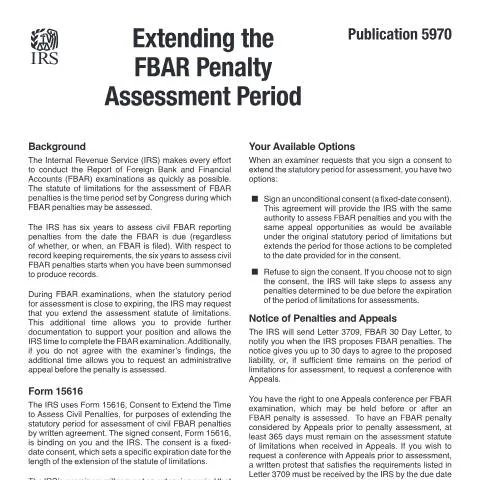
IRS Publication 5970 outlines essential guidance regarding the extension of the time frame for assessing civil penalties related to FBAR. Understanding when and why the IRS might request an extension is crucial for any taxpayer facing scrutiny. This publication fundamentally addresses the procedures surrounding the assessment of civil FBAR penalties, which is critical to ensuring taxpayers are well-informed about their rights and responsibilities.
The Role of the IRS in FBAR Penalty Assessments
The IRS is tasked with the enforcement of FBAR regulations, ensuring compliance among U.S. citizens with foreign financial interests. The IRS has a designated period—typically six years from the date the FBAR is due—to assess any civil penalties related to non-compliance. This period can be altered through consent agreements, as discussed in Publication 5970.
Who Should Be Paying Attention to Publication 5970?
While Publication 5970 is especially crucial for individuals with foreign bank accounts, it is also relevant for a variety of taxpayers, including:
- U.S. citizens living abroad
- Green card holders
- U.S. corporations with foreign accounts
- Trusts and estates with foreign financial interests
Understanding the nuances of this publication can significantly impact how these groups approach their tax situations. For instance, a U.S. citizen residing in France with multiple foreign accounts must grasp the implications of FBAR to avoid penalties.
Timeline of the FBAR Assessment Process
Time is of the essence when it comes to complying with FBAR regulations. The assessment period generally runs for six years, but various factors can alter this timeline. Here’s a breakdown:
| Event | Timeline |
|---|---|
| FBAR Due Date | April 15 (can be extended to October 15) |
| Start of Assessment Period | From the due date of the FBAR |
| Request for Extension | Can be made at any point during the initial assessment period |
| Notification of Proposed Penalties | Within six years from the FBAR due date |
Taxpayers should remain vigilant as the end of this assessment period approaches. Any delays in responding to IRS requests can jeopardize a taxpayer’s compliance status and may lead to penalties.
Can You Extend the FBAR Assessment Timeline?
Publication 5970 outlines the procedures for extending the time to assess civil FBAR penalties. This extension is crucial for both taxpayers and the IRS, as it ensures adequate time for review and response. When the IRS examines FBAR compliance, taxpayers may be asked to extend the statute of limitations. Here’s what you need to know:
The Consent Form: What You Need to Sign
The IRS utilizes Form 15616, titled "Consent to Extend the Time to Assess Civil Penalties," to formalize the extension process. By signing this form, taxpayers agree to extend the assessment period for civil FBAR penalties. Important features of Form 15616 include:
- Fixed-Date Consent: This agreement specifies an expiration date for the extension, ensuring both parties are aware of the timeline.
- Binding Agreement: Once signed, the consent is binding, meaning both the taxpayer and the IRS must adhere to it.
- Flexibility for Extensions: Additional consents can be signed if further time is required to address the situation.
What Happens After Submission?
After submitting Form 15616, taxpayers find themselves in a waiting period. The IRS will assess the submitted FBAR data and determine whether penalties are warranted. Notification of any proposed penalties will be communicated through Letter 3709, which outlines the next steps for the taxpayer.
Timing and Response to IRS Communications
Receiving IRS letters can be daunting, but understanding your rights and obligations is essential. For instance, upon receiving Letter 3709, taxpayers typically have 30 days to respond. If you disagree with the proposed liabilities, you have the option to request a conference with Appeals. This request can be a pivotal moment in contesting penalties:
- For appeals prior to penalty assessment, at least 365 days must remain in the assessment period.
- If fewer than 365 days are left, the IRS must assess any penalties deemed appropriate before your appeal can be considered.
Engaging with the IRS: Best Practices for Taxpayers
Effective communication with the IRS is paramount, especially when responding to potential penalties. Here are a few best practices to keep in mind:
Document Everything
Maintain detailed records of all correspondence and submissions related to your FBAR compliance. This documentation can be critical during any disputes or appeals.
Set Reminders for Deadlines
With various deadlines for responses, submissions, and appeals, setting reminders can help ensure you don’t miss critical dates. Leveraging digital calendars or planners can keep you on track.
Consider Professional Guidance
Engaging a tax professional with expertise in FBAR regulations can be invaluable. They can provide specific advice tailored to your financial situation and help navigate the complexities of IRS communications.
Final Thoughts on IRS Publication 5970
IRS Publication 5970 is not just a technical document but a roadmap for understanding the implications of FBAR regulations. For individuals and entities involved with foreign financial accounts, grasping the intricacies outlined in this publication can safeguard against steep penalties and ensure compliance. Remember, the key to navigating the process successfully lies in being proactive, timely, and well-informed about your rights and responsibilities.
Understanding IRS Publication 5970: A Comprehensive Overview
IRS Publication 5970 serves as a vital resource for understanding the guidelines and regulations surrounding tax-exempt organizations. Specifically, it offers insights into the conditions under which an organization may qualify for tax-exempt status under Section 501(c)(3) of the Internal Revenue Code. This publication is essential reading for prospective organizations seeking recognition as tax-exempt entities, as well as for existing organizations aiming to ensure compliance with federal regulations.
The publication provides detailed explanations of eligibility requirements, which include being organized and operated exclusively for charitable, religious, educational, or scientific purposes. Additionally, it elaborates on the restrictions placed on political activities and the benefits of maintaining tax-exempt status, such as the ability to receive tax-deductible contributions.
Moreover, Publication 5970 includes specific examples that delineate the types of activities that would qualify an organization for tax exemption versus those that could jeopardize its status. This section is particularly beneficial for nonprofit organizations, as it aids in navigating the complex landscape of compliance and operational guidelines.
Steps to Apply for Tax-Exempt Status: Insights from Publication 5970
To obtain tax-exempt status, an organization must follow a series of clearly defined steps outlined in IRS Publication 5970. The first step involves determining whether the organization meets the necessary criteria for exemption. This includes assessing the organization's purpose, activities, and governance structure.
Once eligibility is confirmed, the next step is to complete the appropriate application form. Most organizations will need to file Form 1023 (Application for Recognition of Exemption Under Section 501(c)(3) of the Internal Revenue Code) or Form 1023-EZ, which is a streamlined version of the application for eligible smaller organizations.
Following the submission of the application, organizations should expect a waiting period while the IRS reviews the application. It is crucial to ensure that the application is accurate and comprehensive, as incomplete or poorly constructed applications can lead to delays or denials. The IRS may also request additional information during the review process, which must be provided promptly.
Upon approval, the organization will receive a determination letter from the IRS, officially recognizing its tax-exempt status. It is important to retain this documentation for future reference and to ensure compliance with ongoing reporting requirements, such as filing Form 990 annually to maintain status.
Maintaining Compliance as a Tax-Exempt Organization
Once an organization has secured its tax-exempt status, it must remain vigilant in maintaining compliance with IRS regulations to avoid penalties or revocation of its status. IRS Publication 5970 outlines several key compliance requirements that organizations should adhere to continually.
One of the most significant obligations is the prohibition against engaging in excessive political activity. While organizations may engage in some lobbying, the IRS strictly limits the extent to which a tax-exempt organization can participate in political campaigns. Organizations should develop clear policies regarding political engagement to ensure adherence to these regulations.
Additionally, maintaining accurate and complete financial records is essential. Tax-exempt organizations must prepare and file annual returns (Form 990 or Form 990-EZ) with the IRS, which provides an overview of the organization’s finances and activities. Failure to file these returns for three consecutive years can lead to automatic revocation of tax-exempt status.
Tax-exempt organizations also need to ensure that their activities align with their stated tax-exempt purposes. Any significant deviation from these purposes can trigger an IRS review, potentially jeopardizing the organization’s tax-exempt status. Therefore, organizations should regularly reassess their programs and activities to confirm that they continue to fulfill the requirements outlined in Publication 5970.
Potential Changes and Updates in IRS Regulations
IRS regulations and publications are subject to change based on new legislation and policy shifts. Organizations that rely on IRS Publication 5970 should remain informed about potential changes that may impact their tax-exempt status. Staying updated can involve regularly checking the IRS official website, participating in workshops, and consulting with a tax professional who specializes in nonprofit law.
Additionally, the IRS periodically revises its publications to reflect the latest legal interpretations and compliance requirements. Organizations should make a habit of reviewing the most current version of Publication 5970, as updates may include new examples of eligible activities, changes in application procedures, or clarifications regarding compliance obligations.
Engaging with professional associations within the nonprofit sector can also provide valuable insights into upcoming regulatory changes. These organizations often provide resources and training that can aid in understanding and implementing any new guidelines effectively.