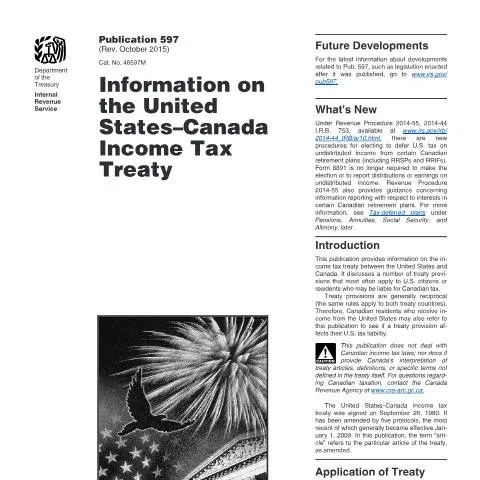
Navigating the Complexities of IRS Publication 597
Understanding the intricacies of the U.S.-Canada income tax treaty can be a daunting task for many taxpayers. IRS Publication 597 serves as a vital resource in this maze, specifically designed to guide U.S. citizens and residents who may hold tax liabilities in Canada. This publication outlines the treaty provisions that are crucial when determining tax responsibilities across the border and provides clarity on how to handle various situations related to income derived from Canada.
The Role of IRS Publication 597 in U.S.-Canada Taxation
IRS Publication 597 is not just a standalone document; it plays a significant role in the broader framework of tax compliance between the U.S. and Canada. The publication offers insights into how the income tax treaty between the two countries, established on September 26, 1980, affects taxpayers. This treaty is reciprocal, meaning that provisions applicable to one country similarly affect the other.
The publication discusses essential articles of the treaty, providing information that helps taxpayers understand their residency status and potential tax liabilities. For instance, Article IV of the treaty outlines criteria for determining residency, which is fundamental for claiming treaty benefits.
Who Should Consult IRS Publication 597?
- U.S. Citizens Living in Canada: Individuals should reference this document to understand how their income will be taxed by both countries.
- Canadian Residents Receiving U.S. Income: Canadians can also utilize this publication to evaluate how treaty provisions might impact their U.S. tax responsibilities.
- Dual-Residents: Those who hold residency status in both countries must be particularly cautious about their reporting obligations and potential benefits under the treaty.
Completing the Tax Treaty Provisions: Key Considerations
When dealing with the complexities of international taxation, particularly under the U.S.-Canada treaty, it is essential to understand the specific benefits and requirements as laid out in Publication 597. Here are critical points to consider:
Claiming Treaty Benefits
U.S. citizens and residents who derive income from Canada may pay less tax on that income, thanks to the treaty. However, to claim these benefits, they must follow specific protocols:
- They must establish residency status as defined in the treaty.
- They have to attach Form 8833, which details their treaty-based return position, when filing their U.S. tax return.
- Filing a U.S. income tax return, even if claiming treaty benefits, remains mandatory.
Understanding the Tiebreaker Rule
A particularly complex area covered in Publication 597 is the tiebreaker rule for dual-resident taxpayers. This rule directs how to determine which country a taxpayer will be considered a resident of for tax purposes when both the U.S. and Canada claim residency. If you find yourself in this situation, follow these steps:
- Assess your primary residence, habitual abode, and where your personal and economic relations are stronger.
- If classified as a Canadian resident under the tiebreaker rule, you may file as a non-resident alien in the U.S. but must still complete Form 1040NR or Form 1040NR-EZ.
Consequences of Non-Compliance with Publication 597
Failing to comply with the regulations outlined in IRS Publication 597 can have significant consequences. Understanding these penalties is crucial for maintaining compliance.
- Fines and Interest: Not filing or incorrectly filing a U.S. income tax return can lead to fines and accrued interest on any owed taxes.
- Loss of Treaty Benefits: If taxpayers do not accurately report income or fail to claim treaty benefits correctly, they may lose the tax reductions available under the treaty.
Preparing Documentation: Essential Forms and Records
Taxpayers must prepare and maintain various documents to support their claims under the provisions of Publication 597. Below is a critical list of documents you should compile:
| Document Type | Purpose |
|---|---|
| Form 1040 or 1040NR | Used for reporting annual income and tax obligations. |
| Form 8833 | Disclosure of treaty-based return position. |
| Income Statements (e.g., W-2, 1099) | Proof of income earned during the tax year. |
| Tax Documents from Canada | Documents demonstrating Canadian income and taxes paid. |
Gathering these forms early in the tax season can alleviate stress and prevent delays in filing.
IRS Processing and Follow-Up Procedures
Once the necessary forms are submitted, it is crucial to understand how the IRS processes these submissions and what steps can be taken if one needs to follow up on their application.
Understanding IRS Processing Times
IRS processing times can vary depending on the volume of submissions and the complexity of the information provided. Taxpayers should be prepared for delays, especially during peak filing seasons. Here are some tips for an efficient follow-up:
- Allow at least six weeks after e-filing or mailing your return before checking the status.
- Use the IRS’s “Where’s My Refund?” tool for updates on your refund status.
- Keep records of all communications with the IRS for reference.
The Uniqueness of IRS Publication 597 in Context
It is crucial to distinguish IRS Publication 597 from other forms and publications that may seem similar but serve different purposes within the realm of taxation. For example, while other IRS forms may pertain to general tax filing or specific deductions, Publication 597 specifically addresses international tax treaty implications.
Another common point of confusion is the distinction between this publication and forms like Form 8891, which was previously used to report certain Canadian retirement plans. Note that Form 8891 is no longer required under Revenue Procedure 2014-55, which streamlined certain reporting requirements.
Staying Informed: Future Developments and Resources
The IRS regularly updates guidelines and forms, making it essential for taxpayers to stay informed about any changes that may affect their filing obligations. For the most recent developments related to IRS Publication 597, including updates in tax laws or amendments to the treaty, taxpayers should check the official IRS website at www.irs.gov/pub597.
Staying proactive and informed through resources provided by the IRS can substantially ease the burden of navigating tax obligations, particularly for those engaged in cross-border financial situations.
Understanding IRS Publication 597: Foreign Tax Credit for Individuals
IRS Publication 597 is a critical resource for U.S. taxpayers who have foreign income and want to understand their eligibility for the Foreign Tax Credit (FTC). This publication outlines the provisions of the FTC, designed to prevent double taxation on income earned abroad. Understanding the nuances of this publication is essential for individuals engaged in international business or those receiving foreign source income.
Firstly, the FTC allows taxpayers to offset income taxes paid to foreign governments against U.S. taxes owed. There are two primary methods for claiming the FTC: the per-country limit and the overall limit. The per-country limit requires separating the foreign taxes by the country paying them, ensuring that credits are correctly calculated for each foreign income source. This method can be particularly beneficial for those with diverse income streams from different countries.
Secondly, it's crucial to identify what qualifies as foreign taxes. Not all payments made to foreign governments qualify for the FTC. Only income taxes and certain taxes paid to foreign countries are eligible. For example, self-employment taxes do not qualify. For taxpayers planning to utilize the FTC, keeping meticulous records of all foreign tax payments, including dates, amounts, and the nature of the income, is essential. This documentation is vital when preparing Form 1116, which is used to compute the allowable credit.
Lastly, Publication 597 also touches on the concept of "tax treaties." The United States has tax treaties with various countries that may provide additional benefits or exemptions regarding foreign income. Taxpayers should review the specific treaty provisions relevant to their situation, as these can significantly affect the FTC claim and overall tax liability. Understanding these treaties can lead to substantial tax savings, making them a critical consideration for any international taxpayer.
Claiming the Foreign Tax Credit: Step-by-Step Guide
Claiming the Foreign Tax Credit involves several steps, each critical to ensure compliance and maximize the benefits available. Here is a comprehensive guide to facilitate this process and help taxpayers avoid common pitfalls.
1. Determine Eligibility: Before attempting to claim the FTC, ascertain whether you qualified for foreign income tax payments. This includes reviewing your employment status, foreign income sources, and any applicable tax treaties. Only taxes paid or accrued during the tax year can be claimed, which means proper record-keeping is essential throughout the year.
2. Gather Documentation: Taxpayers must collect all necessary documentation supporting their claim. This includes Form W-2, 1099, or foreign tax documentation that indicates amounts paid to foreign governments. Additionally, receipts for foreign taxes paid and any documentation proving the nature of the income (e.g., contracts or account statements) should be aggregated for accurate reporting.
3. Complete Form 1116: To claim the FTC, you will need to complete Form 1116, "Foreign Tax Credit." This form requires detailed information about foreign income and taxes paid. Be prepared to provide a breakdown of foreign sources of income, including amounts and types of income. It’s essential to be accurate to avoid under- or over-reporting your claim.
4. Report on Form 1040: Once Form 1116 is completed, you will report the FTC on your Form 1040. This is where you will finalize the credit and apply it to your overall tax liability. Remember to double-check all figures for accuracy, as errors can delay your tax return processing and potentially lead to audits.
5. File Your Return: Pay attention to the tax filing deadline, typically April 15. If you need additional time, consider filing Form 4868 for an extension, but remember that this only extends the time to file, not the time to pay any taxes owed. After filing, keep copies of all submitted documents and the final return for your records, as the IRS may request this information in the future.
6. Monitor Future Changes: Tax laws and the specifics surrounding the FTC can change, especially with new tax treaties or adjustments to existing regulations. Regularly reviewing IRS publications, particularly the updates to Publication 597, will ensure that you remain compliant and informed about any new benefits or obligations.
Common Missteps When Claiming the Foreign Tax Credit
Despite the benefits of the Foreign Tax Credit, many taxpayers make common mistakes that can result in lost credits or issues with the IRS. Here’s a closer look at these missteps and how to avoid them.
1. Neglecting to Review Tax Treaties: One of the most significant errors is failing to review applicable tax treaties. Taxpayers may incorrectly assume the FTC is automatically available without recognizing modifications or limitations imposed by treaties. Always check if the foreign country has a tax treaty with the U.S. that may affect your specific case, as these treaties can provide crucial exemptions or reduced tax rates.
2. Inaccurate Documentation: Another frequent issue arises from improper or lack of documentation. Without precise documentation, taxpayers risk having their FTC claims denied. Common types of documentation often neglected include proof of foreign tax payments, income statements, and details about the nature of the income. Keeping organized records throughout the year simplifies the claim process and minimizes errors.
3. Filing Incorrect Forms: Using the wrong forms or incorrectly completing them is a common trap. Taxpayers sometimes confuse Form 1116 and Form 1118, the latter being for corporations. Make sure to use Form 1116 for individual claims and thoroughly review it to ensure all sections are completed correctly. Additionally, use the revision date on the form to ensure you have the most up-to-date version, as this can impact your application.
4. Underestimating Foreign Income: Some individuals miscalculate their total foreign income, which can affect the amount of credit they claim. It’s essential to include all foreign-sourced income accurately, as even minor discrepancies can lead to significant issues with the IRS. Regular reviews of income statements and cross-checking with foreign tax documentation will help maintain accuracy.
By being aware of these pitfalls and implementing strategies to avoid them, taxpayers can effectively leverage the Foreign Tax Credit and ensure compliance with IRS regulations concerning foreign income.