Navigating the Essentials of IRS Form 8879-EG
When it comes to tax season in the United States, navigating the intricacies of the IRS can be daunting, especially for those filing gift and estate taxes. Form 8879-EG, officially known as the E-file Authorization for Forms 709 and 706, serves as a crucial document in this landscape. Understanding its role, who must use it, and how to properly complete and submit it is essential for ensuring that electronic tax returns are filed accurately and efficiently.
The Integral Role of Form 8879-EG in Electronic Filing
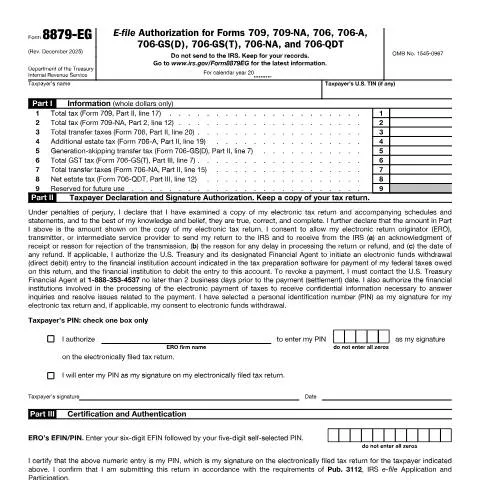
Form 8879-EG is designed to facilitate the e-filing of various IRS tax forms related to gifts and estates, specifically Forms 709, 709-NA, 706, 706-A, 706-GS(D), 706-GS(T), 706-NA, and 706-QDT. At its core, this form authorizes a Taxpayer Identification Number (TIN) and provides a means for the taxpayer to electronically sign their tax return using a Personal Identification Number (PIN).
Understanding the Context
- Type of Returns: Form 709 is utilized for gift taxes, while Form 706 deals with estate taxes. The variations of these forms cater to different scenarios, such as non-resident aliens or trust distributions.
- Importance of Authorization: By signing Form 8879-EG, taxpayers allow electronic return originators (EROs) to transmit their returns directly to the IRS, streamlining the process and expediting processing times.
Who Should Consider Using Form 8879-EG?
Not every taxpayer will need to utilize Form 8879-EG. It is primarily aimed at those involved in specific tax situations. Understanding the profiles of potential users can help clarify when this form is necessary.
Profiles of Potential Filers
- Gift Tax Filers: Individuals who have transferred property during their lifetime may be required to file Form 709. This applies to both residents and non-residents.
- Estate Tax Filers: If a taxpayer’s estate exceeds the federal exemption limit, they must file Form 706, making Form 8879-EG important for the electronic filing process.
- Trusts and Estates: Trusts that are required to file Form 706-QDT will also necessitate the use of Form 8879-EG when filed electronically.
Completing Form 8879-EG: A Step-by-Step Guide
Completing Form 8879-EG accurately is critical for ensuring the successful submission of your electronic tax return. Here’s a breakdown of how to navigate this document effectively.
Part I: Information Gathering
- Taxpayer Information: Include the taxpayer’s name and TIN at the top of the form. This is essential for identification purposes.
- Tax Calculation: In this section, taxpayers will enter various tax amounts from the corresponding forms. It's crucial to ensure these figures are accurate and correspond to the electronic return.
Part II: Declaration and Signature Authorization
This part requires the taxpayer to affirm the accuracy of their return. They must also choose how they want to authorize their PIN:
- Allowing the ERO to sign on their behalf.
- Entering their signature themselves.
Part III: ERO Certification
In this section, the ERO must enter their identifying information, including their Electronic Filing Identification Number (EFIN) and a self-selected PIN. This is a significant step, as it confirms the legitimacy of the filing process.
Submission Process: What Happens Next?
Once Form 8879-EG is completed, the submission is not sent directly to the IRS. Instead, it is retained by the ERO. This is an essential step, as it serves as a record of authorization for future reference and any IRS requests.
Follow-Up Steps
- Tracking Your Submission: After the ERO submits the electronic tax return, taxpayers can expect to receive an acknowledgment from the IRS regarding the acceptance or rejection of their return.
- Addressing Rejections: If a return is rejected, the ERO can inform the taxpayer of any discrepancies, which need to be rectified before resubmission.
Important Deadlines and Timelines
Understanding key deadlines is vital for successful tax filing and compliance with IRS regulations. The timeline surrounding Form 8879-EG and related filings requires attention to detail.
| Action | Date | Notes |
|---|---|---|
| Tax Year Ends | December 31 | Mark the end of the tax year for most individuals. |
| E-filing Deadline for Gift Taxes (Form 709) | April 15 | Extension available until October 15 with Form 4868. |
| E-filing Deadline for Estate Taxes (Form 706) | 9 months after death | Critical for estate executors. |
Consequences of Non-Compliance: The Stakes Involved
Ignoring the requirements associated with Form 8879-EG or failing to file the corresponding forms can have significant ramifications.
Potential Outcomes of Non-Compliance
- Penalties and Interest: The IRS imposes penalties for late filings, which can accumulate rapidly and increase the overall tax liability.
- Legal Consequences: In severe cases, failure to comply with filing requirements may lead to legal action, particularly in estate matters where the IRS closely monitors compliance.
Final Thoughts on IRS Form 8879-EG
Form 8879-EG is a pivotal component of the tax filing process for individuals dealing with gift and estate taxes. Understanding its purpose, the steps for completion, and the implications of filing or not filing accurately can significantly impact taxpayers' financial responsibilities. As the IRS continually updates its guidelines and forms, staying abreast of changes is crucial for effective navigation of the tax landscape.
For the latest developments regarding IRS Form 8879-EG and related regulations, taxpayers should refer to the official IRS website at www.irs.gov/Form8879EG.
Understanding IRS Form 8879-EX: The Electronic Signature Authorization
IRS Form 8879-EX, officially known as the "IRS e-file Signature Authorization," is a critical document for taxpayers who choose to utilize electronic filing services through a tax professional. This form serves as a means for taxpayers to authorize their tax preparers to file their tax returns electronically on their behalf. Understanding the significance, components, and proper handling of this form is essential for a smooth tax filing experience.
Primarily, Form 8879-EX is used for individuals and businesses alike. The form allows the taxpayer to provide an electronic signature, which is legally recognized by the IRS. The importance of this form has grown as electronic filing has become the norm rather than the exception. It is crucial to ensure that the form is filled out correctly to avoid potential delays in processing your tax return.
The key sections of Form 8879-EX include taxpayer information, tax preparer's information, and the electronic signature section. Taxpayers must review the tax return carefully, verifying that all information is correct before signing. Keep in mind that the IRS requires the signed form to be retained for three years from the date of filing, so ensure it is stored securely.
Moreover, it’s important to note the distinctions between Form 8879-EX and other related forms, such as Form 8879, which is intended for individual taxpayers. While both forms serve a similar purpose, they cater to different filing situations. Taxpayers must ensure they are using the correct version of the form to avoid complications.
Common Errors and How to Avoid Them on Form 8879-EX
Filing Form 8879-EX may seem straightforward, but various common errors can lead to significant issues, including delays in processing or even penalties. Understanding these potential pitfalls can help ensure a smooth filing process and compliance with IRS regulations.
One frequent error is failing to match the names and social security numbers (SSNs) of all parties involved. It's crucial that the information provided on Form 8879-EX matches exactly with what is reported on the associated tax return. For individuals, this means ensuring that your name, SSN, and any spouse information are accurate and consistent.
Another common mistake is not reviewing the tax return before signing. Many taxpayers trust their preparers without double-checking the forms. However, reviewing your return for accuracy can save you headaches down the line. If there are discrepancies between the return and what you expected, address these issues with your preparer before signing Form 8879-EX.
Additionally, some taxpayers neglect to keep a copy of the signed form and the tax return for their records. The IRS requires that you retain these documents for three years, and having them on hand can be invaluable should you need to reference them in the future. Consider creating a dedicated folder for your tax documents so that they are organized and easily accessible when needed.
Changes and Updates to Form 8879-EX: What You Need to Know
As with any IRS form, periodic changes and updates are implemented to improve clarity, security, and usability. Staying informed about these changes can help taxpayers and tax professionals avoid issues and ensure compliance with the latest regulations.
Recent updates to Form 8879-EX may include modifications in the way taxpayer information is presented or how electronic signatures are captured. For example, the IRS has been progressively adopting stricter security measures as concerns about data breaches and identity theft have increased. As a consequence, taxpayers and preparers may now be required to provide additional verification methods when submitting electronic signatures.
Furthermore, always check the IRS website for the most current version of Form 8879-EX before submitting it. Tax laws and requirements can shift based on legislative changes and IRS guidelines, affecting what information may be required or how the form should be completed. Familiarizing yourself with these updates can ease the filing process and ensure compliance.
In addition, be aware of potential changes to the deadlines for filing and record-keeping requirements associated with Form 8879-EX. For instance, while the general tax filing deadline is April 15, variations may occur based on state regulations or specific taxpayer situations (e.g., those affected by natural disasters or other emergencies). Hence, monitoring these regulations is crucial for timely and accurate submissions.