Navigating IRS Form 1117: A Practical Guide
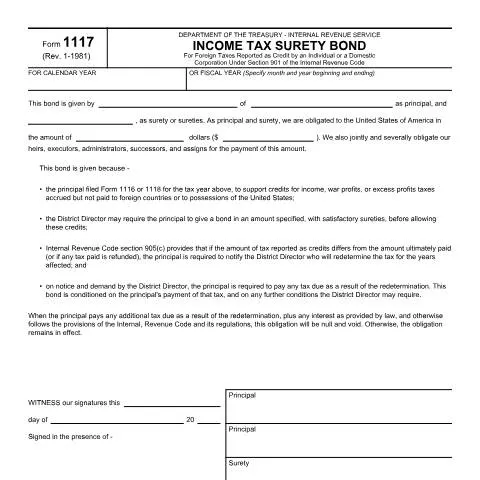
Understanding the nuances of IRS Form 1117 is crucial for individuals and businesses seeking to claim foreign tax credits. This document serves as a surety bond for income taxes paid to foreign governments that may be eligible for a credit against U.S. federal income tax obligations. Failure to correctly complete and submit this form can lead to significant tax liabilities, penalties, or delays in claiming these credits.
Who Must File IRS Form 1117?
Form 1117 is specifically designed for those who have filed either Form 1116 or Form 1118, which detail foreign taxes paid. This includes:
- Individuals: U.S. citizens or residents who have paid foreign taxes and wish to claim a credit against their U.S. taxes.
- Domestic Corporations: Corporations with foreign income that have paid taxes to foreign jurisdictions and are claiming those taxes on their U.S. tax returns.
Moreover, the requirement to file Form 1117 is contingent upon a request from the District Director, who may require this bond as a condition for granting the credits claimed in Form 1116 or Form 1118.
The Importance of Timeliness
Understanding the timeline for filing is essential. IRS Form 1117 should be filed in accordance with the tax year for which the credits are being claimed. Typically, tax returns—including related forms—are due by April 15 of the year following the tax year. For example, for income earned in 2022, you would generally need to file by April 15, 2023.
| Tax Year | Filing Deadline |
|---|---|
| 2022 | April 15, 2023 |
| 2023 | April 15, 2024 |
Filling Out IRS Form 1117: Step-by-Step
When completing Form 1117, precision is key. Each section requires detailed information that directly impacts the validity of your claim for foreign tax credits. Below are the critical components of the form:
- Principal Information: This section includes the name and address of the individual or corporation filing the form.
- Surety Information: Details about the surety, which can be an individual or a bonding company, must be accurately filled in.
- Amount of Bond: Specify the dollar amount of the bond. This amount is crucial and is typically based on the foreign taxes expected to be credited.
Key Considerations:
As you fill out the form:
- Be Accurate: Ensure that all figures align with those stated on Forms 1116 or 1118.
- Signatures: The document must be signed by both the principal and surety. Ensure that all signatures are obtained before submission.
Submission Methods: Where and How to File
Once you have completed Form 1117, it's essential to understand the various submission avenues:
- Online Submission: Currently, Form 1117 cannot be submitted electronically. Therefore, a physical copy must be prepared.
- Mailing the Form: Send the completed form to the address specified by the IRS. This might vary depending on the location of the taxpayer. Refer to the IRS Internal Revenue Service website for specific mailing addresses.
- In-Person Submission: While not typical for Form 1117, some may choose to hand-deliver their forms to local IRS offices. It's advisable to make an appointment if this route is chosen.
Understanding the Aftermath: What Happens Post-Submission?
Once IRS Form 1117 is submitted, several processes occur:
- Review by District Director: The District Director will evaluate the bond and related tax filings. This process may take several weeks.
- Possible Requests for Additional Information: If the IRS requires further information, they will contact the principal. Promptly responding to any inquiries is vital to avoid delays.
- Redetermination of Taxes: If there are discrepancies in the reported foreign taxes versus what is ultimately paid, you must notify the IRS. The District Director will redetermine the tax liability as necessary.
During this phase, it's crucial to maintain records of all communications and submissions. Proper documentation will facilitate smoother interactions with the IRS.
Distinguishing IRS Form 1117 from Similar Forms
IRS Form 1117 is often confused with other related forms, such as Forms 1116 and 1118. Here’s how they differ:
| Form | Purpose | Required When |
|---|---|---|
| Form 1116 | Claiming Foreign Tax Credits | When individuals have foreign source income and taxes paid to foreign governments. |
| Form 1118 | Claiming Foreign Tax Credits (Corporations) | When corporations have foreign taxes paid and wish to claim those as credits. |
| Form 1117 | Surety Bond for Foreign Tax Credits | When the IRS requires a bond for the foreign tax credits claimed on Forms 1116 or 1118. |
Special Cases: Unique Situations Requiring Form 1117
Certain taxpayers may find themselves in unique circumstances that necessitate the filing of Form 1117:
- Foreign Nationals: Non-resident aliens claiming foreign tax credits may face different criteria and should consult the IRS guidelines carefully.
- Minors Filing Taxes: For minors who have income from foreign sources, the guardians or parents may need to complete Form 1117 on their behalf.
- Complex Ownership Structures: Corporations with multiple foreign subsidiaries might need to navigate intricate tax liabilities, necessitating legal and financial advisors' input.
Emergency Filings
In some cases, urgent filing may be necessary. A taxpayer facing imminent deadlines or unique financial situations should consider reaching out to IRS representatives to discuss potential options or extensions.
Conclusion: Staying Compliant and Informed
Successfully navigating IRS Form 1117 requires diligence, accuracy, and an understanding of the form's role within the broader context of U.S. tax law. By ensuring timely and correct submissions, individuals and corporations can effectively manage their foreign tax credits and maintain compliance with IRS regulations.
For further assistance, taxpayers are encouraged to consult the IRS website or seek professional tax advice. Being proactive and informed will ultimately lead to smoother experiences when dealing with the complexities of U.S. tax requirements.
Understanding IRS Form 1117: Key Components and Instructions
Form 1117, also known as the "Foreign Tax Credit," is a critical document for U.S. taxpayers who have incurred foreign taxes. This form allows individuals and businesses to claim a credit for taxes paid to foreign governments, thus mitigating double taxation on the same income. The credit is especially beneficial for those with investments or income-generating activities abroad.
To complete Form 1117 accurately, taxpayers must provide several key pieces of information:
- Taxpayer Identification: You must list your name, address, and Social Security Number (SSN) or Employer Identification Number (EIN) on the form.
- Foreign Income Details: Taxpayers need to specify the type and amount of foreign income that generated the tax liability, including dividends, interest, and wages.
- Foreign Taxes Paid: You must report the total amount of foreign taxes paid or accrued during the tax year. Evidence such as bank statements and tax receipts should be kept on file.
- Tax Credit Calculation: The form requires a detailed calculation of the allowable foreign tax credit based on U.S. tax liabilities and foreign tax rates. You may need to consult IRS guidelines to determine eligibility and proper calculations.
Filing Form 1117 can be complex, especially for those who have income generated from various countries. Each country has different tax treaties with the U.S., affecting the credit's eligibility. For instance, if you're a resident of the United States but earn income in a country like Canada, the U.S.-Canada Tax Treaty can influence your foreign tax credit calculations. Understanding these treaties is vital to maximizing your benefits.
Common Mistakes to Avoid When Filing Form 1117
When preparing to file Form 1117, many taxpayers inadvertently make common mistakes that can delay processing or result in incorrect tax calculations. Here are some pitfalls to avoid:
- Incorrect Foreign Tax Amounts: Ensure that the foreign tax amounts reported align with official statements from foreign tax authorities. Double-check your figures against Form 1099-DIV or other relevant documentation.
- Omitting Necessary Supporting Documentation: It's crucial to attach all necessary documentation that proves foreign tax payments. Lacking this can lead to a denial of your credit claim.
- Not Considering Foreign Tax Credits on Joint Returns: If you file jointly with your spouse, both your foreign tax credits need to be combined. Many taxpayers neglect this aspect, resulting in a lower credit claim than warranted.
- Missing Deadlines: The IRS requires that Form 1117 be filed with your annual returns by the tax filing deadline, typically April 15. Make sure you stay informed about any potential extensions.
Furthermore, taxpayers should be aware that if they are claiming a foreign tax credit for the first time, the IRS may require additional documentation or explanations. It’s wise to consult with a tax professional who understands international tax law to ensure compliance and maximize claims.
Tips for Maximizing Your Foreign Tax Credit
To make the most of your foreign tax credits, consider the following strategies:
- Keep Detailed Records: Maintain meticulous records of any foreign income and taxes paid, including original foreign tax returns and payment receipts. This documentation will support your claims when filing Form 1117.
- Utilize Tax Treaties: Research existing tax treaties between the U.S. and the countries where you earn income. Understanding the implications of these treaties can help you avoid overpaying taxes and maximize your foreign tax credit.
- Consider Basket Cases: Taxpayers can group similar types of income together when calculating their foreign tax credits. This method, known as 'basket cases,' can simplify your calculations and potentially lead to a greater credit.
- Consult a Tax Professional: Given the complexities of international tax laws, working with a CPA proficient in foreign tax credits can provide invaluable insights and ensure compliance with IRS regulations.
By applying these tips, you can enhance your understanding of Form 1117 and ensure you're effectively utilizing your foreign tax credits, decreasing your overall tax liability.