Understanding the Summons to Debtor in Involuntary Bankruptcy Cases (Form B2500E)
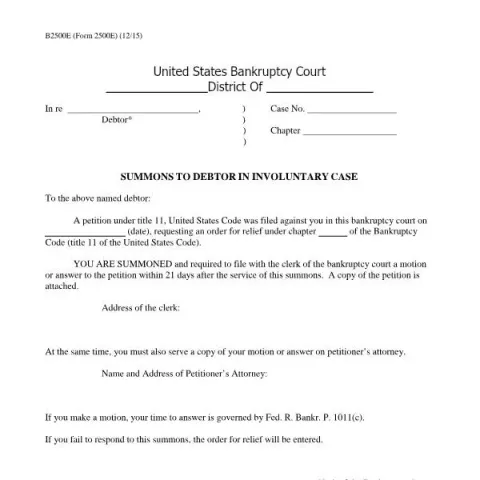
The Summons to Debtor in Involuntary Case is an official legal document issued by the United States Bankruptcy Court, specifically designed to notify a debtor that an involuntary bankruptcy petition has been filed against them. This form, identified as Form B2500E, is a crucial step in the involuntary bankruptcy process, ensuring that the debtor is formally informed and given an opportunity to respond.
Purpose and Significance of the Form
The primary function of this summons is to formally notify the debtor that a petition requesting relief under Chapter 7, 11, or 13 of the United States Bankruptcy Code has been filed by creditors or other petitioners. It serves as a legal notice that the debtor must respond within a specified timeframe—typically 21 days from service—by filing a motion or an answer with the bankruptcy court. Failure to respond can result in the court granting the petition without further input from the debtor, potentially leading to the issuance of an order for relief.
Who Receives the Summons?
The summons is directed to the individual or entity against whom the involuntary petition has been filed. It includes the debtor’s full legal name, including any trade names used within the last eight years, as required by Federal Rule of Bankruptcy Procedure 1005. This ensures clarity and proper identification in legal proceedings.
Key Components of the Form
1. Case and Debtor Information
- Case number assigned by the court
- Debtor’s full legal name and any trade names
- Chapter of the Bankruptcy Code under which relief is sought
2. Notice of Filing
The form states that a petition has been filed against the debtor and provides the date of filing. It emphasizes that the debtor must respond within 21 days of being served.
3. Response Instructions
- The debtor must file a motion or answer with the clerk of the bankruptcy court.
- Must serve a copy of the response on the petitioner’s attorney, whose name and address are provided.
- If the debtor makes a motion, the response time is governed by Federal Rule of Bankruptcy Procedure 1011(c).
4. Consequences of Non-Response
If the debtor fails to respond within the allotted time, the court may enter an order for relief, effectively granting the petition and initiating the bankruptcy proceedings against the debtor.
Procedure for Serving the Summons
Proper service of the summons is essential to ensure the debtor’s rights are protected. The person responsible for service must certify, under penalty of perjury, that the summons and a copy of the involuntary petition were served on the debtor by a mode permitted under applicable law, such as personal or residence service.
Filing and Certification of Service
The person serving the summons completes a Certificate of Service section, detailing the mode of service, date, and recipient’s information. This certification is crucial for the court to verify that the debtor has been properly notified.
Important Deadlines and Legal References
According to the Federal Rules of Bankruptcy Procedure, the debtor has 21 days to respond after service. If the debtor makes a motion, the timing is governed by Fed. R. Bankr. P. 1011(c). It is vital to adhere strictly to these deadlines to protect the debtor’s rights and avoid default judgments.
Fill in your form directly online
No printing: type your details into the boxes of the official form, tick, then download the PDF ready to send.
- 1Type into the form boxes
- 2Tick in one click
- 3Save and download the PDF
Post-Response Procedures
Once the debtor files a response, the court will review the pleadings and may schedule a hearing to determine whether the involuntary petition should proceed. If no response is filed, the court may grant the petition, leading to the issuance of an order for relief and the commencement of bankruptcy proceedings.
Conclusion
The Summons to Debtor in Involuntary Case (Form B2500E) is a fundamental document in the involuntary bankruptcy process. It ensures that debtors are properly notified of legal actions against them and provides clear instructions on how to respond. Proper understanding and timely response to this summons are essential for debtors to protect their rights and interests in bankruptcy proceedings.