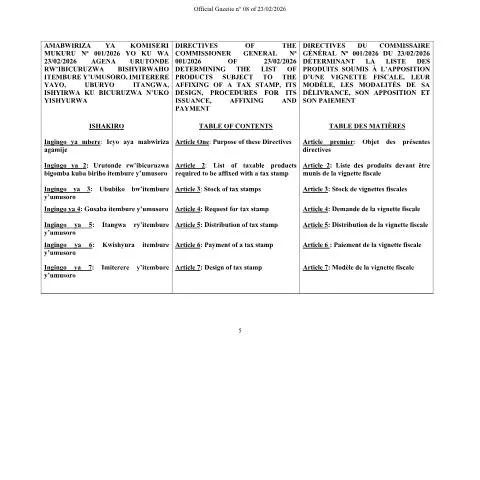
Overview of the February 2026 Official Gazette Directive on Tax Stamps in Rwanda
The Official Gazette of Rwanda published a crucial directive on February 23, 2026, under the title CG DIRECTIVES ON TAX STAMPS. This document, issued by the Commissioner General, sets out detailed rules regarding the products subject to tax stamps, their design, issuance procedures, affixing methods, and payment modalities. It aims to streamline tax compliance and enhance revenue collection for locally produced and imported goods.
Object and Scope of the Directive
The directive's primary objective is to regulate the application of tax stamps on specific products, ensuring that each product bearing a tax stamp complies with the legal requirements. It applies to a broad range of goods, both locally manufactured and imported, that are subject to excise duty under Law No. 011/2025 of May 27, 2025.
This regulation is designed to prevent tax evasion, facilitate customs control, and promote transparency in the taxation process. It also provides clear guidelines for stakeholders involved in the manufacturing, importation, distribution, and sale of taxed products.
Products Subject to Tax Stamps
The directive specifies a comprehensive list of products that must bear a tax stamp to be legally sold or distributed in Rwanda. These include:
- Excisable beverages: Juices, lemonades, sodas, beers, wines, brandies, liquors, whiskies, and other fermented or alcoholic beverages produced locally or imported.
- Tobacco products: Cigarettes, whether imported or locally produced.
- Other alcoholic drinks: Beverages containing local raw materials that are fermented or distilled.
This list emphasizes the government's focus on high-taxed products, particularly those with significant health or revenue implications, such as alcoholic beverages and tobacco products.
Procedures for Issuance and Affixing of Tax Stamps
Stock Management of Tax Stamps
The Rwanda Revenue Authority (RRA) is responsible for maintaining an adequate stock of tax stamps. This ensures a continuous supply to taxpayers who need to affix the stamps on their products, whether at manufacturing sites, import points, or during distribution.
Requesting and Distributing Tax Stamps
Stakeholders must submit requests to RRA for the issuance of tax stamps. The process involves verifying the quantity of products requiring stamping and ensuring compliance with legal standards. Once authorized, tax stamps are distributed to authorized entities for affixing.
Affixing and Payment Modalities
The directive stipulates specific procedures for affixing tax stamps, including the timing, location, and manner of application to ensure tamper-proofing and authenticity. Payment for tax stamps is to be made through approved channels, aligning with the broader fiscal regulations established by RRA.
Design and Legal Framework of the Tax Stamp
The tax stamp's design is standardized to prevent counterfeiting. It incorporates security features that make it difficult to duplicate or tamper with, thereby reinforcing the integrity of the tax collection process.
The legal provisions also specify the language requirements and the effective date of these regulations, ensuring clarity and legal enforceability from the date of publication.
Implications for Businesses and Consumers
For businesses, compliance with these directives means integrating the tax stamp affixing process into their production and distribution workflows. Failure to adhere to the rules can result in penalties, confiscation of products, or legal sanctions.
Consumers benefit indirectly through the assurance that taxed products are authentic and legally compliant, which supports fair trade practices and government revenue collection essential for national development.
Conclusion
The February 2026 directive on tax stamps marks a significant step toward modernizing Rwanda’s tax administration, especially in the area of excise duties. By establishing clear standards for the products subject to taxation, the design and issuance of tax stamps, and the associated procedures, the government aims to enhance transparency, reduce illicit trade, and increase revenue collection. Stakeholders are encouraged to familiarize themselves with these regulations to ensure full compliance and contribute to Rwanda’s economic growth.