Understanding the New Directives for Qualified Tax Professionals in Rwanda – September 2025
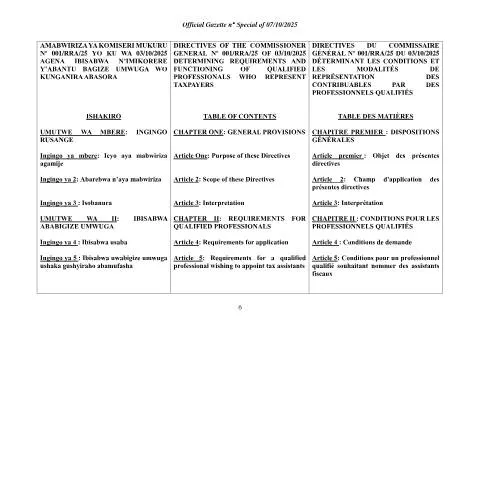
The Rwanda Revenue Authority (RRA) has recently issued a comprehensive set of directives governing the requirements, functioning, and responsibilities of qualified tax professionals. These directives, published in the Official Gazette n° Special of 07/10/2025 under the code CG_DIRECTIVES_QUALIFIED_TAX_PROFESSIONALS_Sept_2025, aim to streamline the role of authorized professionals who represent and advise taxpayers in compliance with tax obligations. This article provides an overview of these directives, their scope, and their significance for tax practitioners and taxpayers alike.
Context and Purpose of the Directives
The directives are issued pursuant to Law No. 020/2023 of 31/03/2023, specifically targeting the procedures related to tax representation. Their primary objective is to establish clear standards for the qualification, operation, and oversight of professionals authorized to act on behalf of taxpayers before the RRA. This move aligns with Rwanda’s broader strategy to enhance tax compliance, improve service delivery, and foster a professional environment for tax representation.
Scope and Applicability
The directives apply to all professionals who have been officially recognized and approved by the Rwanda Revenue Authority to represent taxpayers. This includes individuals who provide advisory services, prepare tax filings, and act as intermediaries between taxpayers and the tax authorities. The scope also covers professionals who wish to appoint assistants to support their activities, ensuring a structured and regulated framework for tax representation services.
Key Provisions and Requirements
Qualifications and Application Process
To become a qualified tax professional under these directives, applicants must meet specific criteria outlined in Article 4. These include possessing relevant educational qualifications, demonstrating experience in tax matters, and obtaining approval from the RRA. The application process involves submitting detailed documentation and adhering to the standards set by the authority.
Appointment of Tax Assistants
Professionals wishing to appoint assistants must fulfill additional requirements, ensuring that these auxiliary staff are properly trained and authorized to perform designated tasks. This measure aims to uphold the integrity and quality of tax representation services, safeguarding taxpayer interests and compliance standards.
Operational Responsibilities of Qualified Professionals
Obligations and Conduct
Qualified professionals are entrusted with several responsibilities, including maintaining accurate records, ensuring compliance with legal and procedural standards, and safeguarding client confidentiality. They are also required to publish and update a list of approved professionals, which is accessible to the public to promote transparency.
Duration and Suspension of Licenses
The directives specify the validity period of licenses granted to qualified professionals, along with conditions for renewal. Furthermore, mechanisms are established for the suspension or revocation of licenses in cases of misconduct or non-compliance, reinforcing accountability within the profession.
Legal and Regulatory References
These directives are anchored in the legal framework provided by Law No. 020/2023 and are complemented by other regulations issued by the Rwanda Revenue Authority. They are designed to harmonize with existing tax laws and procedural guidelines, ensuring a cohesive approach to tax administration and professional conduct.
Implications for Tax Practitioners and Taxpayers
The new directives underscore the importance of professionalism, compliance, and accountability among tax practitioners. For taxpayers, this translates into access to qualified, vetted experts who can provide reliable advice and representation, ultimately facilitating smoother interactions with the tax authorities. For professionals, adherence to these standards is essential for maintaining their licenses and reputation within the tax community.
Conclusion
The issuance of the September 2025 directives marks a significant step towards strengthening the professional standards of tax representation in Rwanda. By setting clear requirements and operational guidelines, the Rwanda Revenue Authority aims to enhance the quality of services, ensure legal compliance, and foster a transparent tax environment. Both existing and aspiring tax professionals should familiarize themselves with these provisions to align their practices with national regulations and contribute to Rwanda’s ongoing development in tax administration.