Understanding the New Guidelines on Payment of Tax Arrears in Installments in Rwanda
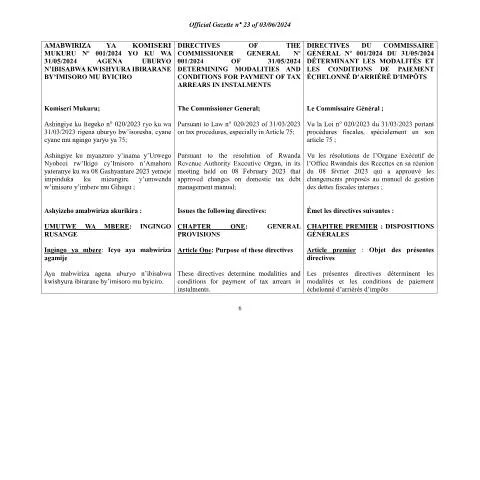
The Rwanda Revenue Authority (RRA) has recently issued a set of official directives aimed at facilitating taxpayers who face difficulties settling their tax arrears. These new regulations, published in the Official Gazette No. 23 of 03 June 2024, provide a comprehensive framework for the payment of overdue taxes through installment plans. This initiative reflects Rwanda’s commitment to fostering a supportive environment for taxpayers while ensuring compliance with fiscal obligations.
Context and Legal Foundation of the New Directives
The directives are issued under the authority of the Commissioner General of Rwanda Revenue Authority, pursuant to Law No. 020/2023 of 31 March 2023, which governs tax procedures in Rwanda. Specifically, Article 75 of this law empowers the Commissioner General to establish modalities for handling tax debts, including installment payments. Additionally, these directives follow resolutions adopted during the RRA Executive Organ meeting held on 8 February 2023, which approved updates to the internal manual on managing domestic tax debts.
The legal framework emphasizes a citizen-centric approach, aiming to balance revenue collection with the economic realities faced by taxpayers. The directives align with Rwanda’s broader policy objectives of promoting voluntary compliance and easing the burden on taxpayers experiencing financial hardship.
Scope and Purpose of the Directives
The primary purpose of these directives is to define the procedures and conditions under which taxpayers can pay their outstanding taxes in installments. This is particularly relevant for taxpayers who are unable to settle their full tax liabilities immediately due to financial constraints. The directives establish clear rules for requesting installment plans, the maximum duration allowed, and the application of interest and penalties during the installment period.
Key Provisions for Payment in Installments
Eligibility and Application Process
Taxpayers with outstanding tax arrears who cannot pay the full amount upfront are eligible to request an installment plan. To do so, they must enter into a formal agreement with the Rwanda Revenue Authority, specifying the number of installments and the amount to be paid in each installment. The directives stipulate that the maximum duration for installment payments is twelve (12) months within a fiscal year, but this period can be extended up to twenty-four (24) months in cases where the taxpayer demonstrates significant financial difficulties.
Importantly, taxpayers seeking installment arrangements are not required to make an initial payment before signing the agreement. Once the agreement is signed, the installment plan becomes binding, and the taxpayer must adhere to the agreed schedule.
Application of Payments and Interest
When a taxpayer makes a payment in installments, the amount paid is first applied to the principal tax debt. Any penalties or interest accrued are settled after the principal debt has been fully paid. Throughout the installment period, interest on the unpaid principal continues to accrue, encouraging timely payments while providing flexibility for taxpayers facing temporary financial issues.
Facilitation and Extension of Payment Plans
The directives also specify that taxpayers experiencing severe economic hardship may request an extension of their installment plan beyond the standard period. The Commissioner General has the authority to grant extensions, but the total duration of such agreements cannot exceed twenty-four (24) months. This flexibility aims to accommodate taxpayers with genuine financial difficulties while maintaining the integrity of the tax collection process.
Implications for Taxpayers and Tax Administration
These new regulations are designed to promote voluntary compliance by making it easier for taxpayers to settle their debts without facing immediate penalties or legal actions. For the Rwanda Revenue Authority, the directives serve as a structured approach to managing tax arrears, reducing the risk of revenue loss, and fostering a cooperative relationship with taxpayers.
Taxpayers are encouraged to proactively request installment plans through the official online platform, Irembo, where they can access the necessary procedures and submit their applications electronically. This digital approach aligns with Rwanda’s broader goal of digitizing government services and making them more citizen-friendly.
Conclusion
The issuance of these directives marks a significant step towards more flexible and transparent tax debt management in Rwanda. By allowing installment payments under clear conditions, the Rwanda Revenue Authority aims to support taxpayers in fulfilling their fiscal obligations while maintaining the country’s fiscal stability. Citizens are advised to stay informed about these regulations and utilize the available digital tools to manage their tax commitments efficiently.