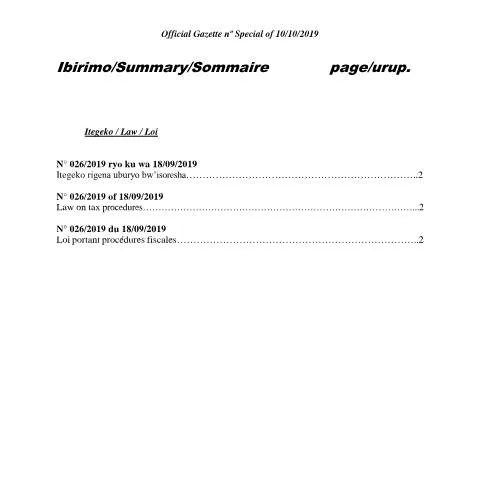
Understanding the New Tax Procedures Law of Rwanda (Law N° 026/2019)
The official gazette publication dated October 10, 2019, introduces Law N° 026/2019, which establishes the framework for tax procedures in Rwanda. This law aims to streamline tax collection, enhance transparency, and clarify the obligations of taxpayers and tax authorities. It is essential for all taxpayers, tax officials, and legal practitioners to understand the scope and implications of this legislation, especially given its digitization efforts and alignment with Rwanda’s broader e-government initiatives.
Scope and Objectives of the Law
The law applies to all taxes prescribed by the Rwandan tax code, including income tax, value-added tax (VAT), withholding tax, and other levies managed by the Rwanda Revenue Authority (RRA). Its primary objective is to define the procedures for the assessment, collection, and management of taxes, ensuring a uniform approach across different tax types and administrative levels. It also aims to improve taxpayer compliance through clear rules and accessible communication channels, notably leveraging digital platforms such as Irembo for service delivery.
Key Provisions and Their Impact
1. Taxpayer Registration and Identification
One of the foundational elements introduced by the law is the requirement for taxpayers to register with the Rwanda Revenue Authority. This registration process involves obtaining a unique taxpayer identification number (TIN), which is central to all tax-related activities. The law mandates that every taxpayer must have an address and be registered in the tax system, facilitating efficient communication and enforcement.
2. Tax Accounting and Records
The law emphasizes the importance of maintaining accurate accounting books and records. Taxpayers are required to keep detailed records of their financial transactions, invoices, and supporting documents. Electronic invoicing systems are encouraged, and companies engaging in digital transactions must comply with specific obligations to ensure transparency and traceability of their financial activities.
3. Tax Declaration and Payment Procedures
Taxpayers are obliged to declare their taxes periodically, with specific deadlines outlined in the law. The legislation provides mechanisms for requesting extensions to these deadlines, ensuring flexibility while maintaining compliance. For withholding taxes, the law specifies the obligations of withholding agents and the records they must retain, such as records of amounts withheld and paid to the authorities.
4. Notices of Tax Assessment and Administrative Penalties
The law stipulates that the RRA must notify taxpayers of any tax assessments or adjustments made. These notices include detailed information about the amount owed and the basis for the assessment. Additionally, the law introduces provisions for administrative fines in cases of non-compliance, with clear content requirements for notices related to penalties.
Enhanced Digitalization and Communication
A significant aspect of Law N° 026/2019 is the promotion of digital communication channels. Taxpayers are encouraged to use electronic systems for invoicing, declarations, and notifications. The law specifies the obligations of users of electronic invoicing systems, including maintaining secure and accurate records. Communication with the tax authority can be conducted in the official language, with provisions ensuring clarity and accessibility for all taxpayers.
Implications for Taxpayers and Tax Authorities
This legislation modernizes Rwanda’s tax administration by formalizing procedures and integrating digital tools. Taxpayers benefit from clearer rules, streamlined processes, and improved access to services via platforms like Irembo. For tax authorities, the law enhances enforcement capabilities, improves data management, and fosters transparency in tax collection.
Conclusion
Law N° 026/2019 on tax procedures marks a significant step forward in Rwanda’s efforts to modernize its tax system. By establishing clear procedures for registration, accounting, declaration, and enforcement, the law aims to foster a compliant and efficient tax environment. Stakeholders are encouraged to familiarize themselves with these provisions to ensure full compliance and benefit from Rwanda’s ongoing digital transformation in tax administration.