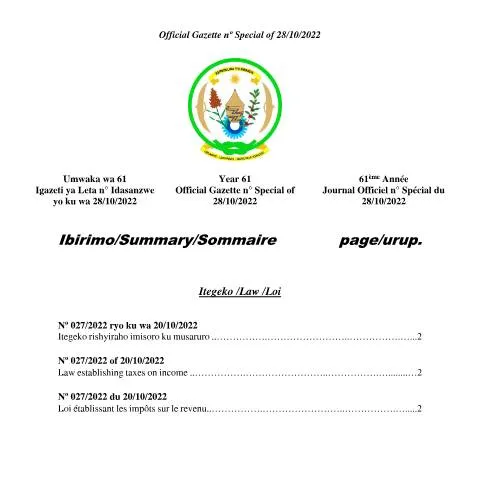
Overview of the Special Gazette Notice on Income Tax Law (October 28, 2022)
The official gazette published on October 28, 2022, introduces Law No. 027/2022, which establishes the framework for income taxation in Rwanda. This legislative act signifies a key development in the country's fiscal policy, aiming to clarify tax obligations, define taxable income sources, and streamline tax administration processes. The law is part of Rwanda's broader effort to enhance revenue collection, improve compliance, and align with international standards.
Scope and Objectives of the Law
The law's primary objective is to delineate the scope of income tax applicable to individuals and entities operating within Rwanda. It applies to all persons and organizations earning income from various sources, whether domestic or foreign, and emphasizes the importance of transparent and equitable taxation. This legal framework aims to foster a conducive environment for economic growth while ensuring that taxpayers fulfill their obligations under the law.
Key Provisions and Definitions
The law provides clear definitions of critical concepts such as residence, permanent establishment, and source of taxable income. These definitions are crucial for determining tax liability, especially for cross-border transactions and foreign entities operating in Rwanda. For example:
- Residence: An individual or entity is considered resident if they have a permanent home or habitual abode in Rwanda.
- Source of Income: Income derived from activities, assets, or services within Rwanda is taxable, regardless of the taxpayer's residence status.
Additionally, the law specifies the criteria for establishing a permanent establishment and the procedures for recognizing income sources, which are vital for tax compliance and enforcement.
Taxable Income and Rates
The law categorizes taxable income into several segments, including employment income, business profits, and income from investments. Each category has specific rules for calculation and applicable tax rates:
- Employment Income: Components such as salaries, wages, bonuses, and benefits in kind are subject to progressive tax rates.
- Business Profits: Profits derived from commercial activities are calculated based on accounting records, with allowances for expenses and deductions.
- Income from Investments and Assets: Gains from foreign assets, dividends, and long-term contracts are also taxable, with particular provisions for exemptions and special regimes.
The law emphasizes the importance of accurate reporting and timely payment of taxes, with specific provisions for tax declarations and assessment procedures.
Tax Obligations and Exemptions
Taxpayers are required to declare their income annually and pay the corresponding taxes within stipulated deadlines. The law also provides for certain exemptions and benefits, such as:
- Income derived from agricultural and livestock activities, which may benefit from tax relief.
- Profits from savings in collective investment schemes and employee shares within companies, which are exempt from tax under specific conditions.
- Income earned abroad, with provisions for foreign tax credits to avoid double taxation.
Furthermore, the law stipulates the obligations of taxpayers regarding record-keeping, transparency, and cooperation with tax authorities to facilitate compliance and enforcement.
Implications for Taxpayers and the Public
This law marks a significant step towards modernizing Rwanda's tax system, making it more transparent, predictable, and aligned with international best practices. For individual taxpayers and businesses, it clarifies their obligations, provides guidance on calculating taxable income, and outlines the procedures for tax declaration and payment.
Citizens and organizations are encouraged to familiarize themselves with the provisions of this law, particularly the definitions, taxable income categories, and exemptions, to ensure compliance and optimize their tax planning strategies. The digitization of tax processes via platforms such as Irembo facilitates easier access to tax services and declarations, promoting a citizen-centric approach to taxation.
Conclusion
The October 28, 2022, gazette notice encapsulates Rwanda's commitment to establishing a comprehensive and equitable tax regime. By clearly defining taxable income, establishing transparent procedures, and providing for exemptions, the law aims to foster a sustainable fiscal environment that supports national development goals while respecting taxpayers' rights and obligations.