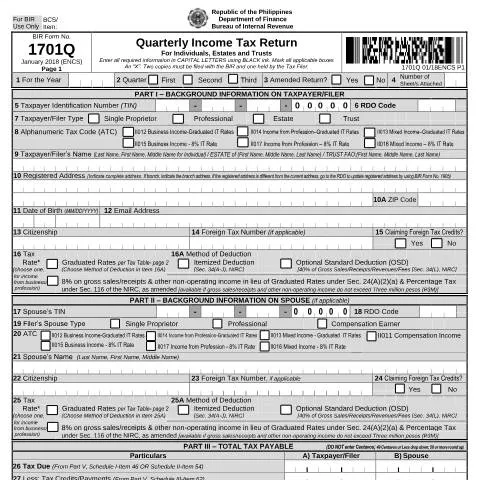
Navigating the BIR Form No. 1701Q: Your Key to Compliance in Income Tax Reporting
Completing your income tax obligations can feel like a daunting task, especially with the diverse forms and requirements enforced by the Bureau of Internal Revenue (BIR) in the Philippines. Among these, the BIR Form No. 1701Q, known as the Quarterly Income Tax Return for Individuals, Estates, and Trusts, serves as a critical instrument for taxpayers. This article delves into the nuances of this form, offering insights on who should file it, how to complete it, and the consequences of timely and accurate submissions.
What Makes the 1701Q Stand Out?
The BIR Form No. 1701Q is tailored specifically for individuals, estates, and trusts. Unlike other tax returns, such as the Annual Income Tax Return (BIR Form No. 1701), which aggregates annual income and losses, the 1701Q is structured for quarterly reporting. This distinction is vital for taxpayers who generate income on a regular basis, ensuring they remain compliant with the tax regulations set forth by the BIR.
Understanding the Filing Requirements
- Who Should File: All individual taxpayers, estates, and trusts earning income are required to file this quarterly return. This includes single proprietors, professionals, and mixed-income earners.
- Exceptions: Certain exempt organizations and individuals below the minimum taxable threshold may not be required to file.
- Filing Frequency: This form must be filed quarterly, with specific deadlines set for each quarter.
Filing Channels: Online vs. Paper Submission
The BIR offers multiple avenues for filing the 1701Q, accommodating various preferences and technological capabilities. Here are the primary options:
1. Online E-Filing
Taxpayers can file the BIR Form No. 1701Q online through the eBIRForms system or the eGovPH app. This digital method provides:
- Convenience: Submit your return from anywhere with internet access.
- Speed: Instant acknowledgment of your submission.
- Accuracy: Automated computations help minimize errors.
2. Paper Submission at BIR Offices
For those who prefer traditional methods, the paper form can be filled out and submitted in person at designated BIR offices. While this method is more time-consuming, it remains a viable option for taxpayers lacking internet access.
3. Authorized Agent Banks (AAB)
Taxpayers may also file their returns and pay any taxes due at Authorized Agent Banks. This method offers a convenient alternative for those who wish to handle their tax obligations in-person.
Essential Steps to Complete BIR Form No. 1701Q
Filling out the BIR Form No. 1701Q requires careful attention to detail. Here’s a step-by-step guide to ensure you complete the form accurately:
- Fill in Background Information: This includes your Taxpayer Identification Number (TIN), registered address, and other personal details. Ensure all information is in capital letters and black ink.
- Select Your Taxpayer/Filer Type: Indicate whether you are a single proprietor, professional, estate, or trust. This classification impacts your tax obligations.
- Indicate Your Alphanumeric Tax Code (ATC): Choose the appropriate ATC that corresponds to your source of income.
- Determine Your Method of Deduction: You may select between graduated rates or an optional standard deduction, influencing your tax calculations.
- Calculate Total Tax Payable: This section requires you to compute your tax due, apply any tax credits or payments, and determine the final amount payable or overpayment.
Understanding the Implications of Non-Compliance
The importance of accurately completing and timely filing the BIR Form No. 1701Q cannot be overstated. Failure to comply can lead to significant consequences, including:
- Financial Penalties: Late filings are typically subject to penalties, which can accumulate, leading to greater liabilities.
- Legal Repercussions: Continued non-compliance may result in legal action taken by the BIR, including audits or assessments.
- Loss of Tax Credits: Filing errors or omissions may invalidate your claims for tax credits, resulting in a higher tax burden.
Special Cases: Navigating Unique Taxpayer Scenarios
Certain taxpayers experience unique circumstances that may affect how they file their 1701Q. These may include:
1. Foreign Nationals
Foreign individuals engaged in business within the Philippines are also required to comply with local tax regulations. They must obtain a TIN and accurately report their income through the 1701Q, considering any applicable tax treaties.
2. Minors or Dependents
Taxpayers filing on behalf of minors or dependents must ensure they have the proper TIN and understand how income is reported under their guardianship.
3. Trusts and Estates
The filing requirements for estates and trusts can vary significantly. These entities must often file the 1701Q to report any income generated, and it is imperative to understand the distinct rules that apply to them.
The Historical Context of BIR Form No. 1701Q
Understanding the historical background of the BIR Form No. 1701Q sheds light on its significance within the Philippine tax system. The form was established as part of the ongoing efforts by the government to increase tax compliance and streamline the reporting process for taxpayers.
The Administrative Code of 1987 provides the legal framework for tax compliance procedures, including the requirements outlined for income tax returns. Over the years, the BIR has adapted its forms and processes to improve transparency, efficiency, and taxpayer convenience.
The Role of BIR Form No. 1701Q in the Tax System
The BIR Form No. 1701Q plays a crucial role in the Philippine tax system, serving not only as a reporting tool but also as a means to ensure that taxpayers meet their obligations. By requiring quarterly submissions, the BIR can better monitor income flows and enforce compliance, thereby enhancing overall revenue collection.
Moreover, the integration of the PhilSys National ID into tax processes offers an additional layer of accountability, helping to streamline identity verification for taxpayers.
Next Steps After Filing: What Comes After Submission?
After successfully completing and submitting your BIR Form No. 1701Q, several important follow-up actions are necessary:
- Retain a Copy: Always keep a copy of your filed return for your records, alongside any proof of payment.
- Monitor Payment Deadlines: Ensure that any amounts payable are submitted on or before the due dates to avoid penalties.
- Review for Amendments: If there are any discrepancies or changes in your financial situation, you may need to file an amended return.
- Consult Tax Professionals: Engaging with tax advisors can provide personalized guidance, particularly if your financial situation is complex.
In conclusion, compliance with the BIR Form No. 1701Q is essential for maintaining good standing with the Bureau of Internal Revenue. By understanding the complete filing process, navigating the form's specific requirements, and recognizing the implications of non-compliance, you can ensure a smoother experience during tax season.
Understanding BIR Form No. 1701Q: Who Should File?
BIR Form No. 1701Q is specifically designed for individuals, estates, and trusts who are required to file their quarterly income tax returns in the Philippines. It's crucial to identify whether you fall into these categories to ensure compliance with the Bureau of Internal Revenue (BIR) regulations.
Any individual who earns income from various sources, such as self-employment, professional services, or business operations, must file this form. Additionally, estates and trusts that generate income are also obliged to submit Form No. 1701Q. For example, if you are a freelancer earning from multiple clients, or if you manage a trust fund that earns dividends or interest, you must be vigilant in filing this form accurately and on time.
Moreover, it's essential to understand the thresholds that determine your obligation to file. For instance, if your gross income exceeds the prescribed minimum threshold set by the BIR for a given tax year, you will have to file Form No. 1701Q. Failure to comply not only results in penalties but can also complicate your tax situation in future filings.
Filing Deadlines and Extensions
The filing deadlines for BIR Form No. 1701Q are structured to coincide with the end of each quarter of the calendar year. Taxpayers are required to submit the form and any corresponding payment on or before the 15th day of the month following the end of the quarter. Therefore, the deadlines are as follows:
- For the first quarter (January - March), the deadline is April 15.
- For the second quarter (April - June), it is July 15.
- For the third quarter (July - September), it is October 15.
It is important to be aware of these deadlines as they are strictly enforced by the BIR. If you anticipate difficulty in meeting the deadlines, it is possible to request an extension. However, extensions are not automatically granted; you must submit a formal request to the BIR, ideally accompanied by a valid reason and supporting documents. Nonetheless, even with an extension, payment of any due tax is still required by the original deadline to avoid penalties and interest charges.
Another option for individuals facing challenges in their fulfilling tax obligations is to seek a Tax Assessment Review. This special procedure allows taxpayers to review their filings and correct any discrepancies before finalizing their returns.
Common Mistakes to Avoid When Filing BIR Form No. 1701Q
When completing BIR Form No. 1701Q, many taxpayers make common mistakes that can lead to complications with the BIR and potential penalties. Acknowledging these pitfalls is essential for ensuring a smooth filing process.
One prevalent mistake is failing to report all income accurately. Individuals often overlook certain income sources, particularly if they come in sporadically or from non-traditional revenue streams. It's important to consolidate all your earnings from various sources, including freelance work, business income, and capital gains when filling out the form.
Another frequent error involves incorrect computation of taxes. Taxpayers may miscalculate their liabilities due to a lack of understanding of the applicable tax rates or deductions. It's advisable to familiarize yourself with the different allowable deductions for your business or professional income to ensure you maximize your return. You may also consider consulting a tax professional for guidance on complex computations.
Additionally, neglecting to sign and date the form is a simple yet critical mistake. An unsigned form is considered incomplete and may lead to delays in processing and possible fines.
Lastly, some taxpayers fail to keep a copy of their submitted forms and any supporting documents. Retaining these records is essential for future reference and in case of audits or inquiries from the BIR.