Navigating the Complexity of BIR Form No. 1706
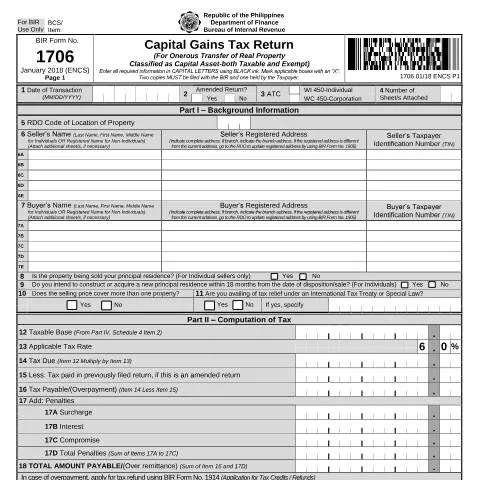
For individuals and corporations alike, the transfer of real property classified as a capital asset often triggers various tax responsibilities. The BIR Form No. 1706, or the Capital Gains Tax Return for Onerous Transfer of Real Property, plays a pivotal role in ensuring that the tax implications of such transfers are properly documented and remitted. Understanding the nuances of this form can significantly impact the financial outcome of a real estate transaction.
Understanding the Context of BIR Form No. 1706
The BIR Form No. 1706 is essential for reporting capital gains taxation resulting from the transfer of real property. This tax form is particularly relevant for individuals and entities involved in selling real estate assets. The mandatory filing of this document ensures compliance with the Philippine National Internal Revenue Code. Filing this return is crucial, as it determines both tax obligations and eligibility for any potential exemptions.
Real property owners may either face taxable or exempt capital gains depending on certain criteria, including the nature of the sale, the type of property involved, and whether the seller qualifies for specific exemptions. Understanding these details is vital for a smooth transaction and avoiding unnecessary penalties.
Step-by-Step Journey: From Transaction to Tax Filing
Let’s break down the process that leads to the completion and submission of BIR Form No. 1706.
- Initiating a Property Transaction: The journey begins when a property owner decides to sell a capital asset. This could be motivated by varying factors like financial necessity or portfolio rebalancing.
- Assessing Taxable Gains: Before filling out the form, the seller must calculate the capital gains. This involves determining the selling price versus the acquisition cost, including any related expenses.
- Filling Out BIR Form No. 1706: The next step is to accurately complete the form, which requires specific financial and personal information.
- Filing the Return: Once the form is completed, it must be filed with the Bureau of Internal Revenue (BIR) along with the required payments.
- Record Keeping: It’s essential for the seller to retain a copy of the filed return for their records.
Decoding the Sections of BIR Form No. 1706
Understanding each part of the BIR Form No. 1706 is crucial for accurate completion. Below is a detailed breakdown of its sections:
Part I: Background Information
This section captures the essential details of both the seller and buyer:
- Date of Transaction: Input the exact date when the sale was finalized.
- Amended Return: Indicate if this is an amended return to rectify previous submissions.
- Seller and Buyer Information: Include names, registered addresses, and Taxpayer Identification Numbers (TIN) for both parties.
- Property Details: Indicate if the sold property was the principal residence, a crucial factor that can affect tax obligations.
Part II: Computation of Tax
This section lays out the tax calculation based on the taxable base determined in previous steps:
- Taxable Base: Calculated from previous sections, where the selling price minus allowable deductions will give the taxable gain.
- Applicable Tax Rate: Typically set at 6% for capital gains tax.
- Total Amount Payable: Provides an overview of the total tax due after considering any prior payments or penalties.
Part III: Details of Payment
Accurate recording of payment details is vital:
- Payment Methods: Record the mode of payment, whether it's cash, check, or others.
- Date and Amount: Clearly document when and how much was paid to ensure compliance and for future reference.
Common Pitfalls: What to Avoid When Filling BIR Form No. 1706
Missteps in filing BIR Form No. 1706 can lead to penalties and complications. Here are some common pitfalls to be wary of:
- Incomplete Information: Ensure all fields are filled out accurately; missing information can delay processing.
- Incorrect Tax Calculations: Double-check calculations in the Computation of Tax section to avoid over or underpayment.
- Failure to File on Time: Adhere to the deadline, typically on or before April 15 of the following year after the transaction.
Submission Channels: Navigating the Filing Process
Filing BIR Form No. 1706 can be carried out in various ways, each with its own procedures. Here’s how to navigate these channels:
- Electronic Filing: Utilizing the eBIRForms or eGovPH app for filing is highly encouraged for convenience and efficiency. This method allows for quicker processing and minimizes paperwork.
- In-Person Filing: Alternatively, submissions can be made physically at designated BIR offices. Ensure to carry two copies of the completed form.
- Mail Submissions: While possible, mailing your form may result in delays; thus, it’s advisable to file electronically or in person whenever possible.
Comparative Overview of Submission Methods
| Method | Speed | Convenience | Cost |
|---|---|---|---|
| Electronic Filing | Fast | High | Low |
| In-Person Filing | Moderate | Medium | None |
| Mail Submission | Slow | Low | Postage Costs |
Implications of Filing: Rights and Responsibilities
Filing the BIR Form No. 1706 has significant implications for taxpayers:
- Tax Obligations: By completing this form, you fulfill your obligations under the National Internal Revenue Code, ensuring legality in your property transaction.
- Access to Exemptions: Certain conditions outlined in the form may qualify you for tax exemptions or reductions. Understanding these can alleviate financial burdens.
- Documentation for Future Transactions: Proper filing serves as evidence of compliance, which can be beneficial for future property dealings or audits.
- Potential Penalties: Failing to file accurately or on time can lead to penalties, interest on unpaid taxes, and other legal consequences.
What to Do When Issues Arise: Addressing Errors and Refusals
In the event of discrepancies, it is crucial to act swiftly:
- Rectifying Errors: If an error is discovered post-filing, an amended return must be submitted, indicating adjustments and providing explanations where necessary.
- Handling Refusals: Be aware of the reasons for any refusals, ranging from missing documents to incorrect information. Addressing these issues promptly is critical to avoid complications.
Conclusion: The Importance of Vigilance in Tax Compliance
Understanding and effectively managing the BIR Form No. 1706 is essential for anyone engaged in real estate transactions in the Philippines. The stakes are high, with financial consequences hinging on the accurate completion of this form. By carefully navigating the complexities involved, taxpayers can ensure compliance, optimize tax obligations, and ultimately secure their financial interests.
Understanding Capital Gains Tax for Real Estate Transactions
The Capital Gains Tax (CGT) in the Philippines is a critical consideration for individuals and entities involved in the transfer of real property classified as capital assets. Under the current taxation framework, the Onerous Transfer of Real Property, particularly those that fall under the purview of Capital Gains Tax, necessitates the completion of BIR Form No. 1706. It is essential for taxpayers to grasp not only the tax implications but also the procedural requirements for filing this form accurately.
Taxpayers should be aware that the rate for the Capital Gains Tax is set at 6% of the gross selling price or the fair market value of the property sold, whichever is higher. This taxation applies to both individuals and corporations that engage in property sales. Additionally, specific exemptions exist under certain conditions, such as the sale of a principal residence, where taxpayers may be eligible to apply for a tax exemption. Understanding these nuances can significantly affect the overall liability and planning for those involved in real estate transactions.
Filling Out BIR Form No. 1706: Step-by-Step Guide
Completing BIR Form No. 1706 can appear daunting at first glance; however, breaking it down into manageable steps can simplify the process. Here’s a detailed outline of how to fill out this form:
- Part I: Taxpayer Information
- Provide your Tax Identification Number (TIN). If you are a foreign national, ensure that you have the requisite registration with the Bureau of Internal Revenue (BIR).
- Fill in the complete name, address, and contact details of the seller—this includes both individual sellers and corporate entities.
- Part II: Details of the Property Transferred
- Clearly indicate the type of property being transferred (e.g., residential, commercial) and provide its complete address.
- Document the date of sale and the selling price, ensuring that the selling price matches the amount agreed upon in the contract or deed of sale.
- Part III: Computation of Tax Due
- Calculate the Capital Gains Tax based on the gross selling price or the fair market value, ensuring compliance with the applicable tax rates.
- In cases where exemptions apply, provide relevant information that supports your eligibility for tax exemption.
- Part IV: Payment Information
- Indicate the payment method - whether via bank or over-the-counter transaction at any authorized BIR collection agent.
- Be sure to keep copies of the payment confirmation as they may be required for verification.
- Part V: Signatures
- All sellers must sign the form, and if a representative is filing on behalf of the seller, ensure that proper authorization documents are attached.
Important Considerations and Common Pitfalls
When filing BIR Form No. 1706, there are several critical considerations to keep in mind to avoid common mistakes that could lead to penalties or delayed processing:
- Accuracy is Key: Errors in the completion of the form can result in significant delays or rejections. Double-check all entries, especially numerical values and property descriptions.
- Timeliness of Submission: The deadline for the filing of the Capital Gains Tax Return is 30 days after the sale of the property. Failure to file on time may incur penalties.
- Documentation: Ensure that you possess all supporting documents needed for the filing. These may include the Deed of Sale, tax declarations, and previous tax receipts if applicable.
- Consult a Tax Professional: Given the complexity of real estate transactions, it is often prudent to seek advice from tax professionals who are well-versed in the Philippines tax laws.
Being thorough and diligent in each step of the filing process not only ensures compliance with the law but also helps in avoiding unnecessary financial burdens associated with property transactions. The BIR offers resources and assistance for taxpayers; therefore, do not hesitate to reach out for help if needed.