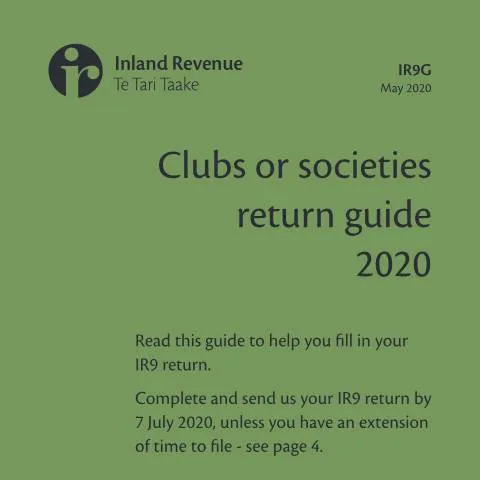
Understanding the IR9G Clubs or Societies Return Guide
The IR9G guide is an essential document for clubs and societies operating in New Zealand, providing critical tax return information. For many organizations, particularly those that are volunteer-driven or non-profit, comprehending the nuances of tax obligations is not only a matter of legal compliance but also key to maintaining operational viability. This guide offers a comprehensive walkthrough of the filing process, critical deadlines, and the information required to ensure accuracy in tax reporting.
Who Needs to Refer to the IR9G Guide?
All clubs and societies in New Zealand are mandated to submit a tax return each year unless they exclusively derive exempt income. This includes various types of organizations, from sporting clubs to hobbyist groups, which may generate income through activities or fundraising efforts. It's important to understand the specific circumstances under which your organization falls under this requirement:
- Exempt Income: If your club or society's income is entirely exempt, you may not need to file.
- Certificate of Exemption: Possessing a certificate of exemption from RWT (resident withholding tax) does not automatically mean your income is exempt; you must check your organization's specific circumstances.
- Change in Financial Status: If your organization didn't have income that was liable for tax during the previous fiscal year, you only need to complete a simplified version of the return.
Decoding the Key Sections of the IR9G Guide
The IR9G is segmented into various sections, each addressing different components of the tax return. Understanding these sections is crucial as it allows for more effective navigation of the filing process. Here are the primary areas covered:
- Questions on organizational details: This includes your club or society's name, postal address, and bank account information.
- Income particulars: This section delves into different income streams, including taxable sales and disposals, alongside any exempt income.
- Tax calculation: You’ll find guidance on how to calculate your tax liabilities based on your reported income.
- Filing deadlines: It outlines when your return is due and the implications of missing these dates.
Step-by-Step Utilization of the IR9G Guide
To effectively use the IR9G guide, follow these steps which outline a systematic approach to submitting your tax return:
- Review your Income: Start by inventorying all income streams. Document income derived from memberships, fundraising events, or any sales made by the society.
- Check Exemptions: Identify any income that may fall under exemptions. If you have doubts, consult the IRD or a tax advisor.
- Gather Necessary Information: Collect all relevant financial records, including bank statements, receipts from fundraising, and prior tax returns.
- Complete the Return: Using the guide, fill out the IR9 return, ensuring that you respond to each question accurately and completely.
- Submission: Ensure you file your return by the due date. If you’ve been granted an extension, keep this information handy for reference.
Clarifying Tax Terms: Your Essential Dictionary
Understanding the terminology used in the IR9G guide is vital for accurate interpretation. Here are some key definitions:
| Term | Definition |
|---|---|
| Exempt Income | Income that is not subject to tax, such as specific donations or grants. |
| RWT (Resident Withholding Tax) | A tax deducted from interest and dividends before they are paid to you. |
| Taxable Income | Income on which tax must be paid after allowable deductions are subtracted. |
| Balance Date | The end of the financial year for the organization, typically set at 31 March. |
Common Procedural Questions Addressed
When navigating the IR9G guide, there are often common concerns or procedural questions that arise. Understanding these can smooth the filing process:
- What if my organization has ceased to operate? If your club or society has ceased operations, you must still file a return, providing accounts up until the cessation date.
- How do I handle late submissions? Late filings can incur penalties. If unable to meet the deadline, it’s essential to communicate with the IRD as soon as possible to address potential repercussions.
- What happens if I make an error in my return? It’s crucial to rectify any inaccuracies promptly. You may need to file an amended return, which the IRD can guide you on.
Interconnections with Other IRD Documents
The IR9G guide does not exist in isolation; it interacts with other IRD documentation, which can be essential for a holistic approach to your tax obligations:
- Charitable Organisations Guide (IR255): If your society qualifies as a charitable organization, this guide provides detailed obligations and benefits.
- Provisional Tax Guide (IR289): For organizations that may need to pay provisional tax, understanding its implications is critical.
- Education Centres Guide (IR253): For those in the educational sphere, this guide outlines specific obligations related to taxation for educational entities.
Avoiding Common Misinterpretations
Misinterpretations of the guidelines in the IR9G can lead to compliance issues. Here are some pitfalls to avoid:
- Assuming all income is taxable: Understand the nuances of exempt and non-taxable income to avoid overreporting.
- Neglecting to maintain accurate financial records: Without comprehensive records, accurately filling out your return becomes challenging.
- Ignoring communication from the IRD: Any letters or notifications from the IRD should be reviewed carefully to ensure compliance with any changes in tax law that may affect your organization.
Practical Resources for Clubs and Societies
Finally, clubs and societies can benefit from various resources offered by the IRD and other organizations:
- myIR Portal: This online service allows clubs to manage their tax-related activities, file returns, and access resources conveniently.
- IRD Customer Service: The IRD provides phone support for organizations needing clarification on any aspect of the tax filing process.
- Workshops and Seminars: Consider attending tax workshops and seminars hosted by local councils or financial organizations, which can provide valuable insights tailored to your specific needs.