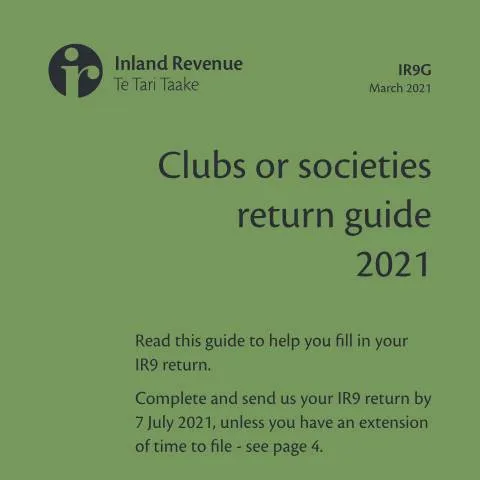
Understanding the IR9G Guide: An Essential Resource for Clubs and Societies
When it comes to navigating the intricacies of income tax in New Zealand, the IR9G: Clubs or Societies Return Guide serves as a crucial tool for organizations. Whether you manage a local sports club, a cultural society, or any other type of community group, understanding this guide can help ensure compliance and effective management of your tax obligations. This article provides valuable insights into the content of the IR9G, its practical applications, and the essential information that organizations need to be aware of.
Why Clubs and Societies Must File a Tax Return
All clubs and societies operating in New Zealand are generally required to file an annual tax return unless they generate only exempt income. The IR9G guide clarifies who falls under this requirement, making it essential for organizations to recognize their obligations. It's important to note that even if your organization qualifies for a certificate of exemption from Resident Withholding Tax (RWT) on interest and dividends, it does not automatically classify your income as exempt.
Organizations in the following situations must file a return:
- Having taxable income during the fiscal year (1 April - 31 March).
- Not being classified as a tax-exempt organization.
This requirement serves to uphold transparency and ensures that all entities contributing to New Zealand's economy adhere to the same standards.
Deadline for Submission: Navigating Due Dates
The due date for submitting the IR9 return largely depends on the balance date of your organization. For those with a balance date of 31 March, the deadline is set for 7 July of the same year, unless an extension has been granted. If your organization operates on a different balance date, the due date may vary. It's advised to contact the Inland Revenue Department (IRD) if there's any uncertainty regarding your filing date.
For clubs and societies represented by an agent, the deadline may extend to 31 March of the following year. This flexibility provides additional time for preparation, but it's crucial to be aware of these timelines to avoid late penalties.
Decoding the Sections of the IR9G: What to Expect
The IR9G guide organizes its content in a logical manner, with questions and sections aligned with the return form to facilitate understanding. Each section addresses specific queries that clubs and societies encounter during their tax return process. Key areas covered include:
Club or Society’s Name
Correctly providing the name of your organization is paramount. If there have been any changes since the last tax return submission, you must furnish proof of this change to ensure accurate record-keeping by the IRD.
Postal and Bank Details
Section inquiries about the postal address and bank account number are designed to guarantee that all correspondence and potential refunds are directed appropriately. If changes have occurred, these must be accurately reflected on the return.
Incorporation Status
Understanding your organization’s incorporation status is vital, as different tax rates apply based on whether your club or society is incorporated under New Zealand legislation. This section emphasizes the importance of maintaining accurate documentation regarding your incorporation status.
Income and Expenditure Details
For clubs or societies that own residential properties, specific provisions apply. It’s crucial to differentiate between income types and expenses, particularly concerning rental properties and the ring-fencing rules established under the Income Tax Act 2007. The IR9G outlines how to report these accurately to ensure compliance.
Clarifying Taxable vs. Exempt Income
One of the critical elements of the IR9G is the differentiation between taxable and exempt income. Clubs and societies must understand what constitutes exempt income to ensure they are reporting accurately. If your organization primarily generates exempt income, you may have simplified reporting requirements.
The guide elaborates on various types of income, detailing:
- Taxable sales and disposals of property.
- Friendly societies and their unique statuses.
- Donations and their implications on tax returns.
Moreover, it provides insights on how net losses can be carried forward to offset future taxable income, allowing better financial planning for the upcoming fiscal years.
Provisional Tax and Its Implications
Understanding provisional tax is crucial for clubs and societies with significant income streams. The IR9G provides details about the initial provisional tax liability and subsequent obligations. Taxpayers may elect to be provisional tax payers, and this decision comes with specific responsibilities regarding payments and assessments.
Organizations must carefully consider their earnings and ensure they are making accurate provisional tax payments. The guide helps outline the various payment dates and methods, emphasizing the importance of timely submission to avoid penalties.
Practical Steps to Utilize the IR9G Effectively
To fully leverage the IR9G guide, organizations can take the following practical steps:
- Familiarize Yourself with the Structure: Understand each section of the guide. Knowing where to find specific information can expedite the process.
- Maintain Accurate Records: Keep detailed records of income and expenses throughout the year. This will simplify the process of filling out your return.
- Stay Updated on Tax Laws: Tax regulations can change, so regularly check the IRD website or consult tax professionals for the latest information.
- Consult with Professionals: If you are uncertain about any aspect of your return, do not hesitate to seek professional advice to ensure compliance and accuracy.
Common Misinterpretations of the Guide
Clubs and societies often encounter common pitfalls when interpreting the IR9G. Here are a few clarifications to prevent misunderstandings:
- Exempt Income Misconceptions: Just because an organization believes it operates under exempt income does not mean it is free from filing obligations. Always verify with the IRD.
- Importance of Accurate Reporting: Inaccuracies in reporting can lead to penalties. Organizations should double-check all entries, especially income and expenses.
- Assumed Extensions: Just because an extension may exist does not mean it automatically applies. Verify your status.
Embracing Digital Solutions: Utilizing myIR
In today's digital age, the IRD offers myIR, a secure online platform that allows clubs and societies to manage their tax obligations efficiently. Through myIR, organizations can:
- File returns electronically.
- Check compliance status and tax codes.
- Access tools and calculators to aid in tax calculations.
Engaging with myIR provides a streamlined approach to managing tax obligations, and organizations are encouraged to leverage this resource to enhance their efficiency.
Conclusion: The Path Forward for Clubs and Societies
The IR9G: Clubs or Societies Return Guide serves as an essential resource, detailing crucial tax obligations while providing clarity on complex income tax matters. By familiarizing themselves with the guide and implementing its recommendations, clubs and societies can navigate their tax responsibilities with confidence. In an ever-evolving regulatory landscape, ongoing education and adherence to best practices will be vital for ensuring that organizations remain compliant and financially sustainable.
Understanding the Roles and Responsibilities of Clubs and Societies in New Zealand
Clubs and societies in New Zealand play a vital role in fostering community interaction, cultural exchange, and personal development. They serve various purposes, including sports, arts, cultural heritage, and social welfare. Understanding their legal obligations and responsibilities is crucial for their effective operation.
Under the Incorporated Societies Act 1908, clubs and societies must be registered to operate legally. This registration involves submitting an application to the Department of Internal Affairs (DIA), which entails outlining the society's objectives, governance structure, and rules. Clubs must also adhere to the provisions of the Charities Act 2005 if they are registered charities, ensuring that their operations align with the community objectives defined by the act.
Regular meetings must be held, and minutes should be documented and accessible to members, promoting transparency. Additionally, clubs should conduct annual general meetings (AGMs) to present financial statements and elect officers, ensuring compliance with their constitution and maintaining good governance practices.
Clubs and societies are encouraged to engage with their members actively. This not only fosters a sense of belonging but also ensures that they meet the needs and aspirations of their members. Regular communication, whether through newsletters, social media, or meetings, is essential for sustained engagement.
Financial Management and Reporting for Clubs and Societies
Proper financial management is crucial for the sustainability of clubs and societies in New Zealand. As non-profit entities, they must ensure that their income and expenditures align with their objectives and comply with relevant laws.
The Inland Revenue Department (IRD) provides guidance on tax obligations, which varies based on the income level and activities of the club. Clubs earning less than NZD 1.5 million from non-taxable income may be exempt from income tax; however, they still need to file annual returns. It’s essential for clubs to maintain accurate financial records, including receipts, invoices, and bank statements, to support their reporting requirements.
Furthermore, clubs with charitable status must submit annual financial reports to the Charities Services. These reports must include a statement of financial performance, a statement of financial position, and details of any significant changes in the club's activities or governance. This level of accountability ensures that clubs remain transparent and trustworthy in the eyes of their members and the broader community.
To aid in financial management, clubs may consider appointing a treasurer or forming a finance committee responsible for overseeing budgeting, expenditures, and financial reporting. Regular financial reviews can help identify areas for improvement and ensure that resources are allocated efficiently.
Leveraging Technology for Club Administration and Member Engagement
In today's digital landscape, technology plays a pivotal role in the administration and engagement of clubs and societies. Many clubs are adopting digital platforms to streamline operations, enhance communication, and improve member interaction.
Utilizing a RealMe digital ID can simplify identity verification processes for members, particularly in online voting or registration. This not only makes administration more efficient but also enhances member security and trust.
Moreover, clubs can use dedicated management software for scheduling events, managing memberships, and handling finances. These tools often include features for tracking attendance, sending invitations, and managing payments, allowing for a more organized approach to club operations.
Social media platforms also provide an excellent avenue for engagement, enabling clubs to share updates, promote events, and connect with members in real-time. Regular posts about club activities, achievements, and opportunities for involvement can help keep members informed and engaged.
Additionally, online surveys and feedback forms can be invaluable for gauging member satisfaction and gathering suggestions for improvements. Incorporating feedback into the club's decision-making process demonstrates to members that their voices are heard and valued.
Embracing these technological advancements not only enhances operational efficiency but also cultivates a sense of community among members, fostering a more vibrant and engaged club environment.