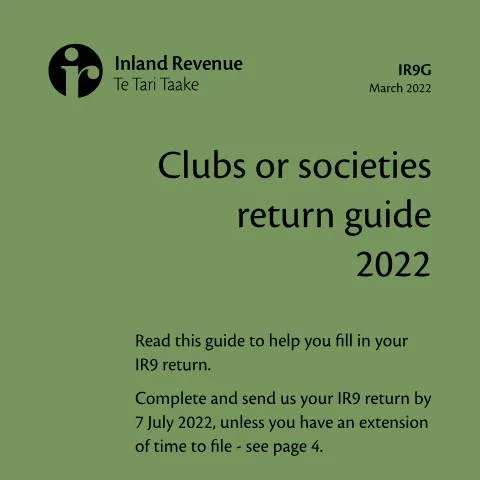
Understanding the IR9G Guide: A Comprehensive Resource for Clubs and Societies
For any club or society in New Zealand, the IR9G Clubs or Societies Return Guide is an essential document to navigate the intricacies of income tax responsibilities. This guide tailors specifically to non-profit organizations, providing critical insights on filing tax returns that ensure compliance with New Zealand’s tax laws. Whether your organization derives income from memberships, donations, or activities, understanding the contents and applications of this guide is paramount for proper tax handling.
Scope of the IR9G Guide: What It Covers
The IR9G guide thoroughly outlines the requirements for completing the IR9 tax return, specifying the obligations for clubs and societies regarding income tax. It includes:
- A detailed breakdown of what types of income must be reported.
- Guidance on deadlines for submitting returns.
- Specific questions that organizations need to address when filing.
- Clarifications on various tax statuses and exemptions.
However, it is important to recognize the limitations of this guide. For example, it primarily focuses on tax obligations. Organizations that receive additional funding from sources not covered by this guide, such as grants beyond the scope of regular income reporting, may need to refer to supplementary resources.
Key Concepts for Accurate Reporting: Navigating the Tax Terrain
To effectively utilize the IR9G guide, it is crucial to grasp several key concepts that can impact your club or society’s tax return:
- Taxable Income vs. Exempt Income: Understanding the distinction between taxable income and exempt income is foundational. All clubs and societies must file a return unless they derive exclusively exempt income.
- Balance Dates: The standard balance date for filing is 31 March, with returns due by 7 July. However, different balance dates may apply, which necessitates verification from the IRD.
- Provisional Taxpayer Status: If your club or society meets certain criteria, it may be classified as a provisional taxpayer, affecting filing timelines and requirements.
Identifying Your Audience: Who Should Be Concerned?
The contents of the IR9G guide are particularly relevant for:
- Organizations classified under the Incorporate Societies Act, the Charitable Trusts Act, or similar legislation.
- Clubs and societies with varying sources of income, including property rentals or events.
- Entities that have undergone name changes or structural modifications, needing to update their records with the IRD.
It becomes indispensable for these organizations to understand their tax obligations, as failing to submit a tax return can attract penalties and interest charges.
Common Pitfalls: Misinterpretations to Avoid
When dealing with tax documentation, misunderstandings can lead to costly mistakes. Here are some common pitfalls:
- Assuming Exempt Status: Many organizations mistakenly believe they are entirely exempt from tax obligations due to having some exempt income. It is crucial to communicate with the IRD to clarify your status.
- Inaccurate Income Reporting: Not categorizing income correctly can result in miscalculations during tax assessments. Each income stream must be analyzed according to the guidelines provided in the IR9G.
- Missing Deadlines: Filing past the deadline of 7 July or failing to apply for an extension can trigger penalties. Organizations must ensure they understand their specific filing timelines.
Interconnections with Other Tax Documents: A Holistic Approach
The IR9G guide doesn’t stand alone; it interacts with various other tax documents that help clarify the tax landscape:
- The IR255 guide is essential for charitable organizations, providing specific information on tax exemptions and obligations related to donations.
- The IR289 provisional tax guide outlines details for clubs and societies that may qualify as provisional taxpayers.
- Understanding the IR315 Business cessation form is crucial for organizations that have ceased operations and need to finalize their tax obligations.
Using the IR9G in conjunction with these documents ensures a comprehensive understanding of tax responsibilities and entitlements.
Step-by-Step Guidance: Practical Application of the IR9G Guide
To navigate the tax return process effectively, follow these practical steps:
- Gather Financial Records: Start by compiling all financial statements, bank statements, and records of income and expenditures from the fiscal year (1 April to 31 March).
- Review the IR9G Guide: Familiarize yourself with the questions outlined in the guide, ensuring you understand the requirements for each section.
- Complete the IR9 Form: Fill out the IR9 return, ensuring that all income streams are accurately reported and classified.
- Submit Before Deadline: Ensure the return is submitted by the due date. If the organization cannot meet this deadline, apply for an extension.
- Maintain Records: After submission, retain copies of the filed return and all financial documentation in case of future inquiries.
Common Procedural Questions: Clarifying Doubts
While the IR9G guide provides comprehensive insights, questions often arise regarding procedural nuances:
- What if my organization has no taxable income? If your club or society does not earn taxable income, you still need to fill in the first page of the IR9 and submit it along with the declaration on page five.
- How do I determine if my organization is exempt? Contact the IRD directly if you are unsure about your tax status or if your organization qualifies for exempt income status.
- What happens if I miss the deadline? If the return is filed late, penalties will apply, and your organization may incur interest charges on any overdue tax.
Resources for Further Assistance: Where to Turn
The IRD provides various resources and services to assist clubs and societies in navigating their tax obligations:
- Access to the myIR platform allows organizations to manage their tax information and track returns digitally.
- Dedicated calculators and tools available on the IRD website help organizations estimate taxes owed and verify tax codes.
- For personalized assistance, organizations can contact the IRD directly via the self-service number or schedule a consultation.
Utilizing these resources ensures that clubs and societies remain compliant and informed about their tax responsibilities.
Understanding Your Club's Legal Obligations
As a club or society in New Zealand, understanding your legal obligations is crucial for compliance and maintaining your good standing. Clubs may be classified under various legal structures, such as incorporated societies, charitable trusts, or companies. Each structure comes with its own set of legal requirements.
For incorporated societies, the Incorporated Societies Act 1908 mandates specific governance procedures, including the need to hold regular meetings and keep accurate records. On the other hand, charitable trusts must adhere to the Charities Act 2005, requiring them to register with the Charities Services and submit annual returns. Be sure to review your specific legal framework and consult with a legal advisor if you're unsure.
Additional obligations may arise from your club's activities, especially if you are managing funds or engaging in public fundraising. The Fundraising Act 2016 stipulates that certain fundraising activities may require an appropriate licence.
Digital Services and Record Keeping for Clubs
In today's increasingly digital world, clubs and societies in New Zealand have the opportunity to streamline their operations significantly through online tools and services. The use of digital platforms can aid in record keeping, communication, and even membership management.
For instance, the RealMe digital ID can simplify identity verification processes when accessing services from various government bodies, including the IRD and DIA. This is particularly useful for clubs that need to confirm members' identities for voting or decision-making processes.
Moreover, clubs should maintain an efficient online database to keep track of membership records, financial transactions, and meeting minutes. This ensures transparency and accountability, which are vital for maintaining trust within the community and regulatory compliance. Consider taking advantage of software solutions that cater specifically to the needs of clubs and societies.
Additionally, the use of cloud storage allows for secure, remote access to important documents. This ensures that all club members can access necessary information, even from different locations. Implementing a well-structured digital filing system can also reduce the risk of losing critical documents and enhance overall operational efficiency.
Creating an Inclusive Environment in Your Club
Inclusivity is essential for the growth and sustainability of any club or society. To foster an inclusive environment, clubs should consider implementing policies and practices that welcome diversity in membership and participation.
This begins with understanding the demographics of your community and actively reaching out to underrepresented groups. For example, you might host events that celebrate different cultures or partner with local organizations that represent various communities.
Moreover, clubs should aim to create a safe space for all members. Establishing a code of conduct can help set clear expectations around respectful behaviour and ensure that everyone feels comfortable voicing their opinions. Regular training sessions on diversity and inclusion can also be beneficial for club leaders and members alike.
By engaging in these initiatives, clubs can not only meet their social responsibilities but also enhance their member experience and broaden their appeal, ultimately contributing to a more vibrant community.